
My parents had their eyes on the Elroy Webber-designed home where I grew up for decades before we moved in. Watching them carefully make it ours was my first education as a design writer.
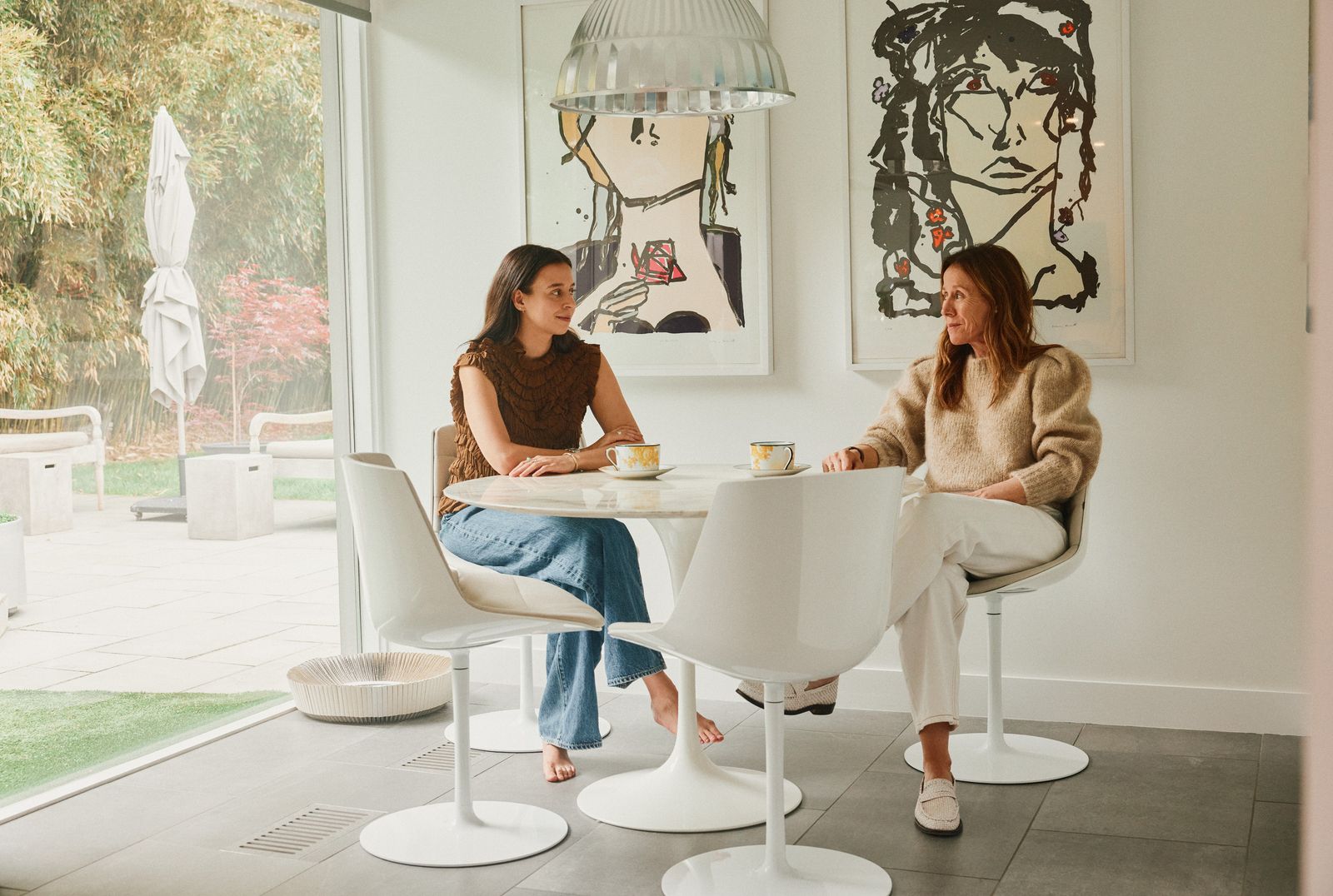
Welcome to Living Landmark, an essay series about what it’s like to grow up in an architecturally important home.
"I drove by the house every afternoon in high school and would stop and look at it," my dad tells me. We’re sitting in the living room of the very house he’s describing, an early 1950s residence in his hometown of West Hartford, Connecticut, by prominent New England architect Elroy Webber. The low-slung midcentury home is where my parents raised my sister and me for most of our childhood. But for decades before they bought it in 2007, the wide-lot home wrapped in stone and spring wisteria, and tucked into a colonial neighborhood, was just an object of my dad’s affection. In the early ’90s, before my sister and I were born, my parents toured the house next door, also designed by Webber in the early ’50s. They walked through politely, but kept drifting toward the east-facing windows to peek into the neighboring Kaufman Home. They wished it had been the one for sale.
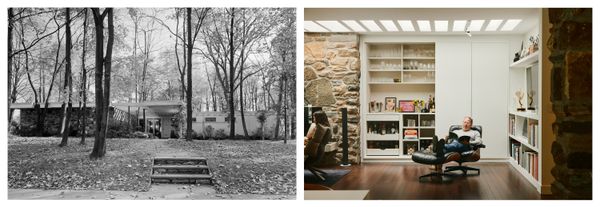
Emma Apple Chozick’s dad (pictured right) had his eye on the Elroy Webber-designed Kaufman House (pictured left, in the 1950s) since his own childhood.
From left: Photo by © Ezra Stoller/Esto; photo by Sophie Fabbri
It wasn’t. Instead, they bought a ranch-style house across town and slowly furnished it with the midcentury collector’s pieces they had always been drawn to: the Eames lounge my mom won at auction while hyperventilating over the price (it was, at the time, the most she had ever spent on any piece of furniture), a set of six Mies van der Rohe dining chairs, and what felt like an entire catalog’s worth of Alessi pieces from their wedding registry. It was the house my older sister and I each came home to as newborns—the backdrop to the early years of our family life, and while it wasn’t the midcentury residence my parents dreamed of, their design aesthetics and furnishings filled in the gaps.
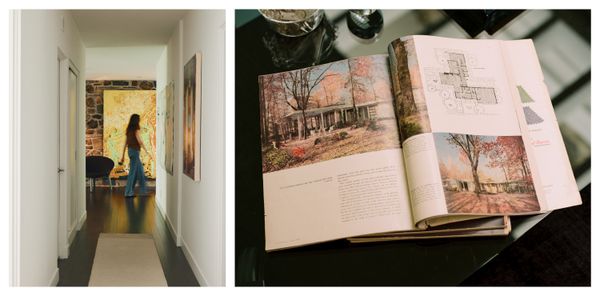
The house was featured in a January 1958 issue of House Beautiful (pictured right). Emma (pictured left) and her family keep a stack of original copies of the issue on their coffee table.
Photo: Sophie Fabbri
The Kaufman Home reappeared in our lives in spring 2007, when my sister and I were in elementary school. My parents had contractors scheduled to start an addition on the ranch, plans already drawn. That morning, before a zoning hearing, my dad checked the real estate listings, "just one more time," he tells me. There it was: the long, single-level house with a long trellis wrapped in wisteria leading up to the bright-yellow front door, finally for sale. They toured it immediately and made an offer that afternoon. It was my mom’s birthday, and my dad hadn’t gotten her a gift yet. "So he got me our house," she laughs.
Completed for its namesake homeowners and their two daughters, the house was a deeply personal commission. While studying at Harvard, Webber spent the summer of 1929 working at Le Corbusier’s Paris atelier, later writing that he returned to the U.S. "supercharged with the modern movement," and finished his architecture degree at Massachusetts Institute of Technology. The ideas he brought back took a distinct form in the Connecticut Valley, where his work stood apart not only from the region’s dominant colonial architecture, but also from the glass-heavy modern homes being built by his contemporaries, which were often critiqued for making homeowners feel exposed. Ironically, it continued to invite the same kind of attention. Even as a kid, I remember playing in the yard while passersby paused on the sidewalk to stare at the house, much in the same way my dad once had.
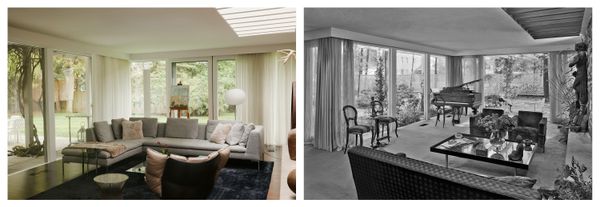
Webber’s original vision remains largely intact in many of the spaces including the living room (pictured right in the 1950s, and left in its current state).
From left: Photo by Sophie Fabbri; photo by © Ezra Stoller/Esto
See the full story on Dwell.com: The Midcentury House That Raised Me
Related stories:

No comments:
Post a Comment