
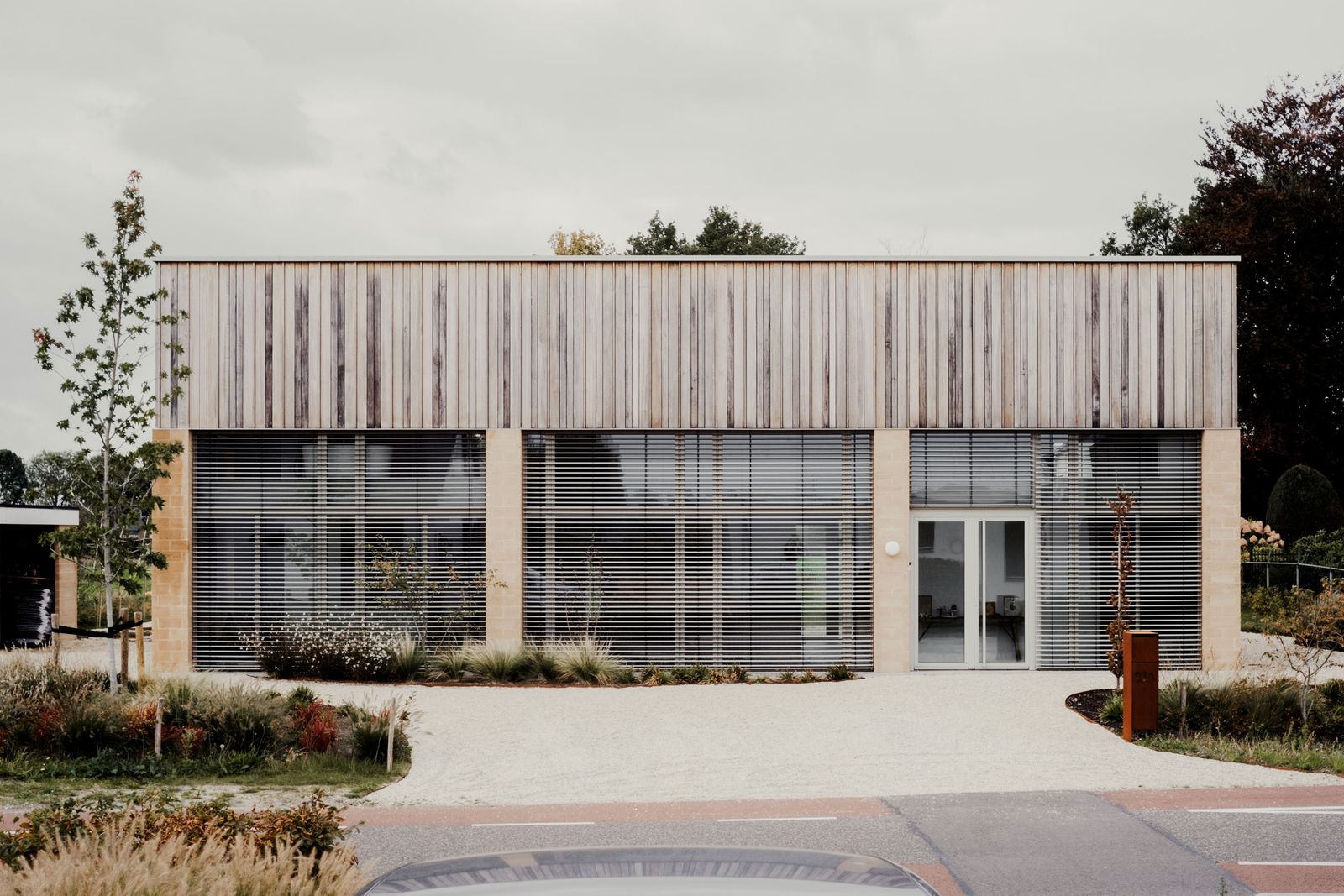
The elongated plan mirrors a vernacular once typical of Weert, but is freshly expressed with materials like fraké wood and clay blocks.
Houses We Love: Every day we feature a remarkable space submitted by our community of architects, designers, builders, and homeowners. Have one to share? Post it here.
Project Details:
Location: Weert, The Netherlands
Architect: De Nieuwe Context / @denieuwecontext
Footprint: 2,960 square feet
Builder: HSBB
Structural Engineer: BDA Engineering
Landscaping: Makers Landscape
Masonry: Rennenberg Bouw
Photographer: Riccardo de Vecchi /@riccardodevecchi.photo
From the Architect: "In the rural green surroundings of Weert, this new residence sits on a plot with unobstructed views over the farmlands. The landscape forms the foundation of the design, which harmonizes with its environment and the wishes of the residents. Together, form, material, and spatial layout create a sense of unity with the surrounding countryside.
"The design draws inspiration from the traditional langgevelboerderij (long-facade farmhouse), a building type historically common in the Weert region. As the name suggests, this farmhouse is characterized by its elongated shape and the combination of living and working spaces along a horizontal axis. This idea is reflected both in the house’s vertical layering and in the horizontal organization of its interior spaces. The layout fosters a strong connection with the landscape. Expansive rear windows open the house to its surroundings, creating a sense of freedom and bringing the outdoors in. Sunken seating areas enhance the feeling of calm and spaciousness, strengthening the connection with nature throughout the open interior.
"The building is constructed from natural and sustainable materials, chosen not only for their warm appearance but also for their environmental benefits. The exterior is clad in sustainable fraké wood, while clay blocks from the Spanish company Fetdeterra are used in both the facade and interior. The texture and color of these bricks ensure a natural integration into the environment. Moreover, clay blocks are a circular building material that can significantly reduce the construction industry’s material footprint and CO₂ emissions."
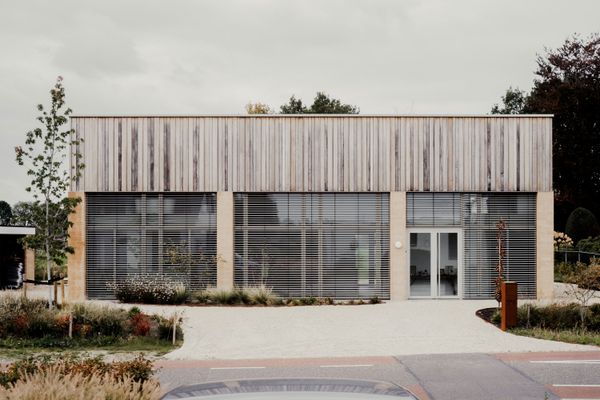
Photo: Riccardo Vecchio
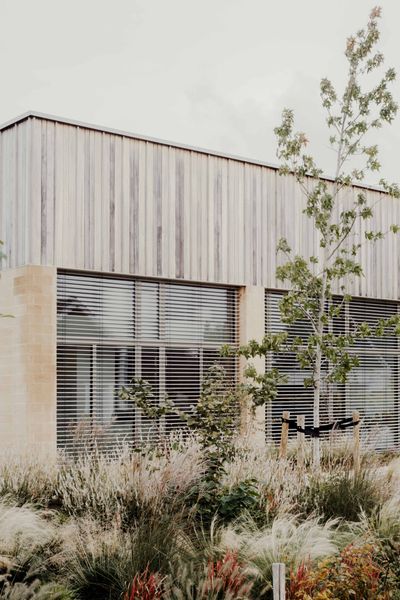
Photo: Riccardo Vecchio
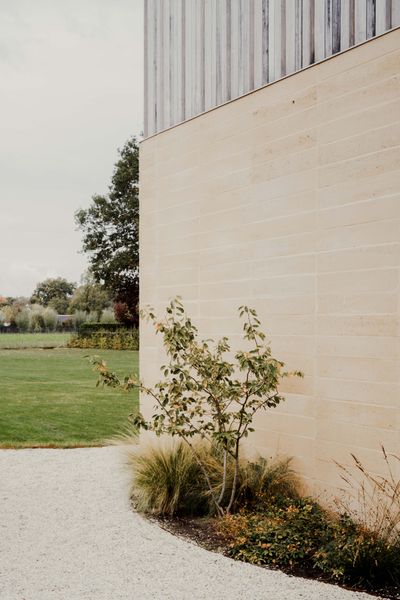
Photo: Riccardo Vecchio
See the full story on Dwell.com: This Netherlands Home Nods to a "Langgevelboerderij"—or a Traditional Farmhouse
Related stories:

No comments:
Post a Comment