
The Chinese mobile software helps you keep tabs on loved ones who live alone. To me, its popularity isn’t surprising.
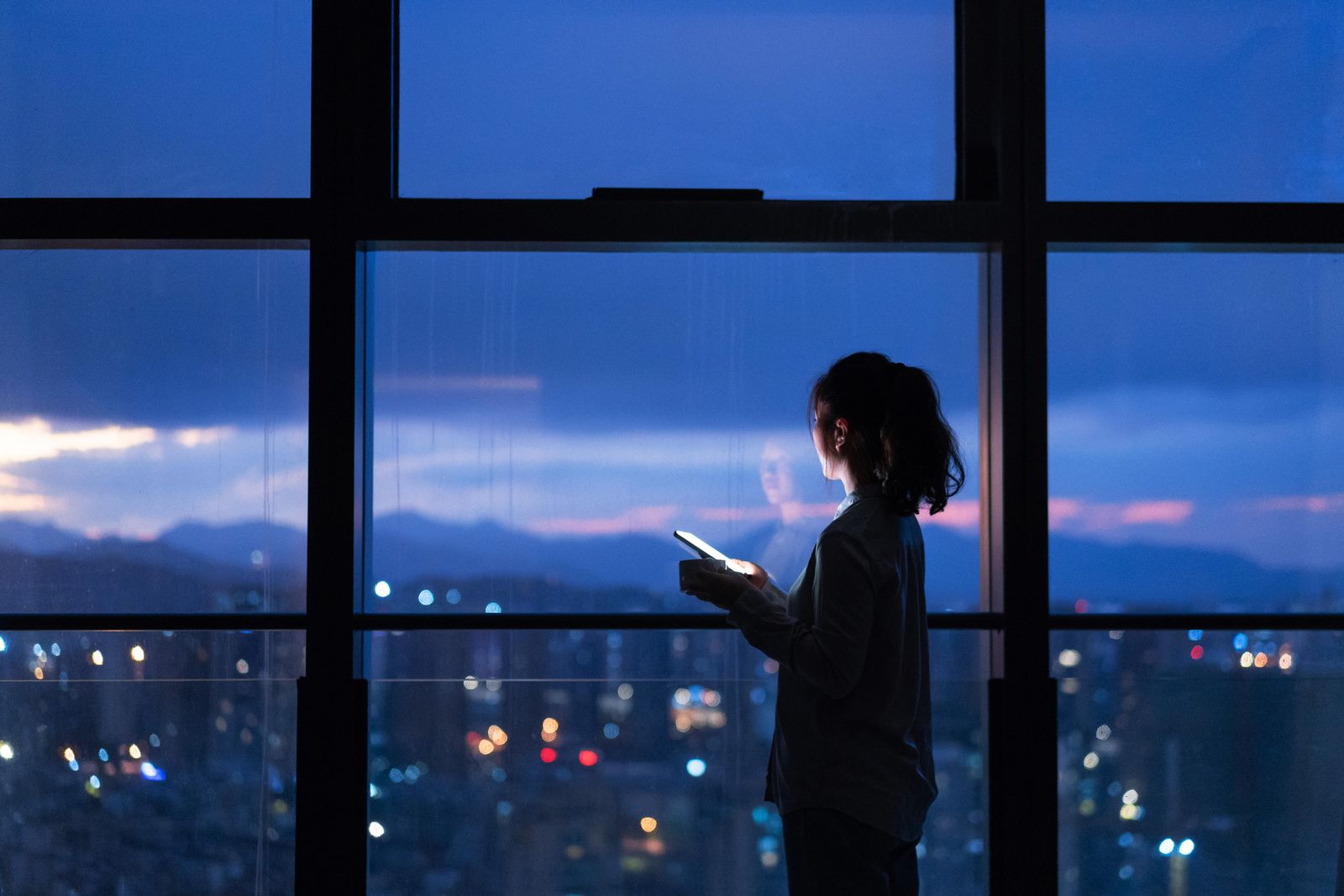
When the third text went through as SMS, I assumed my mom was dead. It was a major jump to conclusions, sure, but hear me out: She lives alone, on the other side of the country from both of her children and her siblings, and for the past few years she’s had an unrelenting series of health scare whack-a-moles, some of which we’ve been able to fly out to support with, and others we haven’t. I’ve tried to develop a habit of checking in more regularly than I used to. If a handful of days go by and I don’t have an unread text or Instagram DM with a Reel from her very specific corner of the internet, I’ll send her a quick "How are you?" or a clip from the least questionable depths of my algorithm. It’s not that my motivations for corresponding with my mother are disingenuous (how dare you!), but I’d be lying if I said that I also haven’t come to see these passive connective gestures as steady proof of life.
So a few months ago, when that text showed up as a green bubble, and I counted the days since I’d heard from her, my mind immediately skipped past many points of reason. I called my sister; they also hadn’t talked in a few days, which to her was curious, but not immediately concerning. My nervous system, however, was firing. This is it, I thought. How the @)!*#* can I check? I’m six hours away—by plane. I don’t have any of her friends’ phone numbers.
I’ll speed through the part where I called her workplace (it was the receptionist’s first day; she didn’t know if my mom had come in recently) and eventually semifrantically asked a family member on my dad’s side (my parents are divorced) who lives in the area to rush over and do a wellness check. After about 15 minutes of sitting around and letting the worst-case scenario crystallize in my head, the phone rang. Turns out, she just had a really bad case of the flu, and her phone had died without her realizing it.
Your image of me based on that story might be that I’m someone who’s quicker to assume crisis than the average person, and there might be some truth in that—I’ll admit, my sensitivity around my parents’ mortality has intensified in the last few years, since my dad also had a major health event in that period. But I feel pretty strongly that my cortisol levels wouldn’t have spiked as immediately in response to a few days of unanswered texts from my mother if not for another experience that further shook up what used to be my more default state of "everything is probably fine": that worst-case scenario actually did play out for someone I loved who lived alone, who was discovered after a family member decided they’d sent a few too many texts without responses. So in early January, when I first read about China’s viral "Are You Dead?" app in a BBC story shared by trend researcher Casey Lewis in her Substack After School, I laughed to myself about the app’s fearless branding, but also…I got it.
The app, which changed its name from "Si le ma," or "Are You Dead Yet" in English, to "Demumu" quickly after it drew international media attention, was created by three Gen Z developers as an "invisible safety net for those who live independently, without invasive tracking," according to its website. (One of the developers told Wired that the new name is a combination of the word "death" and the naming pattern of Labubu, the Chinese plushie toy that caused its own global consumer craze.) Though it reportedly launched in mid-2025, it only recently became the most downloaded paid app in China for a period, and subsequently climbed the rankings in overseas App Store charts. By the third week of January, it held the 10th spot in the paid Utilities apps section of Apple’s U.S. App Store (though by the time of publishing, it no longer ranked in that section’s top 200).
Using "Are You Dead? | Demumu, Official Genuine Version," as it currently appears in the U.S. App Store (suggesting it might’ve already inspired similar apps), is simple by design. At set up, you’re asked to enter an emergency contact name and email. A big green button with a small ghost icon in its center asks the user to "Check in today." After one tap, it goes gray with the note "Check-in successful." If a user fails to "check in" for two consecutive days, it automatically sends an email to the designated contact, urging them to check on the user in person. (The App Store page says the recently relaunched version of the app added check-in reminders to its functions.) The interface is straightforward enough for any person who’s interacted with a smartphone to operate, so the barrier to entry is as low as it probably could be for less tech-savvy, older generations—the expected demographic for a "tool" of this nature—to use. But it also struck a chord with young people. One of the cofounders of Moonscape Technologies, the app’s parent company, said he thinks the app gained its first traffic boost when it was picked up by an influencer on the popular Chinese social platform RedNote.
A blog post on the app’s website titled "Why Daily Check-ins Matter for People Living Alone" reads: "Living alone offers independence and freedom, but it also comes with unique safety considerations. For millions of people worldwide, a simple question haunts them: What if something happens and no one knows?" above a section that describes the Japanese term kodokushi, or "lonely death," for when people die alone and remain undiscovered for extended periods. The app’s sudden viral moment might boil down in part to the shock value of its original name; it’s not the first-ever digital check-in tool (in the U.S., for example, the Snug Safety app launched more than a few years ago). But its quick and wide embrace among younger users reflects a modern anxiety across generations about how we check on others—and get checked in with, too—when more people are living and spending significant time alone.
As noted in a November 2025 Economist story titled "The Rise of Singlehood Is Reshaping the World," the share of people living alone has increased in 26 out of 30 wealthy countries since 2010. In China, there may be up to 200 million one-person households by 2030, according to information from research institutions reported by state media. In the U.S. alone, over a quarter of all occupied households had just one resident in 2020, up from 7.7 percent in 1940, per Census data. Meanwhile, data from the Census Bureau’s Current Population Survey for 2025 shows that the number of one-person households in the U.S. is nearing a record 40 million. More American baby boomers and Gen Xers are living by themselves than ever before, opting to age in place (as in, live independently at home for as long as possible rather than relocating to an institutional setting), and people over 50 are more likely than earlier generations to be divorced, separated, or never married. Millennials and Gen Zers are increasingly delaying or forgoing getting married and having children. But the housing market hasn’t necessarily caught up with those shifts. In a recent essay, Dwell managing editor Jack Balderrama Morley wrote about how he’s starting to think ahead for his later-in-life housing as a "solo ager," a newer term for people who are getting older and living alone without kids or a spouse. "You’d be right in thinking that I’m a little young to be taking on this mantle now, but I’m planning ahead for architectural reasons…. The questions that solo agers have to face force us to reconsider the world: How do I want to live? Who is taking care of me? How do we take care of each other?" he asks in his piece.
Add to the equation the ways the pandemic restructured our individual and communal lives. Remote work allowed large swaths of people to relocate. Many young Americans left more populated urban cores for smaller cities and towns in search of more affordable lifestyles. When your home is your office, and vice versa, that also translates to much less time spent in proximity to other people—less passing neighbors on your commute and socializing in person with coworkers. Studies have shown that young people today spend more time at home, and are more generally socially isolated, than previous generations. That trend has been rising since before the Great Structural Shake Up of 2020. We also have something else to thank: the arrival of technology that lets people engage as much, if not more, online than in the actual world around them.
As much as the surveillance state is critiqued, and for important reasons, technology can be a godsend for communication when distance of any kind is a factor (or even if it’s not; Find My Friends can be a great way to realize someone is near you and coordinate a hang out that might not have happened). It has also allowed people to live in greater physical isolation and reshaped our notions of what constitutes legitimate social connection, not to mention raised fundamental tensions around how we set boundaries, both with others and our digital devices. An app like Demumu could help address an increasing and genuine need to keep tabs on the safety of those who live solo, and it’s a less intense step than using a full-blown medical alert system. (Though, interestingly, the global market for those is projected to more than double by 2035.)
For now, I think I’ll stick to semiregular texts for check-ins, even if it means an occasional false alarm. As it turns out, my family member’s favor to me ended up paying it forward: A few weeks later, she decided to drive to her elderly mother’s house when she couldn’t get a hold of her, channeling some of my residual nervousness. Her mother had fallen, and the surprise drop-by saved her life.
Top photo by dowel via Getty Images.
Related Reading:
I’m Single. I Have No Kids. Is My Home Ready for Me to Get Old Alone?
‘I Will Die Here’: A Conversation With My Mom About Her East Village Apartment of 27 Years

No comments:
Post a Comment