
How the places we live became compartmentalized staging grounds for our "personal brands" in the name of online content.
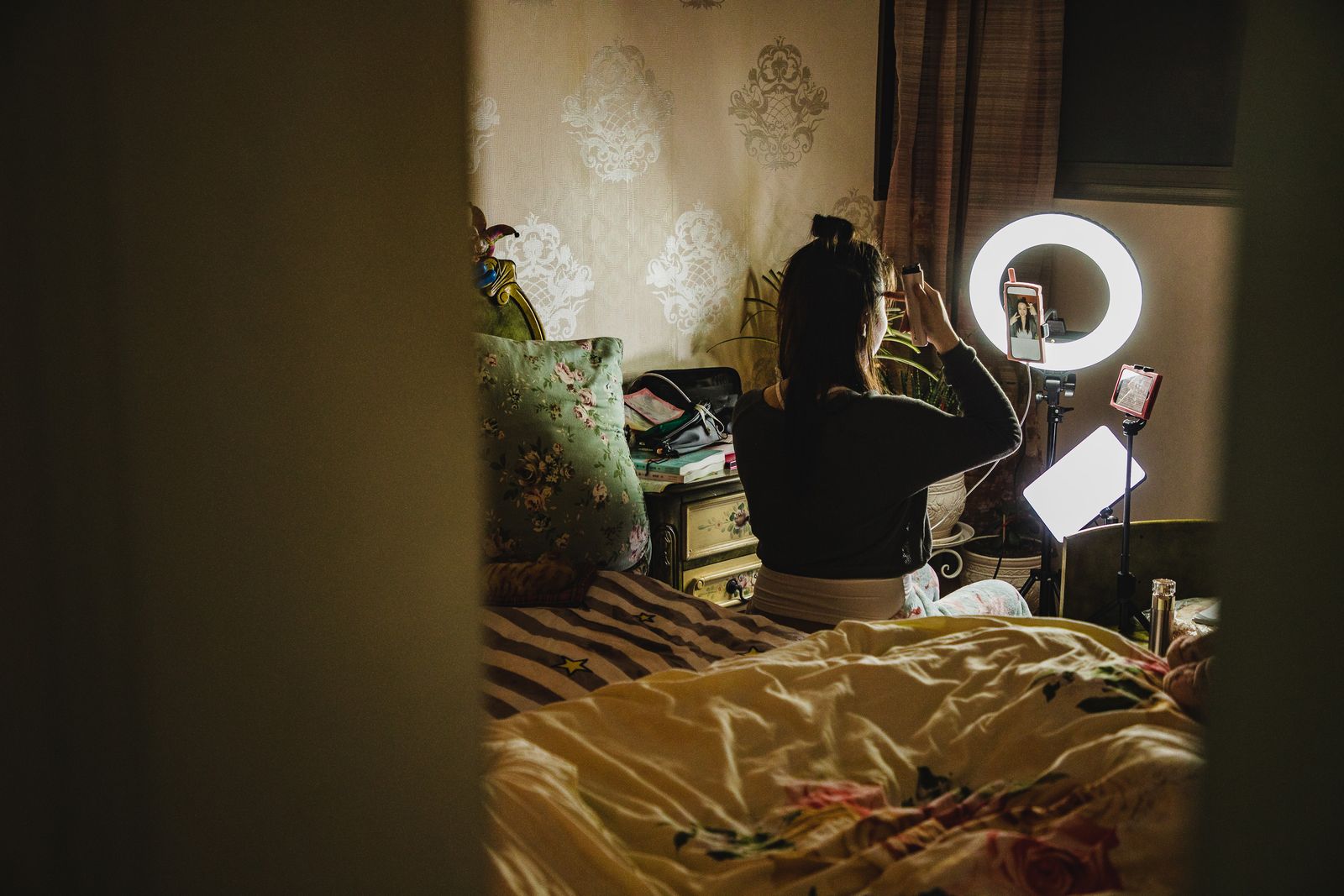
Paige Rien is an interior design consultant and former HGTV presenter whose life’s work has become encouraging people to repair the rupture—caused by the warped marketplace of home content on social media—between the way people want their houses to look and how they want to actually live. She’s made a name for herself pushing back against the taste regimes that have emerged from social media.
These taste regimes might vary in their specifics. A minimalist, "Scandinavian-chic" aesthetic has come to be associated with millennial decor from the 2010s through the early 2020s, but maximalism has its devotees too, as do "granny chic" and "cabincore" and myriad other niche aesthetics. The specifics, Rien told me, don’t really matter. Social media’s influence on home design is not about how it all looks but how it compels people to behave. It’s about an ability to replicate what you’ve seen, to conjure a legible and total "vibe" that’s easily identifiable in the midst of a hasty scroll.
Rien recalled the disillusionment she experienced when working with clients in the mid-2010s: "I’d meet a family, and I would ask, ‘What do you need for your home?’ And they’d say, ‘Well, we want Pottery Barn.’ But that’s not a need, or a desire, or even a function. That’s just a look. I found that the content of design media was becoming people’s desires, even though they have wide, varied, and interesting lives."
Rien told me that in her house’s current "season," as she put it, her four teenage sons have the run of the living room. She wanted them to feel like they could hang out with their friends and play video games and watch sports in the middle of the house. They’ve put up a football flag and LED lights, and although she doesn’t love any of it, she knows it’s not permanent.
To Rien, coexistence is one of the purposes of a home. The main influence of social media on interiors has been the siloing of spaces into discrete boxes—the nursery, where all the toys are allowed to live; the highly feminized living room (a trend that Rien is troubled to see on the rise, leading to the ongoing exile of heterosexual men and boys into "man caves"); the basement, where the teenagers can disappear into their devices. It was partly in response to the primary affordance of smartphones—the ability to disappear—that Rien became so keen on opening up her living room to her sons and their friends.
The decor might not be her first choice, but if they’re gathering in the center of the home, at least there’s less of a likelihood that anyone will fall down a rabbit hole of antisocial internet ideology or succumb to social isolation—conditions that are being flagged as epidemics among teenage boys especially. "A lot of the problems that young people are having—teens right now, in particular—might be rooted in part in the size of the American home getting bigger and bigger, because it allows people to have a totally separate life," Rien told me.
—
In Italian philosopher Emanuele Coccia’s 2021 book, Filosofia della casa, he argues for a radical blending—a rethinking of what Rien refers to as "siloing" of space—as a means of survival at the end of modernity. Social media has the effect of dividing a house’s purposes into compartments so that a space is more easily identifiable and can be used more readily as a staging ground. A clean visual field is essential for influencers, whose incomes rely on selling products inside their homes, with the interiors used as backdrops. To Coccia, this is anathema to happiness at home. Like Rien, he envisions the future home as a place that is porous and constantly changing, that is open to the world.
This starkly contrasts with the direction in which social media’s visual language is pushing home design. Beyond transforming private spaces into marketing showrooms, Instagram and Pinterest have encouraged people to think of their homes as display cases for their family brand. Consider the "back kitchen," which the New York Times identified as an emerging trend among wealthy homeowners in 2022—it is a space apart from the main kitchen, where actual cooking and mess and process happen. The back kitchen became a coveted feature of newly constructed homes on the market in the post-Covid years; influencers showed theirs off, along with their huge laundry rooms, as part of their remodels.
At this point, according to Rien, the pressures of the attention economy have forced most home influencers to renovate their homes every five years for as long as they plan to work. But this hasn’t always been the case.
In his book Building a Market, the geographer Richard Harris locates the origins of do-it-yourself home improvement in the 1950s; before this, people repaired their homes as needed, but such restoration was seen as a chore necessary for keeping a roof over one’s head, not a process by which one could broadcast taste and status.
"I can remember a time when not everyone was living in that space of constantly yearning and stretching for bigger and better in terms of houses," Rien told me. "Home Depot used to literally just be a hardware store. Now it’s become our hobby. It’s our life—it represents really deep desire."
To create a picture-perfect home that conveys skillful obedience to a given aesthetic—this is what Rien sees as the driving desire of many people who have the means to renovate and redecorate their home interiors. Social media is both the primary determinant of this desire and the rubric for the aesthetic itself. As Rien sees it, this desire has replaced other, more practical desires that people might harbor for their homes.
But those older, more emotional desires have not disappeared; they’ve just been pushed aside.
Excerpted from The Story of Your Life by Kathryn Jezer-Morton, published by Viking, an imprint of Penguin Publishing Group, a division of Penguin Random House, LLC. Copyright © 2026 by Kathryn Jezer-Morton.
Buy the book
The Story of Your Life: How Social Media Shapes the Way We Experience Everything
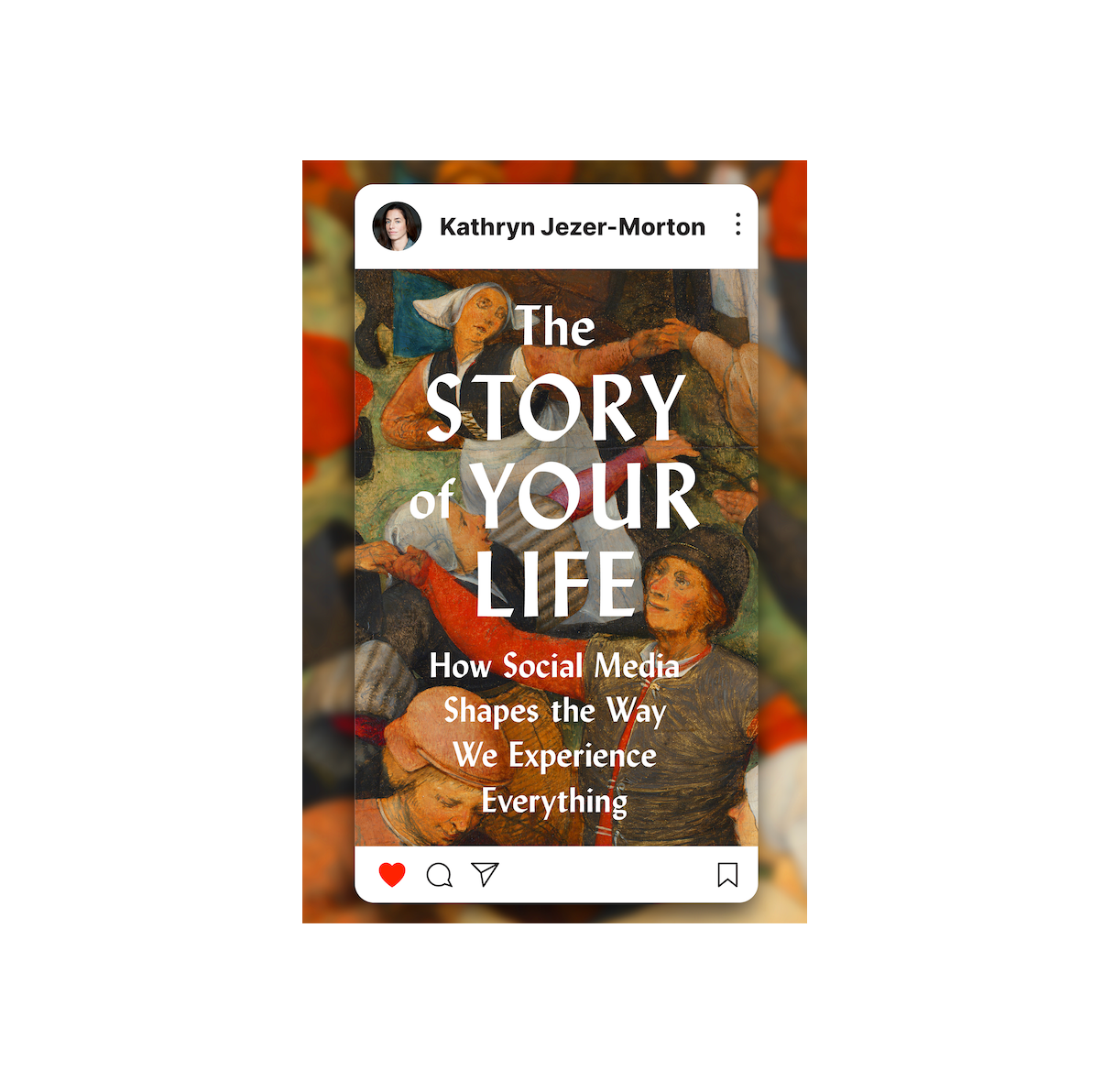
An eye-opening look at how social media shapes the stories we tell and the lives we lead Over the past two decades, platforms like Instagram, Facebook, and TikTok have revolutionized how we document and share our lives. We once archived our experiences in photo albums, and now we capture our most significant moments in reels and photo dumps. Whether we prefer to admit it or not, social media is where our history lives now. In The Story of Your Life, journalist and New York magazine columnist Kathryn Jezer-Morton examines how these algorithm-driven platforms not only change the way we share information but also shape the content itself. What stories do we choose to tell, and how do these choices reflect and shape our evolving identities? Through rigorous research and intimate interviews with everyday people, Jezer-Morton explores how the platforms on which we have told our life stories for the past twenty years have determined what those stories have come to look and sound like. Today our attention spans are short, and our stories reflect that, with spectacle and exaggeration playing ever-larger roles in our accounts of everyday life. By examining how we share, talk, and post about our milestones, vacations, homes, relationships, hardships, politics, and more, Jezer-Morton shows just how pervasive and influential our social media platforms have become in how we view ourselves and what we consider to be a life well lived. Smart, funny, and sharply observant, The Story of Your Life delivers an original and revealing look at our lives online and off and offers us a fresh perspective on the ways social media shapes the very arcs of our lives.
Top photo by Kilito Chan via Getty Images
Related Reading:
How Much Did That House Actually Cost to Build? A Shelter Magazine May or May Not Tell You
Your House Is Not the Corner Bar...but Does It Need Custom Matchbooks?

No comments:
Post a Comment