
Anand Sheth’s presentation at the San Francisco Art Fair shows how designers are thinking about adaptability and reuse.
This story is part of Fair Take, our reporting on global design events that looks up close at the newest ideas in fixtures, furnishings, and more.
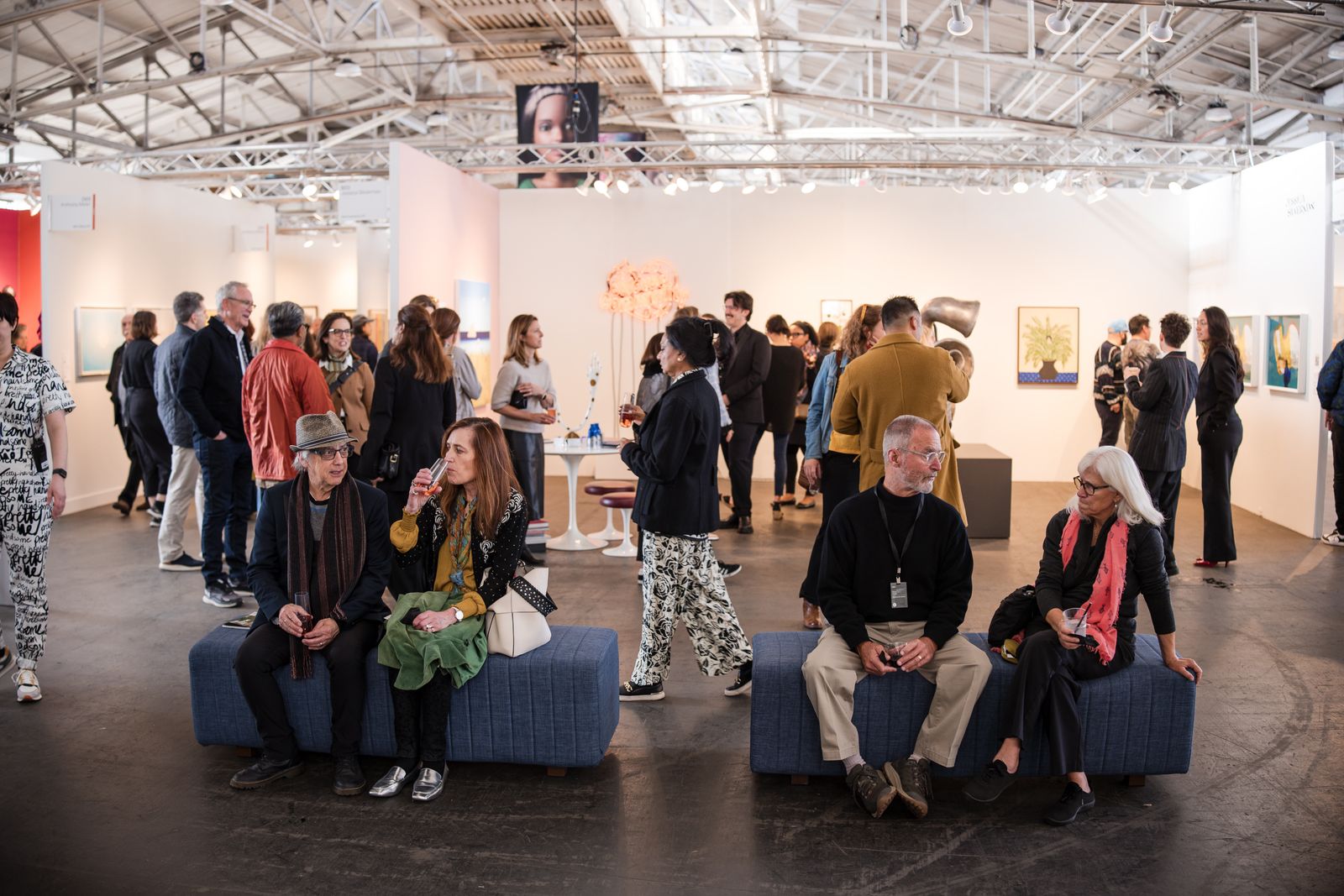
For the second year in a row, Dwell has partnered with architect and curator Anand Sheth on an exhibition at the San Francisco Art Fair, held at Fort Mason. Called "Inheriting San Francisco," the show celebrates San Francisco’s historic adaptability and explores what Sheth calls the city’s "aesthetics of vacancy" and the values shaping its urban landscape today. "It speaks to a kind of resourcefulness and innovation that feels very true to the Bay Area," adds the fair’s director, Kelly Freeman. "The constant push to create more with what’s in front of you, and to keep stretching what’s possible. "It feels incredibly of the moment."
Sheth, who’s called San Francisco home for 20 years, filled the stage of a theater with furniture, lighting, and other objects by emerging designers that represent the ideas, preoccupations, and obsessions animating the Bay Area’s creative community right now. Ahead of the show, which is now on view and runs through April 19, we spoke with Sheth about his curatorial approach, the ideas driving San Francisco design, and some of his own custom work he created for the fair.
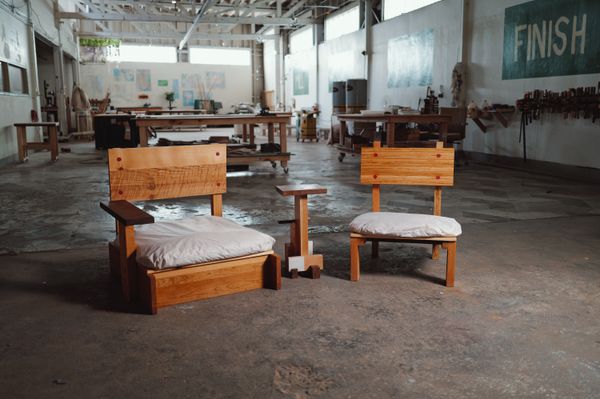
Untildef Studio, Lam Arm Chair, Nomad Chair, and Off Cut Side Table
Photo courtesy Anand Sheth
What does the theme "Inheriting San Francisco" mean to you?
"Inheriting San Francisco" is a response to supporting my emerging creative community in taking responsibility as stewards of the city. We’re at a certain place in our careers where we’re not just accepting information and getting inspired by San Francisco; we’re building our businesses and shaping institutions. With that comes this potential burden of inheriting all of the good and also the challenges that San Francisco presents.
What does it mean for you to act as both architect and curator in this context?
A real through line of my curatorial practice has been less about finding beauty in the world, though that’s important, and more about unearthing a more experimental version of beauty. In an art environment that prioritizes beauty, how do we allow people to make space in their palette for confrontational concepts and ideas? And how can those concepts align with beauty while being just as valuable as the beauty itself?
I’m trying to relate my curatorial practice to the process of architecture, where we’re promising to complete something that doesn’t exist yet, but we’re committed to its realization nonetheless. For the San Francisco Art Fair, we don’t exactly know the final look and feel of the objects we’ll be presenting, but we do know a lot about the narrative they’re communicating.
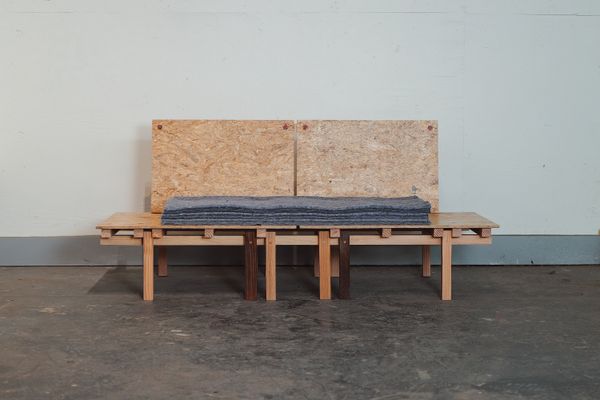
Untildef Studio, Nomad Loveseat
Photo courtesy Anand Sheth
The background, surrounding, and threshold of the stage, as well as the capsule furniture collection on stage, are made from ordinary Oriented Strand Board (OSB). What drew you to elevate that material?
OSB is an extremely ubiquitous and cheap material. When you sand it down to a certain level, it has an interesting grain pattern that feels really fluid. Last year, I was invited by a friend to be the architect and curator of a pop-up concept, and I selected OSB as the guiding material. We played into the DIY aesthetic a little bit because OSB is an inexpensive and solid material that’s often used to board up storefronts. Vacancy is not an accident; it’s programmed into the structure of our economy. I wanted to express the creative community’s discontent about not having enough space, while there’s all sorts of vacant space across the San Francisco. In this concept of inheriting San Francisco, it’s about the relationship of this material in our pedestrian experience.
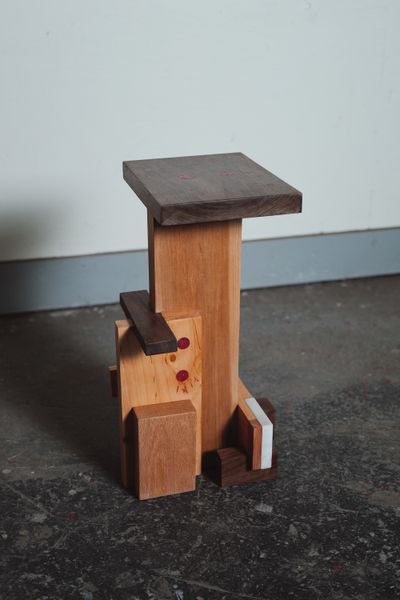
Untildef Studio, Offcut Side Table A
Photo courtesy Anand Sheth
See the full story on Dwell.com: This San Francisco Architect Has Some Thoughts On the City’s Many Vacant Spaces

No comments:
Post a Comment