
President Trump brought on the Airbnb cofounder to overhaul outdated federal websites. Now, the administration is seeking a new design hire to tackle more trivial matters of taste.
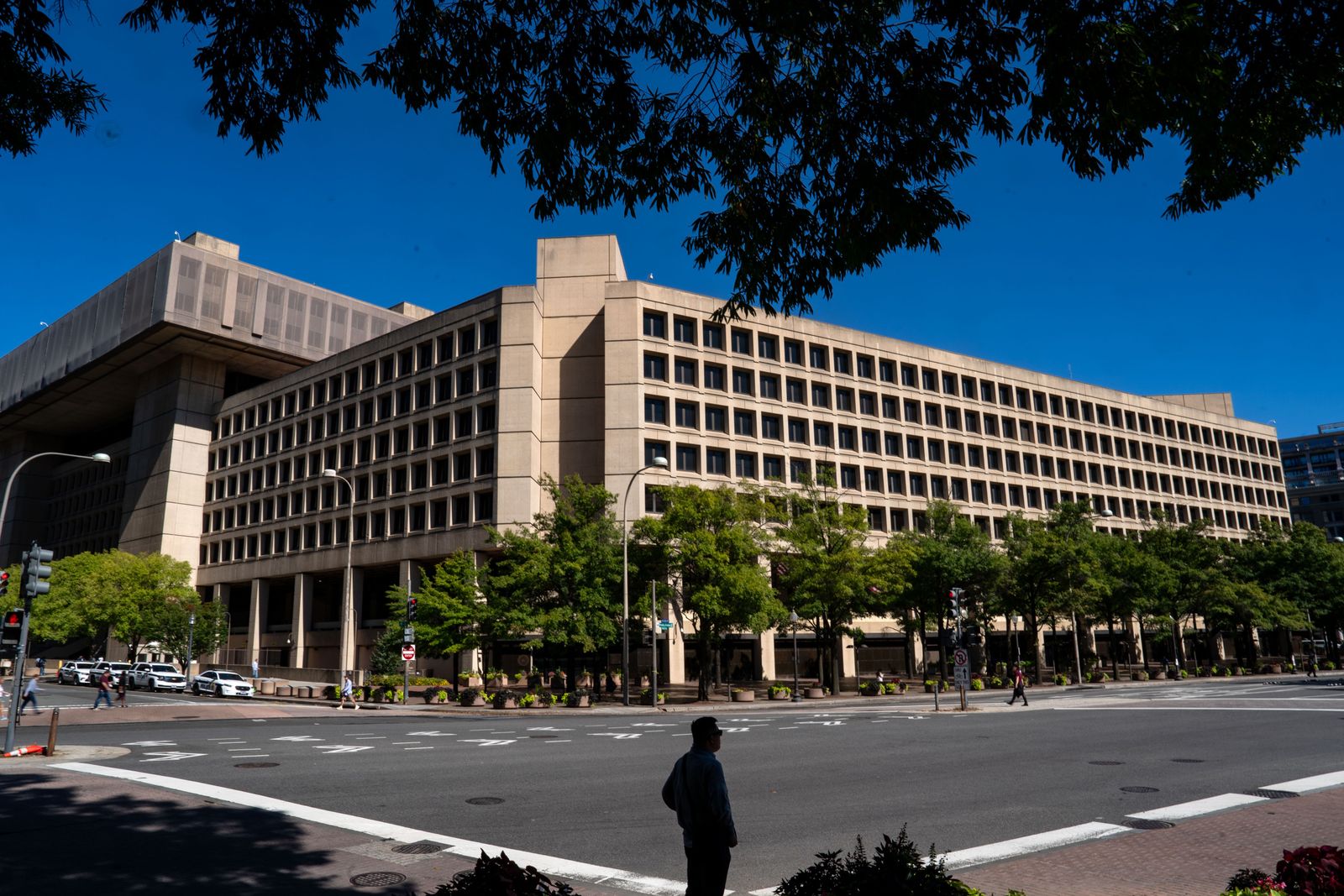
Earlier this year, U.S. Chief Design Officer (and Airbnb cofounder) Joe Gebbia spoke at a press conference alongside President Trump to announce a new federal website for discounted prescription drugs. The site itself is pretty basic: serifed gold fonts, a scroll-to-learn homepage, sparse links. It’s not a miracle by any means, most high schoolers could build it. Still, it’s exactly what Gebbia was hired to do: Overhaul U.S. government websites to make them more navigable as mandated by President Trump’s executive order, "Improving Our Nation Through Better Design." Let’s be real: This is genuinely not a bad idea, as anyone who has had to deal with social security or the IRS websites has experienced what the order calls "digital potholes." Now, it seems, the U.S. is looking for its Gebbia of architecture.
It’s nice when things get fixed, though it seems this figure would be tasked with fixing some things that may not be broken: specifically our public buildings. Much criticism (from authors and architecture institutions alike) has been lobbed at his "Make Federal Architecture Beautiful Again" executive order—requiring new and renovated federal properties be designed in the "classical" or "traditional" architectural styles of Western Europe. This month, the administration took a big step in fulfilling the architectural order’s mandates by posting a job listing for a senior architectural advisor for the General Services Administration (GSA), the entity responsible for maintaining nearly 9,000 federal properties. Think of this person as the technical and aesthetics czar, someone tasked with procurement procedures, project management, and, of course, advising on "architectural standards." But here, we’re looking not just at standards of health, safety, and welfare, as are the purview of most architects; the term "classical" appears eight times in the job listing and there are seven mentions of "traditional architecture." In the senior architectural advisor’s purview, standards are defined by a building’s style. It’s worth asking: Is "style" even a problem worth fixing?
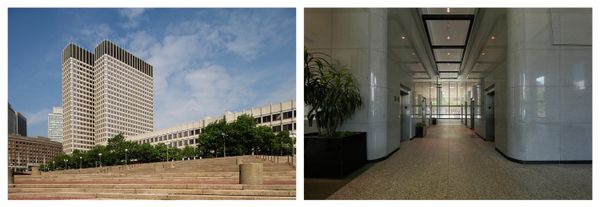
The John F. Kennedy Federal Building in Boston, Massachusetts—designed by Walter Gropius and The Architects Collaborative with Samuel Glaser—is on the long list of buildings the GSA was ordered by President Trump to sell off.
Photos by Carol M. Highsmith/Library of Congress
Throughout last year, it seemed as if the Trump administration was hellbent on solving one specific issue surrounding federal property—there was simply too much of it. Having campaigned on reducing government expenses, in his first 100 days in office the president ordered the GSA to shed 7,500 federal offices either by terminating leases or by selling off any of 500 "non-core" buildings. With that endeavor came the opportunity to consolidate a federal style. Two of the most architecturally significant properties on this culling list were designed in the modernist style: the Ludwig Mies van der Rohe–designed Kluczynski federal building in downtown Chicago and Boston’s John F. Kennedy federal buildings by Walter Gropius. Later, FBI Director Kash Patel announced that their brutalist Washington, D.C., FBI headquarters would close permanently, citing the Charles Murphy–designed building’s ongoing problem with deferred maintenance. Employees were moved to the 1998 neoclassical Reagan Building nearby, and the fate of the brutalist property is unknown. And, just this week, the GSA announced it would be selling the 1960s modernist Theodore Roosevelt Building, which has housed the Office of Personnel Management.
Unloading modernist federal buildings, however, generated new challenges: Ditching 7,500 offices while the President mandated employees to return to the office en masse doesn’t exactly support federal workers. The GSA itself is struggling to house its own; Government Workforce reported last year that the agency’s office only had workstations for 1,000 employees when 1,200 were expected to be back at a desk even after the Department of Government Efficiency blitzed through the ranks and effectively sliced off about 16 percent of the agency’s employees. At the same time, the GSA plans to quadruple its work, absorbing procurement services from other agencies. Per the job listing, the new senior architectural advisor would be responsible for projects with budgets in excess of $300 million, hinting toward the massive scale and scope of potential additional GSA work (with fewer personnel to support them).
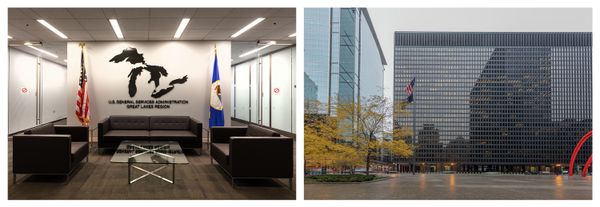
The Chicago Federal Center designed by Ludwig Mies van der Rohe is another building that was deemed "non-core."
Photos by Carol M. Highsmith/Library of Congress
2026 is bringing more than a few contentious plans for federal properties. Trump’s handpicked board of directors voted to close the Kennedy Center for Performing Arts citing a two-year renovation to building systems and aesthetics (including, per NPR, new black-and-gold seats with marble seating armrests); he has proposed painting the granite Eisenhower Building white to create some type of visual congruence with the White House; his plan to build a towering, arguably inappropriately-sized arch across from the Lincoln Memorial was approved this week. We won’t go into the White House’s $300 million East Wing ballroom drama.
Of those, only the Eisenhower Building is overseen by the GSA, though it seems suspect that this senior architectural adviser would be working with budgets that precisely match that of the ballroom. Currently there are 35 ongoing GSA construction projects; of those, 27 are ports of entry which are exempted from the order’s neoclassical mandates. The broad parameters of this role might hint that there will be other, much grander taxpayer-funded, traditionally designed government projects on the way.
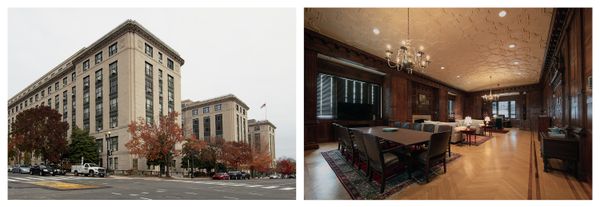
The U.S. General Services Administration Building is reportedly set to become the headquarters for the GSA and the Office of Personnel Management, allowing for the sale of the modernist Theodore Roosevelt Building from which OPM currently operates.
Photos by Carol M. Highsmith/Library of Congress
See the full story on Dwell.com: The Federal Government Is Looking for Its Joe Gebbia of Architecture
Related stories:

No comments:
Post a Comment