
In an intensive week-long session, architects, contractors, and community groups convened to develop plans that will allow the city to bump up the number of living spaces while retaining its historical character.
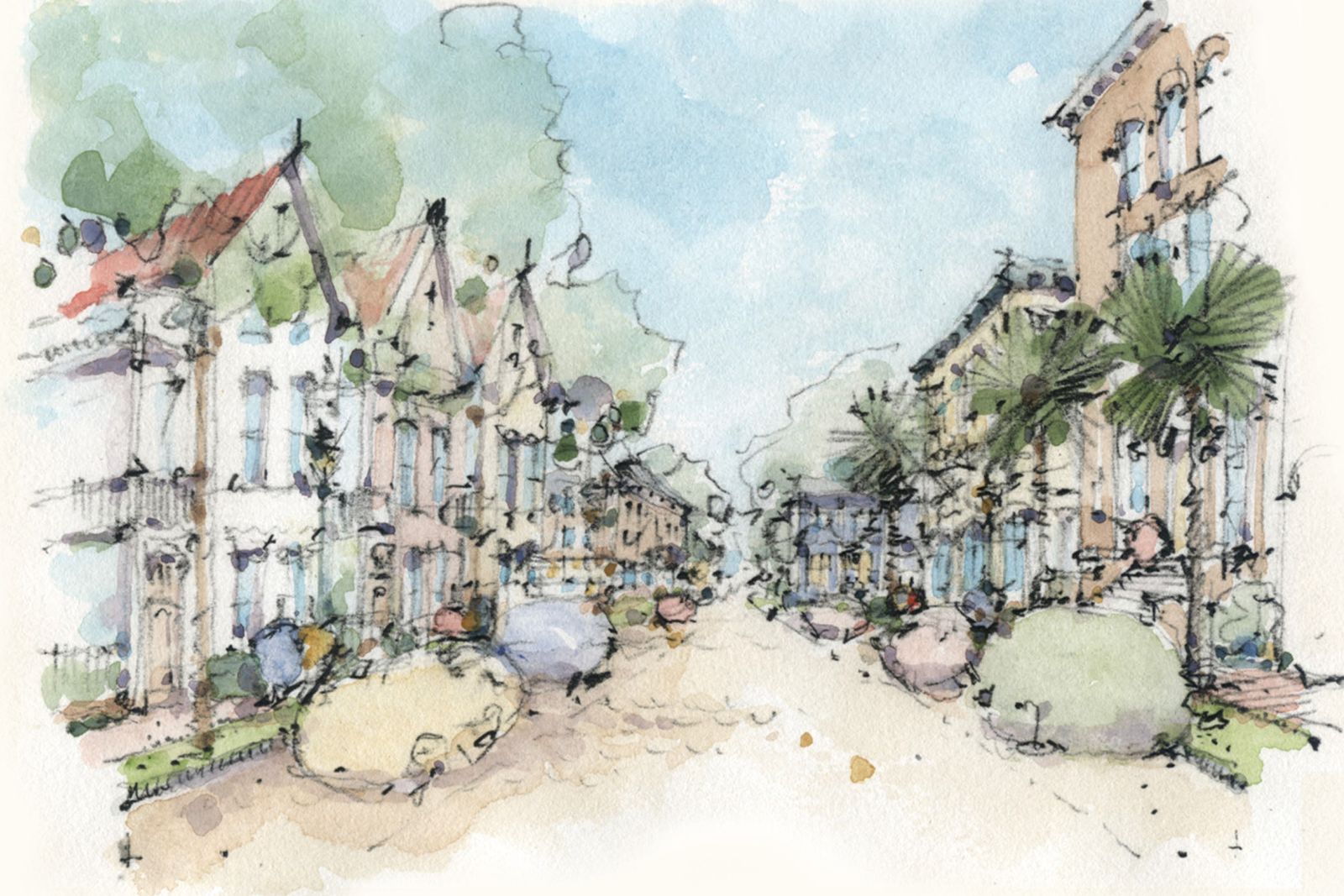
Charleston, South Carolina is the quintessential historic village, a place where brightly colored rowhomes foreground church steeples; where building ornaments are at ease in the low-rise, treelined environs. Here, the built environment reflects the city’s character, and mayor William Cogswell doesn’t want to mess with that. As a lifelong Charlestonian who worked in the private sector in property redevelopment prior to entering public office, Cogswell knows what makes his city special—but he’s also acutely aware of the challenges it faces. Charleston, like many other American cities, has underbuilt even as the population has exploded over the past 15 years. They need more homes, and fast.
To meet housing demands, the city launched Project 3500, an initiative that will build 6,000 new homes by 2032, more than half of which will be reserved as affordable housing. But this strategy isn’t following the typical housing motivators like Requests for Proposals, design competitions, or policy changes. Instead, Project 3500 has taken care of the early-stages legwork, namely locating sites and acquiring entitlements, and strategically securing financing partners. Crucially, they held a design charrette—a design and planning workshop open to stakeholders and the public—this month. The week-long event assembled a team of local and international architects, including Christian Sottile (Sottile & Sottile) from Savannah, GA, Ben Pentreath (Ben Pentreath Ltd) and Hugh Petter (ADAM Architecture) from the United Kingdom, Vince Graham (LOCI Design) from South Carolina, and architects at Historical Concepts from Atlanta, to create a design scheme that will not only be pre-approved but deeply conscious of Charleston’s historic fabric. It’s a major undertaking, but perhaps emblematic of how deep the housing crisis goes: A city located in a deep-red state led by a Republican mayor is devoting public resources to develop homes affordable to working people.
Project 3500 is the result of a year-long collaboration with pro-bono consulting firm Bloomberg Associates, which generated a report on the state of the city’s housing. The findings, per the study summary, show a population growing in numbers and wealth: Not only has the area median income doubled in the past 12 years, but the city’s population has increased at a rate about twice the national average. Building hasn’t kept up, as the report states: over the past seven years, the city has only constructed 399 new units. It has created significant pressures on working households: Home prices in the city have increased significantly—nearly 20 percent since 2021—and while rental prices cooled somewhat last year, on the whole they’ve increased since 2020 and are now more than seven percent higher than the national average.
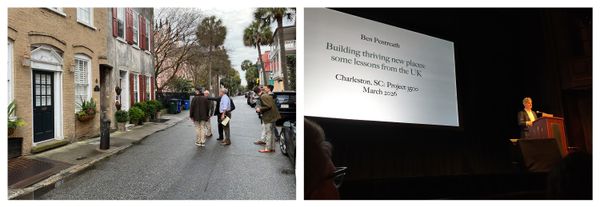
Groups toured Charleston to observe the city’s residential architecture (left). Ben Pentreath gave a lecture on relevant learnings from his work in the U.K. (right).
Courtesy City of Charleston
The problem isn’t unique to Charleston, and many cities have opted to change their regulations and requirements to address it, using legislative tools like upzoning to encourage new multifamily construction; others have loosened regulations around accessory dwelling units and parking requirements, or have pursued broader "cut the tape" initiatives to remove lengthy review processes. All of these require some degree of negotiation—and compromise—and often leave it up to the private sector to take advantage of those reforms to meet housing needs. Cogswell notes that they’ve tried the policy angle, but it hasn’t made it easier to remedy a dire situation. "Charleston is one of the world renowned built environments, and it’s also an extremely difficult place to build in," he says. Multiple review boards that are "very strict" and climate-related flooding make development especially arduous.
Cogswell had traveled to the U.K., Denmark, and the Netherlands to tour social housing projects, and along the way met with Pentreath and Petter to see their work, which is known for its adherence to historic precedents. Visiting Pentreath’s work in the town of Poundbury, Cogswell saw echoes of Charleston’s character; he aspired to the area’s mixed-use buildings and scattered-site affordable dwellings that, while constructed over the past 20 years, look and feel like historic buildings.
Back in Charleston, the city decided to devote its resources to constructing new units. Officials examined parcels of underused land they already owned (or were owned by a city-related entity like the school district or housing authority) and vetted them for feasibility based on access to transit, jobs, and services. They settled on four sites, all located in the city’s peninsula. They then brought Pentreath and Petter over to participate in the design charrette, opting to do a one-week, ultra-focused series of meetings with residents, city officials, and community groups to develop plans for these sites.
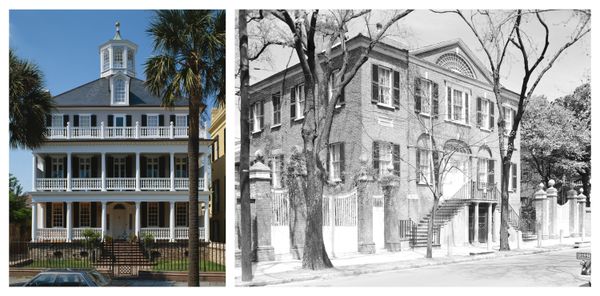
The William Blacklock House at 18 Bull Street (left) was one precent home the group used as a reference. The Colonel John Ashe House at 32 South Battery Street (right) was another.
Photos from Library of Congress
The charrette, architect Sottile explains, condenses a process that can drag on for years into one week. They aren’t uncommon practices in redevelopment, especially when designers are seeking engaged public input, yet can be another step in the already-extensive building process. But when combined with builders, regulators, and potential financers, a charrette can actually expedite a project through tough hurdles. Important to the Charleston process were the technical meetings, says Sottile, where they met with contractors and prefabricators to strategize around building elements that can be assembled quickly without sacrificing quality, as well as developers who came in from across the country to participate. The ultimate goal was to generate plans for thousands of new affordable units that would be essentially indistinguishable from the city’s market rate, classically-designed homes.
"We can reframe the way a development team approaches a project where they might spend years working through design, approvals and all the bureaucracy or the technical requirements, the neighborhood meetings," says Sottile. "The city’s taking all of that and saying, why don’t we cast our own vision and work with the development community to shorten that process so that we have projects that can be ready to develop."
Shortening the timeline dramatically changes the way capital can be brought in to do the work, he adds. The city has been working closely with the Department of Housing and Urban Development to secure tax credits, Sottile explains, while also using city, state, and local dollars. It might seem counterintuitive to create housing that matches the city’s historic charm—one built incrementally over generations—through a rapid-fire design process, but this is where the architects’ expertise in classical design shined.
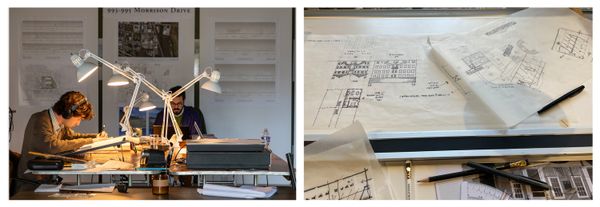
Architects actively worked on plans for the city during the charette.
Courtesy City of Charleston
See the full story on Dwell.com: Other Cities Could Learn a Thing or Two from Charleston’s Affordable Housing Plan
Related stories:

No comments:
Post a Comment