
Smooth-surfaced public spaces made the city an unlikely mecca for the sport. But spots for noseslides and kickflips aren’t all that’s lost with redevelopment.
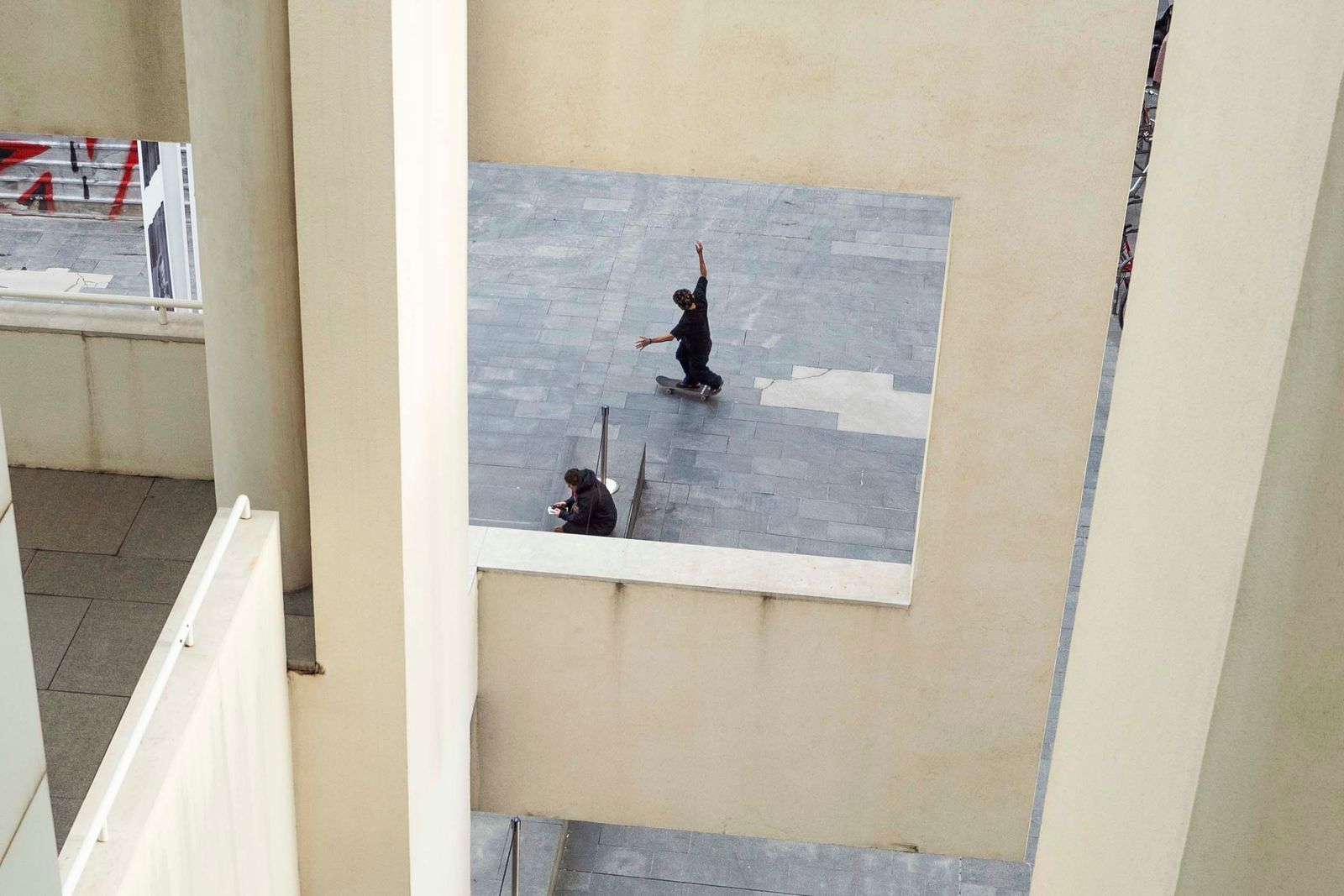
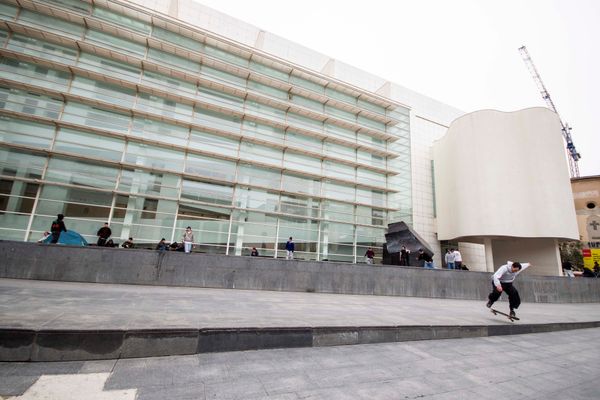
For nearly 30 years, the plaza in front of the Barcelona Museum of Contemporary Art has been central to the city’s skateboarding scene. Plaça dels Àngels was envisioned as a public space in service of the museum, yet its black granite ledges, inclined planes, and smooth, continuous surfaces—designed by architect Richard Meier as a counterpoint to the white, curvilinear facade he gave the museum—formed a perfect vocabulary for skateboarding. Located in the center of El Raval, a working-class neighborhood just a stone's throw from La Rambla, a famous promenade in the city, the square was progressively appropriated by a growing skate community, whose persistent filming and self-mythologization turned it into an accidental model for skate plazas worldwide, cementing Barcelona’s reputation as a global skate mecca.
Today, however, skateboarding at the plaza is under threat. Over time, MACBA has progressively expanded across the plaza, with its spaces now including the main building, a research center on the west side, and the Convent dels Àngels, a former nunnery that, since 2006, has served as additional exhibition space for the museum. The latest expansion project, whose construction began in February 2025, aims to enlarge the exhibition space of the convent by adding a new wing that would connect these three buildings, taking over nearly 10,000 square feet of public space and gradually enveloping Plaça dels Àngels, at the expenses of residents, but also skaters and what the city has come to symbolize globally for the sport.
Becoming a skate mecca
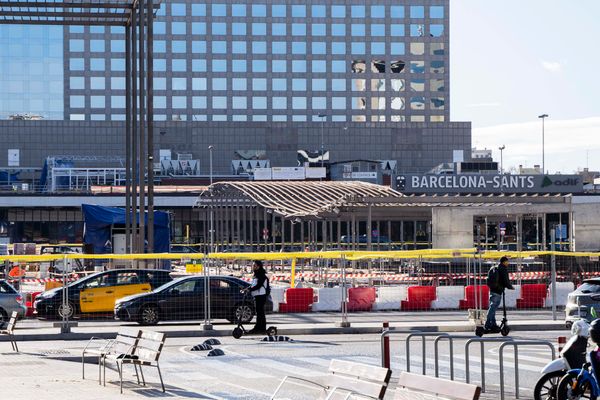
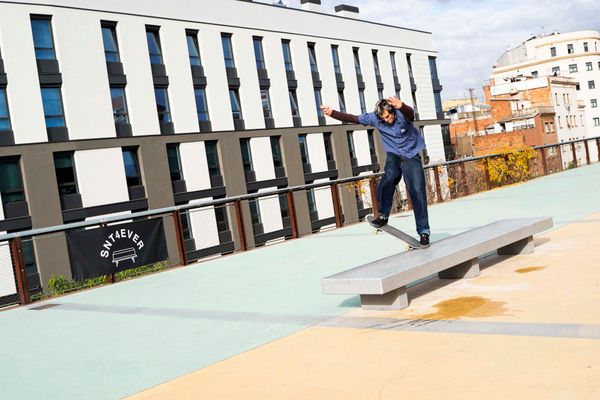
It was by chance that skate culture would become so essential to Barcelona at all. In 1983 architecture firm Estudio Viaplana-Piñon built Plaça dels Països Catalans, a square in front of Sants train station that would set the standard for Barcelona’s public space in the decades to come, and, as it would turn out, become one of the city’s best skate spots. (In spite of being recognized in 2019 as one of the city’s cultural heritage assets, it, too, is facing redevelopment. A collective dedicated to its preservation, SNT4EVER, is calling for a redesign that acknowledges its longtime use by skaters. In the meantime, the collective has inaugurated a new skate plaza in the nearby Jardins de la Rambla de Sants, developed in collaboration with local entities and Barcelona City Council, as an alternative during construction.)
Plaça dels Països Catalans is constructed above active railway tracks, conceived without trees not as a stylistic choice but due to technical constraints: planting them would have interfered with railway infrastructure and maintenance access, while also requiring complex structural solutions to support soil and root systems over the tracks. (The square was later awarded the FAD Prize—a prestigious Spanish architecture and design award—because of its pioneering design.) Its fully paved granite surface was radically low-maintenance, making it a long-term solution that was both more durable and less costly than landscaped plazas. It also supported a constant flow of people, accommodating the comings and goings of a busy train station. These qualities made Sants a model for Barcelona’s urban design, establishing the plaza dura, as they’re known, as a repeatable, democratic typology that would shape much of the city’s public space.
See the full story on Dwell.com: The Battle Over Barcelona’s Plazas Is Bigger Than Skateboarding

No comments:
Post a Comment