
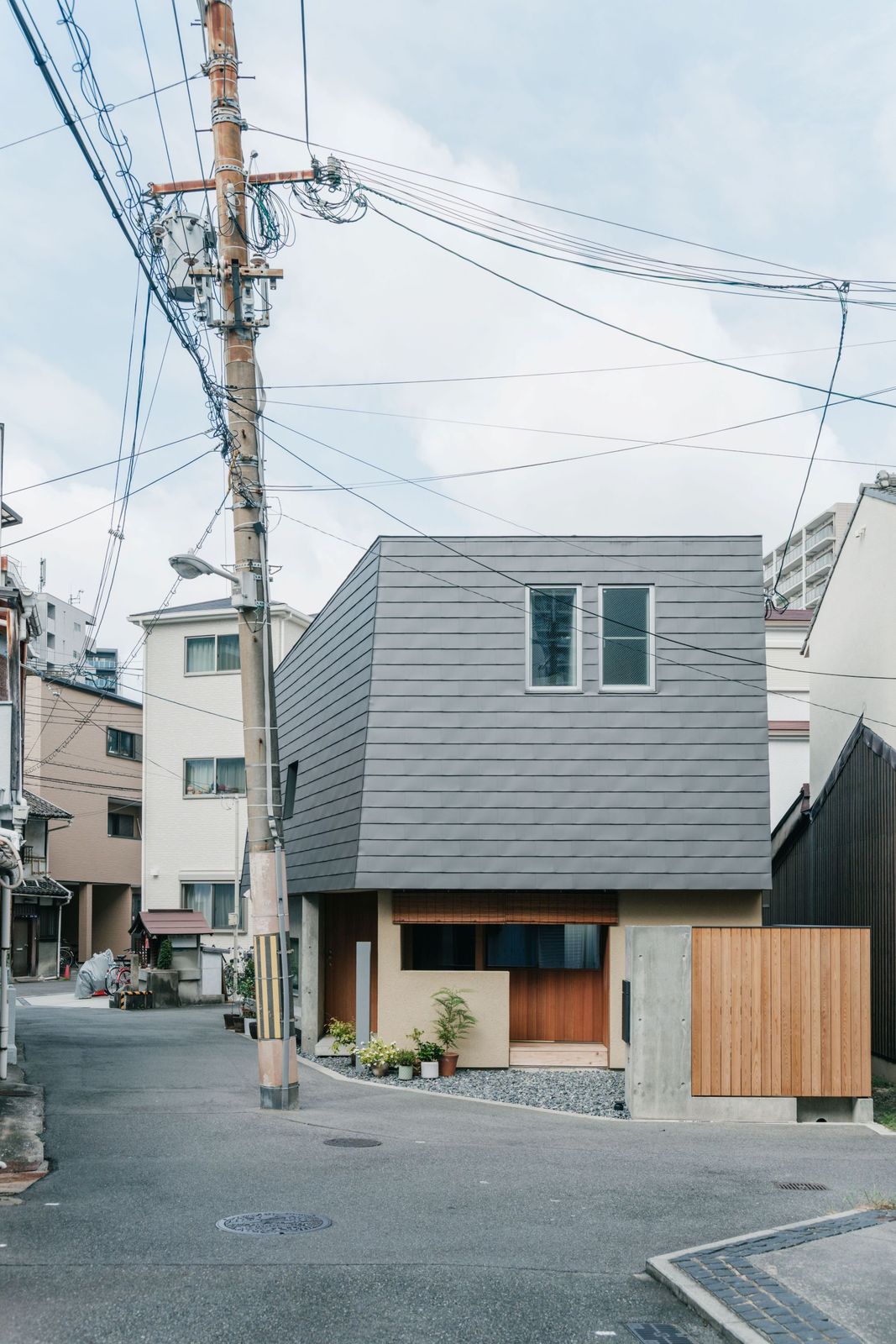
Set on an exposed lot, the residence has private, intimate interiors and exterior spaces that engage with the community.
Houses We Love: Every day we feature a remarkable space submitted by our community of architects, designers, builders, and homeowners. Have one to share? Post it here.
Project Details:
Location: Osaka, Japan
Architect: Masakazu Tsujibayashi Architects / @tttsujibayashi
Footprint: 1,130 square feet
Builder: Kosaka Komuten
Structural Engineer: Toshimitsu Miyake
Photographer: Yosuke Ohtake / @yosukeohtake_archiphoto
From the Architect: "The site is in one of Osaka’s central districts, a neighborhood where informal streets and narrow lanes weave through a mix of row houses, new residences, small shops, and temples. The area retains a warm, down‑to‑earth atmosphere rooted in its older character, and I wanted to create a home that would settle naturally into this context.
"But what does it mean for architecture to ‘settle in?’ It involves layers of naturalness, time, subjectivity, and objectivity—elements that are difficult to define logically. It is essential yet inherently unstable, shifting with human emotion. In a dense urban environment where public and private realms overlap, this becomes even more complex. With this in mind, I aimed to design a home where the residents, the architecture, and the city could continually renegotiate their relationship as feelings shift over time.
"The first step was to consider how the house relates to the street. The irregular site is bordered by roads on three sides, so the building was placed close to the property lines to secure the required floor area. Because this brings the house into close proximity with the city, I carefully calibrated the boundary between public and private. I adopted materials that age gracefully and a scale that feels familiar to people, allowing time to become part of the architecture while avoiding any sense of imposition. Openings were positioned and sized by reading the conditions of each street edge, maintaining privacy while still allowing subtle traces of daily life to filter outward.
"Building on this foundation, elements were placed intuitively, as if in ongoing dialogue with the environment and people. This intuitive process allowed the design to evolve day by day; rather than restarting, each adjustment was made while keeping the history of earlier revisions visible. As a result, a variety of contrasting elements—such as large windows and the deep eaves that conceal them, robust concrete walls and welcoming benches, or transparent and opaque railings—appear inside and out, interacting with one another to form a balanced spatial rhythm. These layered relationships continue into the interior where varying ceiling heights, floor levels, and spatial scales connect in sequence, while carefully selected materials and details create a gentle tension that guides movement and offers places of rest. Rather than dominating, the materials, details, and composition allow their inherent qualities to emerge. The way each element engages with the others feels almost conversational, creating a lively and enjoyable atmosphere.
"Ultimately, a home can only settle into its surroundings through ongoing engagement. By allowing residents to choose their relationship with the space day by day, the house gradually becomes part of the neighborhood, adapting to the subtle shifts of everyday life."
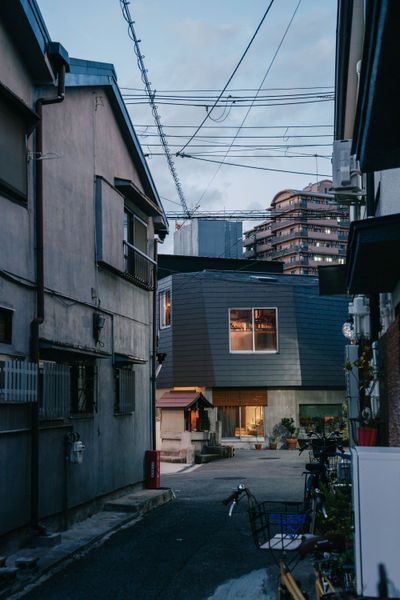
Photo by Yosuke Ohtake
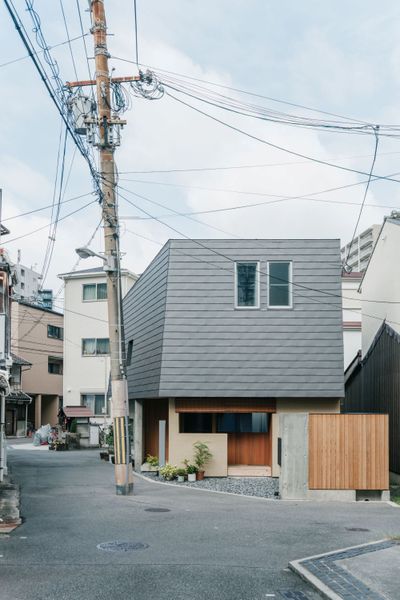
Photo by Yosuke Ohtake
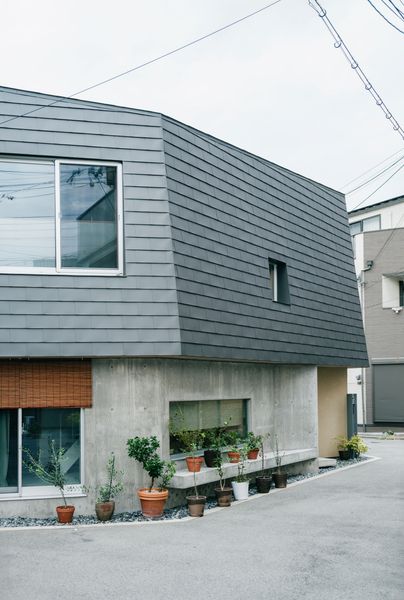
Photo by Yosuke Ohtake
See the full story on Dwell.com: In Osaka, a Small Neighborly Home Has Benches for Passersby
Related stories:

No comments:
Post a Comment