
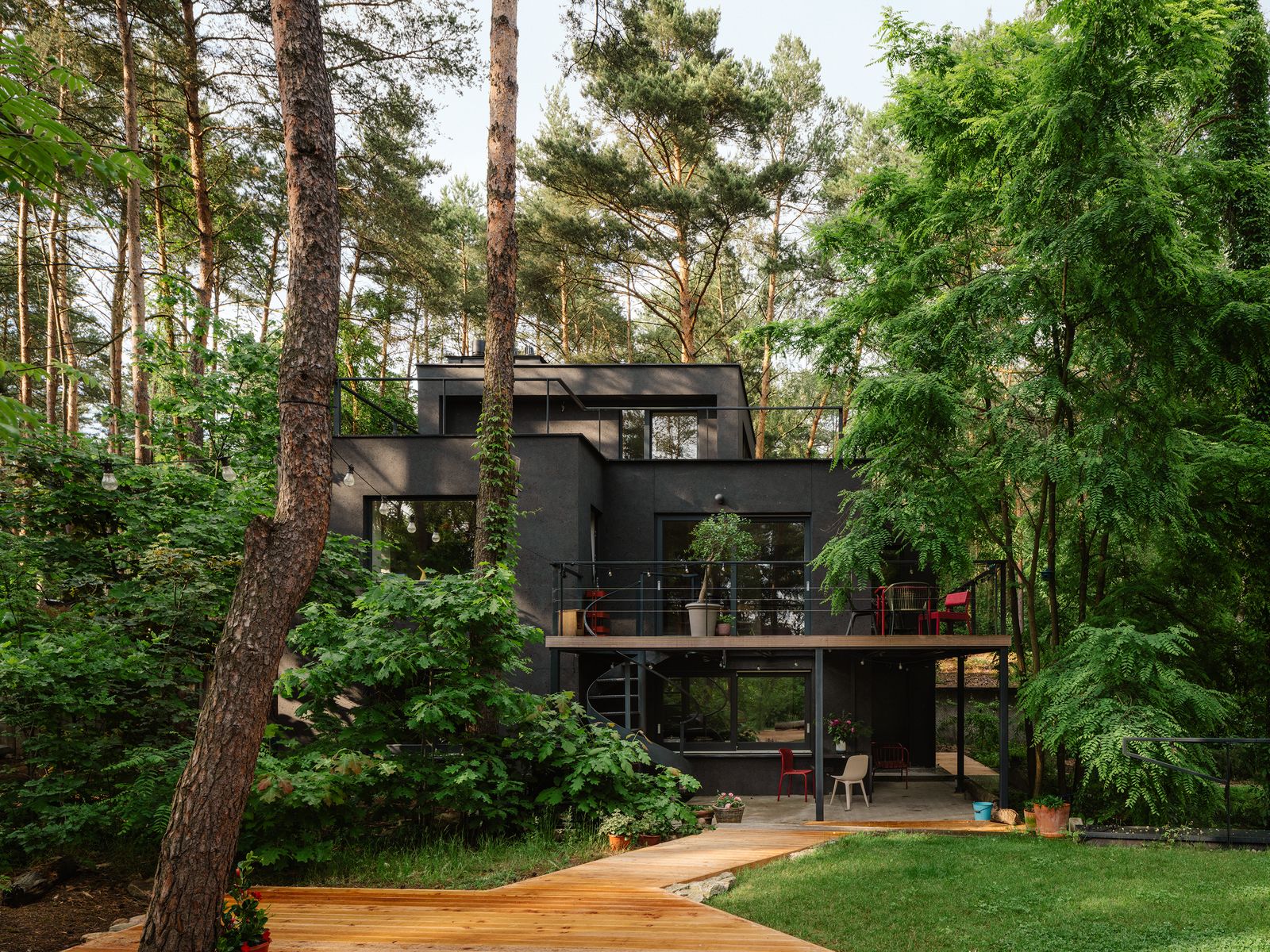
The new owners of this patchwork ’70s residence outside Warsaw loved its form so much, they actually spent more on saving it than replacing it.
Houses We Love: Every day we feature a remarkable space submitted by our community of architects, designers, builders, and homeowners. Have one to share? Post it here.
Project Details:
Location: Skubianka, Poland
Designer: SZCZ Jakub Szczesny / @szcz.art
Footprint: 1,744 square feet
Structural Engineer: Artur Wiśniewski
Photographer: Nate Cook / @natecookphotography
From the Designer: "The house is located near Warsaw, close to a river and surrounded by a gently sloping mixed forest. The owners bought it by accident when they met a real estate agent while walking their dog, who led them to a pyramid-like building hidden among the trees. It turned out to be an uninhabited residence. The building was constructed between 1976 and 1981 during a period of crisis and low availability of building materials. It was built from whatever could be obtained from construction sites and renovations of infrastructure facilities: for example, the ceilings were made of tram rails, which were laid at a slight slope above the ground floor as they pierced through the outer wall and became part of the terrace structure. Thanks to its slight slope, the terrace was naturally drained. At the same time, the floor in the living room behind the wall had a noticeable slope, and the wall was blackened by the cold and moisture penetrating through the rails. The original construction documentation consisted of a few pages with very sketchy drawings and a one-page description.
"I made it clear to the clients that renovating this house would likely be more expensive than building a new one, and certainly more labor-intensive. However, the owners wanted to keep the stepped shape of the building, were not afraid of low ceilings, and wanted to be in contact with the green surroundings. We introduced large glazing, specifically operable windows for ventilation and views. The clients decided not to have any railings on the top level. The house was to be used only by the mature couple and occasionally their two adult daughters. Initially, the building was to serve as a second home, but as the interior work progressed, the place was so relaxing that they were less inclined to return to their apartment in Warsaw. The owner is skilled with his hands, so with the help of friends, he built most of the furniture, made metalwork elements, and a door with a hydraulic lift.
"Our goal was to discreetly hide the home among the trees and create a contrast between the camouflaged exterior and the warmth of the eclectic interior. We proposed floor skylights in the terrace to illuminate one of the guest bedrooms and in the living room to illuminate the corridor on the ground floor. The building was to be as simple and subdued as possible. The windows were to attract attention, with additional wide steel frames and red accents in the interior. The house was designed to raise the level of the living area and enjoy a better view: above the low ground floor, where there are two guest bedrooms for the daughters, a study and a bathroom with a boiler room, there is a kitchen with a dining area and a living room with an additional toilet and a new terrace (the old one had to be dismantled). Above, there is the primary bedroom with a view of the forest and the river, a small bathroom, and two terraces.
"During the construction, the clients decided to change the original location of the garage and cover it with a green roof, which can be accessed from the higher part of the plot. According to the residents of the house, people in the area called it a ‘block’ and considered it ugly due to its rectangular shape and lack of at least a gable roof. However, it was precisely this set of shapes resembling figures from the game Tetris that attracted the current owners so much that they bought the house without hesitation and did not even think about replacing it with another one.
"The furniture is a hodgepodge of artifacts, ranging from old furnishings from the previous apartment to so-called ‘useful items,’ or objects that had been lying around indefinitely on shelves in the family's garage and basement. The owner claims that he still has many useful items in his new garage and that they are waiting for their turn when he builds a sauna."
Photo: Nate Cook Photography
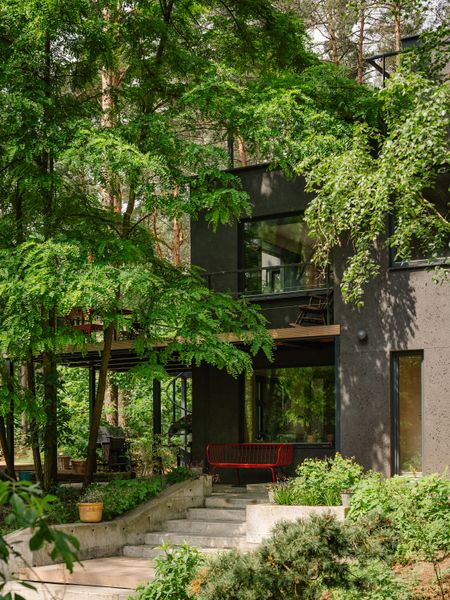
Photo: Nate Cook Photography
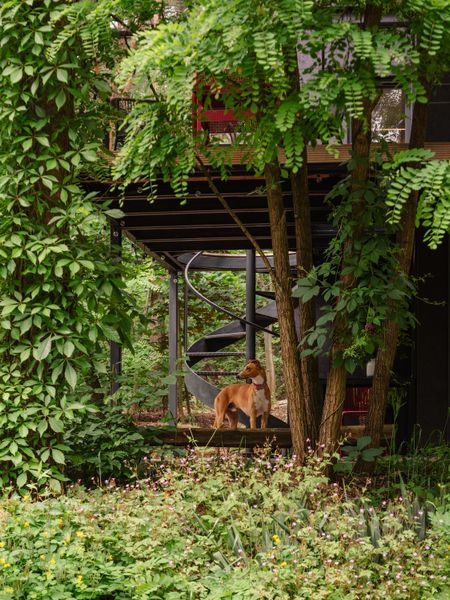
Photo: Nate Cook Photography
See the full story on Dwell.com: Where Neighbors Saw a Jumble of Blocks, They Saw Tetris Pieces With Potential

No comments:
Post a Comment