
How U.S. municipalities from Los Angeles to New York are using green infrastructure to prepare for a wetter future.
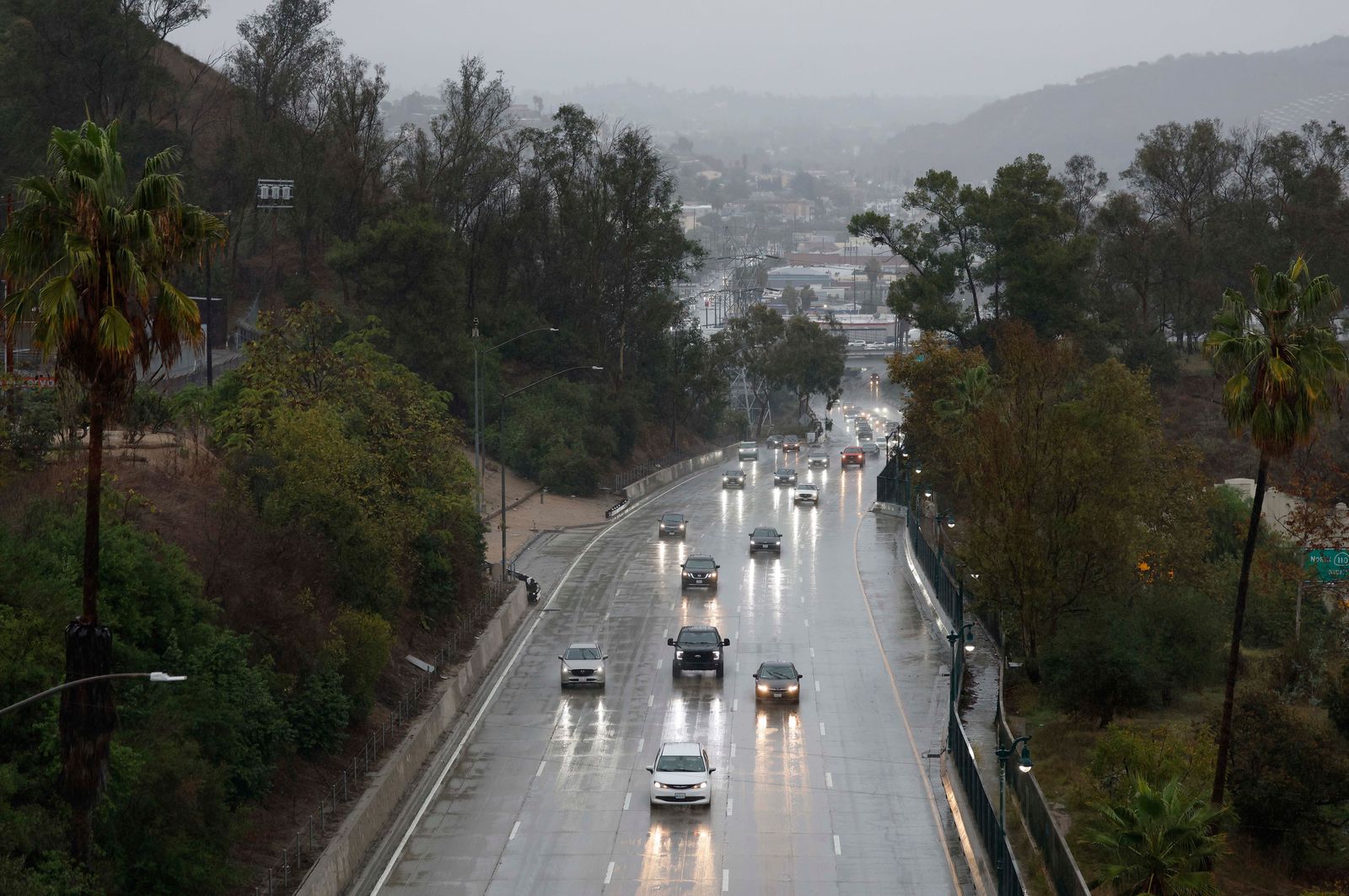
Los Angeles experienced a record-shattering deluge of rainfall in February 2024 that dumped 10 inches of rain on the city in two days, more than half of what the city usually gets each year. Meteorologists had warned that this atmospheric river could be catastrophic, and serve as a dire preview of how these weather events could become stronger and deadlier due to climate change. But the city was prepared. Los Angeles had spent years replacing parts of its concrete cityscape with permeable patches of dirt, grass, and plants, which mitigated flooding by soaking up some of the rainwater and directing it to underground aquifers before it could build up around drains and gutters. In the process, the city managed to capture 8.6 billion gallons of water within just three days, enough to service 106,000 households for one year.
L.A. is effectively drawing on the idea of a "sponge city," a model of flood prevention that directs water into landscaping rather than storm drains. The late Chinese architect Kongjian Yu popularized the concept via his firm, Turenscape, which specializes in ecologically minded urban design. He worked with the Chinese government to develop permeable spaces that absorb and release water in dozens of Chinese cities before he died in a plane crash in September of 2025. Yu, who derived his thinking from ancient Chinese wisdom, often said it’s important to "make friends with water" rather than fighting it, and promoted the holistic benefits of designing human spaces in symphony with the sky and ground. "We need a new system, a new vernacular to express the changing relationship between land and people," he said in 2024.
His concepts have taken root far beyond China. In Bangkok, Turenscape converted an abandoned tobacco factory into the 102-acre Benjakitti Forest Park, a green lung filled with ponds and native plants that absorbs water during the city’s frequent heavy rainfalls. Copenhagen, meanwhile, developed what it calls a Cloudburst Management Plan after an extreme storm in 2011 that drenched the city with three feet of water. The city plans to realize 300 projects over two decades aimed at using natural methods, such as sponge parks and rain tunnels, to absorb rainfall that climate change is making more extreme.new
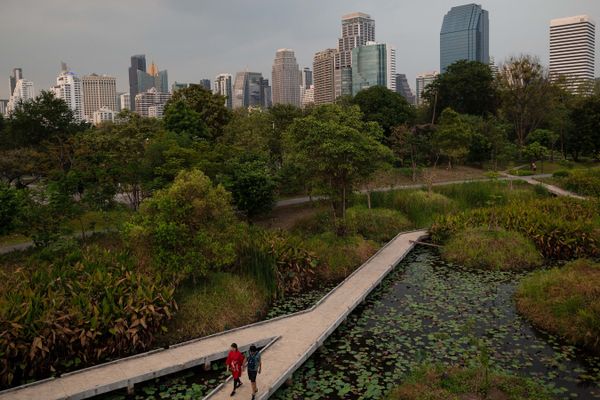
Turenscape’s Benjakitti Forest Park, in Bangkok, is a vibrant green space that soaks up rainfall.
Photo by Manan Vatsyayana/AFP via Getty Images
More U.S. cities—some where catastrophic floods are causing residents to flee, and insurance companies to pull out of some areas and hike prices in others—are implementing sponge infrastructure, too. In Atlanta’s flood-prone neighborhood of Vine City, dozens of homes deemed unsafe after a flood were razed to create a sponge park that absorbs the area’s stormwater during heavy rains and gives residents a much-desired gathering space. New York, meanwhile, has partnered with Copenhagen to develop its own cloudburst management program by designating a series of "hubs" across the city that use green methods like rain gardens and permeable pavers to prevent the worst effects of flooding, while its 1,800 square foot sponge park collects and cleans stormwater runoff from Brooklyn’s 2nd Street and reduces sewage overflow into the Gowanus Canal; Los Angeles’s Department of Water and Power says that the city’s interventions now allow it to capture more than 27 billion gallons of stormwater each year.
These sponge and cloudburst programs, some of which are pilots, are "approaches of making the city, or making developed landscapes, able to flood benignly," explains Franco Montalto, professor of civil, architectural, and environmental engineering at Drexel University.
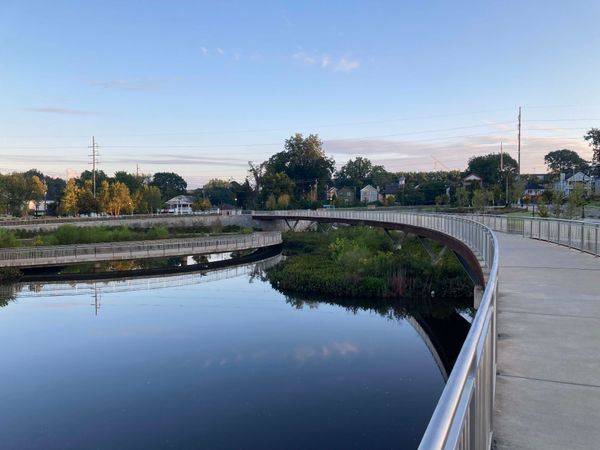
Atlanta’s Cook Park absorbs stormwater that once inundated the surrounding community, combining flood protection with a recreational space.
Photo by Jay Wozniak/Trust for Public Land
While these concepts are borrowed from other countries, the United States has its own legacy of green infrastructure, spanning decades as an alternative to so-called "gray" systems like sewers, dams, and other traditional engineering interventions that are designed to move water out of cities as quickly as possible. In the early 2000s, the Environmental Protection Agency began demanding that cities repair their overflowing sewers to comply with the Clean Water Act, which mandated reductions to pollution discharges to rivers and streams. Planners first considered making sewers bigger, which could be both disruptive and expensive, Montalto says. Low-impact development, consisting largely of natural interventions, became an attractive alternative.
"The argument that a bunch of people made, myself included, was that we need to divert stormwater away from sewers and infiltrate it into the ground," he says. "And that became what was called green stormwater infrastructure." This has often taken the form of rain gardens, or bioswales: small patches of green space installed on roadsides and sidewalks to alleviate sewer systems, which have been installed by the thousands in U.S. cities over the past two decades. While these strategies initially focused on reducing sewer discharge, not necessarily on reducing flooding, they introduced engineers and planners to the same philosophies of storm water management that guided sponge city development in China.
But the next step, Montalto says, would be the hardest, since it would require infrastructure upgrades on a massive scale. His research team studied the impact of 2020’s Tropical Storm Isaias on the Eastwick neighborhood of Philadelphia, which sits at the end of a watershed. Montalto found that, for green infrastructure to have prevented flooding, it would have needed to cover 65 percent of the watershed’s surface area—more than five times what communities upstream from Eastwick are planning now. "[Cities] would look fundamentally different," he says. Every parking lot would be permeable; every street would be connected to bioswales; every rooftop would be green. "We haven’t really been willing to do a whole hearted retrofit of urban landscapes, or design landscapes in dramatically different ways."
Much of Kongjian Yu’s work in China was logistically easier, as he designed sponge infrastructure in newly built districts rather than retrofitting existing cities. He also operated with significant government financing in centrally planned areas, a stark difference from the U.S., where implementing stormwater systems requires cooperation from agencies that are not used to working together.
Even working within ideal conditions has not prevented the most catastrophic effects of flooding. Chinese cities designed with sponge infrastructure suffered record-breaking floods between 2021 and 2023 that left experts questioning whether green interventions are happening too late to respond to the extreme weather of the future. Yu responded to his skeptics, saying that sponge infrastructure in affected areas had been implemented half-heartedly and that his concepts, when built at scale, have been proven to work.
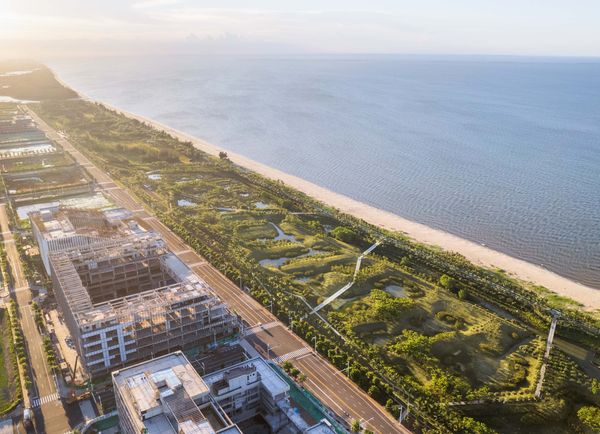
Turenscape’s Haikou Jiangdong Coastal Park, in the Chinese island province of Hainan, replaced an existing concrete sea wall with a "breathing" porous landscape using terraces and bioswales to absorb water.
Courtesy Turenscape
See the full story on Dwell.com: You Might Already Be Living in a "Sponge City"
Related stories:

No comments:
Post a Comment