Spot Whales From the Living Room of This $8M San Juan Island Retreat

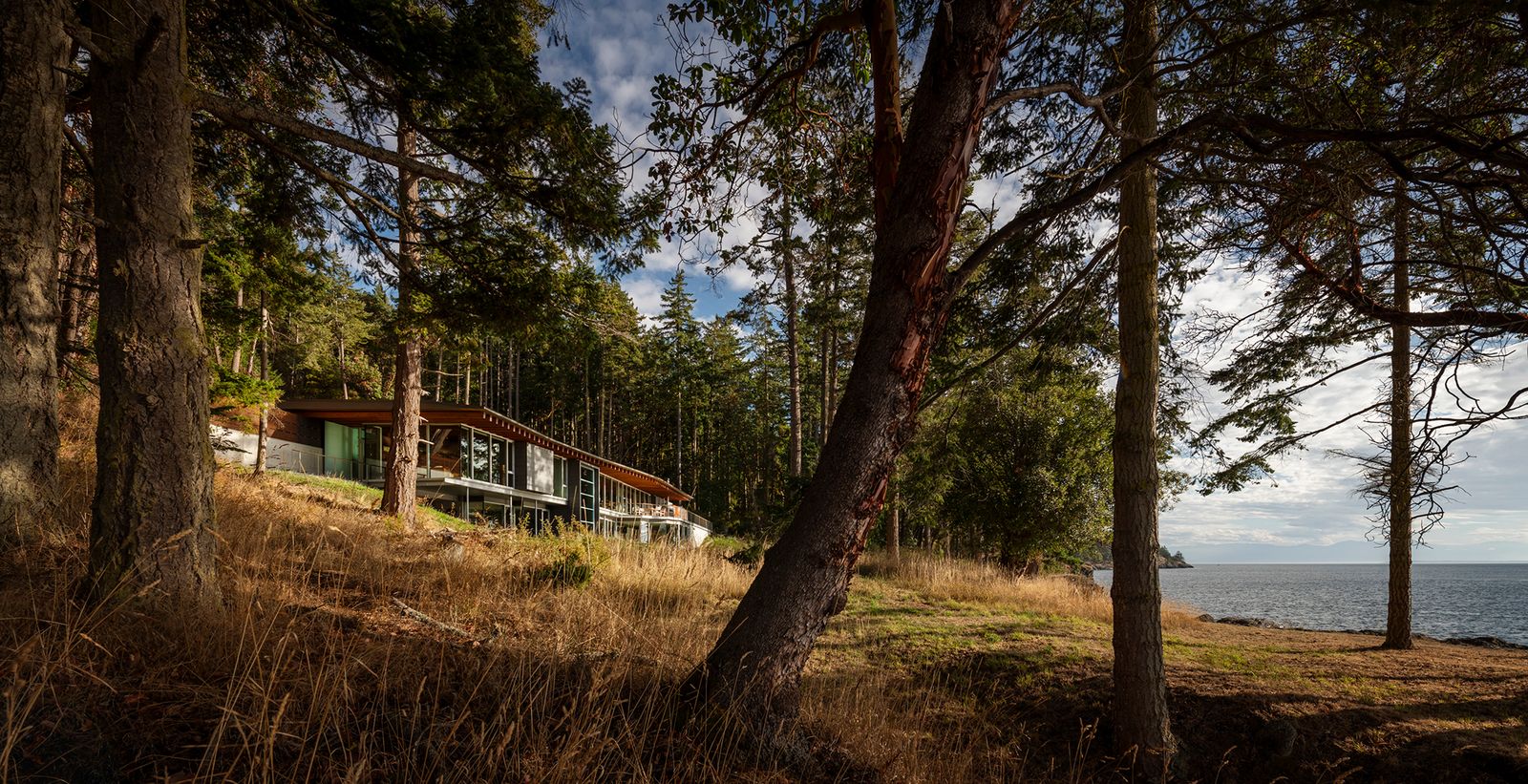
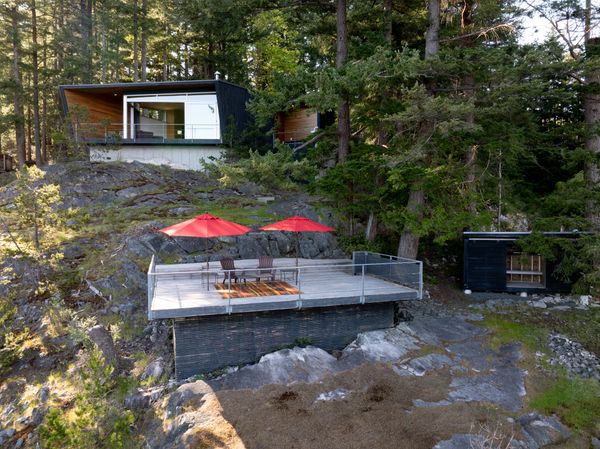
Designed by Bohlin Cywinski Jackson, the residence sits between a wooded hillside and the open water, with a glass-walled living room that takes in both.

Designed by Bohlin Cywinski Jackson, this San Juan Island residence sits between a wooded hillside and the open water, with a glass-walled living room that takes in both.

Location: 4415 West Side Road, Friday Harbor, Washington

Price: $7,950,000

Year Built: 2024

Architect: Bohlin Cywinski Jackson

Footprint: 6,483 Square Feet (3 Beds, 3.5 Baths) 

Lot Size: 6 Acres 

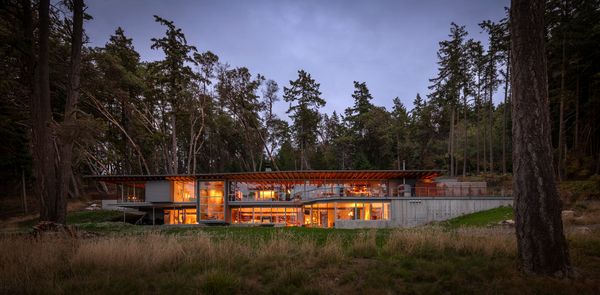
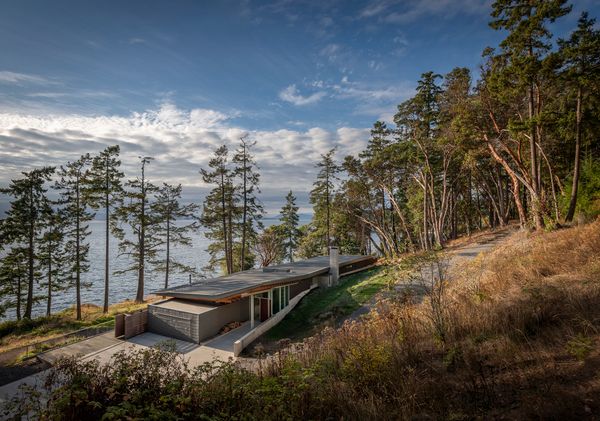
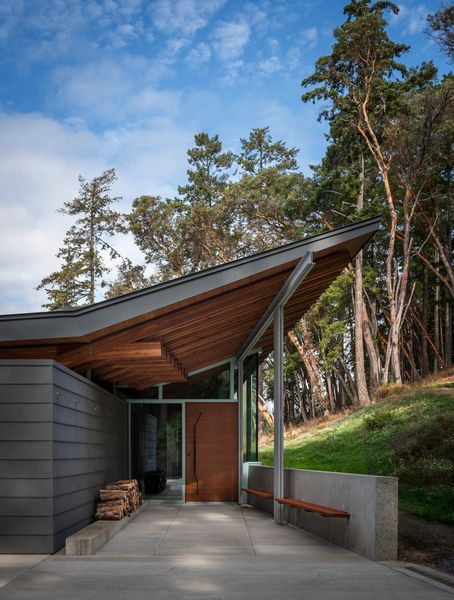
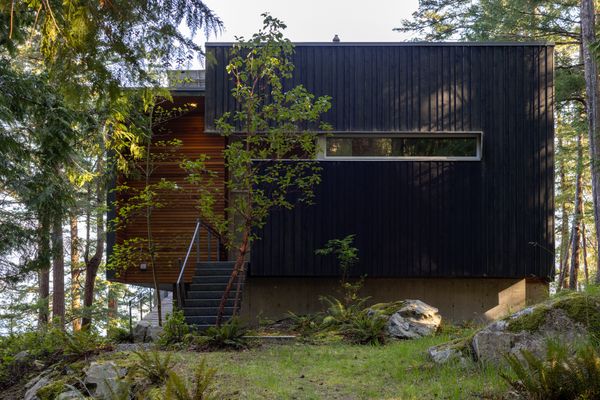
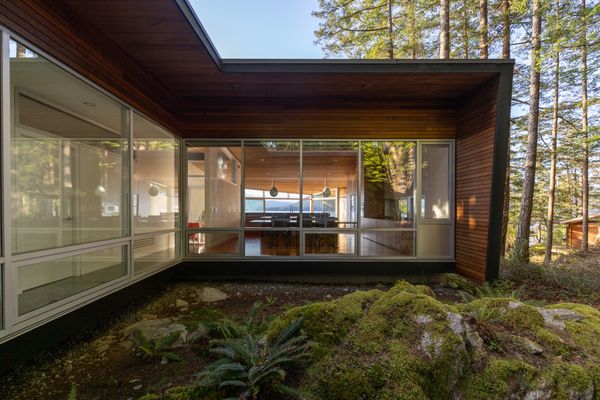
From the Firm: "This island residence was designed to offer immersion in a remarkable coastal environment. The six-acre site, on the western coast of San Juan Island, Washington, slopes downhill from a forest of Pacific madrone, alder, and Douglas fir to a rocky coastline overlooking the Haro Strait. Responding to the slope and the extraordinary natural beauty of the site, we tucked the two-story residence against the hillside, creating a modest presence while maximizing views of the ocean and Vancouver Island. Entering the site from above, the driveway turns to reveal a first glimpse of the home’s weathering steel screen and low horizontal roof through the trees. The roof’s rhythmic, interlocking Douglas fir beams rise at the entry and continue inside the home, above a custom bookshelf and closet. A subtle shift in the floor plan focuses views into the living area while maintaining privacy in the primary suite at the far end. Connected kitchen, dining, and living areas provide ample space for cooking and entertaining, and open onto an expansive deck with a pizza oven. The living area is defined by a continuous wall of bookshelves along the eastern side, punctuated by views of the forest uphill, and panoramic views through a wall of glass to the west, shielded from the sun by a deep roof overhang. A custom media cabinet and shelving anchor one end of the living area, while a monumental concrete fireplace with built-in wood storage offers an inviting place to gather on cool evenings. Pendant lights above the dining table are by the Danish designer Jørn Utzon. The main level also includes a primary bedroom suite, positioned to look out over the ocean. The home’s lower level includes guestrooms, a wine room, and flexible studio space."

The San Juan Island Residence occupies six-acres along the western coast of San Juan Island, with 400 feet of shoreline overlooking Haro Strait.

The residence occupies six acres along the western coast of San Juan Island, and it comes with 400 feet of shoreline. 

Photo by Aaron Leitz

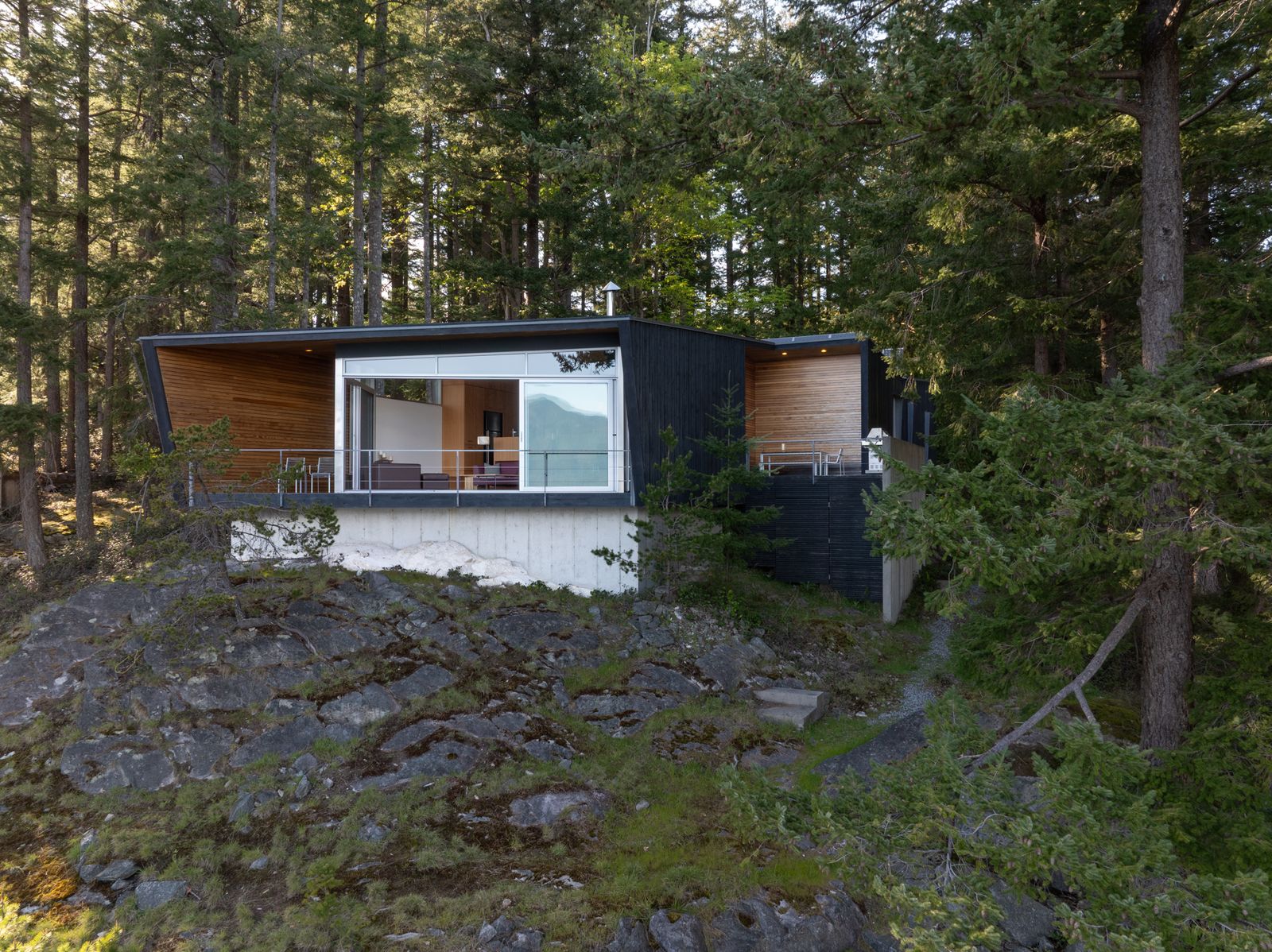
The San Juan Island Residence occupies six-acres along the western coast of San Juan Island, with 400 feet of shoreline overlooking Haro Strait. Designed by Bohlin Cywinski Jackson, the back of the home appears tucked into the hillside, while the front opens toward the water.

Designed by Bohlin Cywinski Jackson, the home has a low-profile rear facade, and a glazed front facade that opens toward the water and sunset views. 

Photo by Aaron Leitz

Photo by Aaron Leitz

See the full story on Dwell.com: Spot Whales From the Living Room of This $8M San Juan Island Retreat
Related stories:

How to Write the Perfect Beach House

The authors of novels set in summery, coastal communities describe why shoreside homes are such a staple of fiction, and how they design ones that feel real.

Welcome to Beach Week, our annual celebration of the best place on Earth.

It’s a sign of summer as sure as longer days and warmer weather: the sudden proliferation of beach reads at the entrance of your local bookstore and neighborhood library. That term can mean many things, but often it’s quite literal, indicating summer-set tales with colorful, eye-catching covers featuring dazzling stretches of sand, inviting umbrellas and Adirondack chairs, and patches of tall grass you can practically hear shushing in the ocean breeze.

And, of course, beach houses.

The beach house is a mainstay of fiction, a trope that cuts across audience age and genre: young adult, romance, women’s fiction, literary fiction, historical fiction, and even the occasional James Patterson thriller all find themselves set in and around them. It’s not a new development, either; paperback bestsellers in the space have been around for decades, like Judy Blume’s 1977 Summer Sisters, set on Martha’s Vineyard, and Iris Rainer Dart’s 1985 Beaches, the source material for the tear-jerker classic movie starring Bette Midler. But the trend has surely been supercharged in recent years by the success of Elin Hildebrand’s Nantucket-set oeuvre and Jenny Han’s The Summer I Turned Pretty, now a wildly successful Amazon show.

"The house was large and gray and white, and it looked like most every other house on the road, but better," says Belly, the protagonist of The Summer I Turned Pretty. "It looked just the way I thought a beach house should look. It looked like home." These settings often serve as a way to tell stories about family—but they lean into the messiness, acknowledging the fact that home is always just a little bit complicated.

Indeed, one of the reasons beach houses are such a staple of fiction is that the setting meets perhaps the number-one requirement for a powerful trope: it offers both familiarity and variety. Every coastal community has its own architecture and its own rhythm, and "the beach" encompasses everything from rutted dirt roads to the Kennedy compound on Hyannis Port. But there are common characteristics from book to book: The fictional beach house isn’t so pristine that you can’t track at least a little sand in on the floor. A perusal of bookstores and library shelves suggest New England and the Outer Banks seem to be particularly popular settings, although California, the Maritimes, and even the Great Lakes do make appearances. Locales like the Gulf Coast are less thoroughly represented: the predominant vibe is less rattan decor, foldable chaise loungers, and button-down fishing shirts, more cedar shake siding, Adirondack chairs, the occasional rollneck sweater, and, of course, enormous clouds of blue hydrangeas.

When author Meg Mitchell Moore was mentally designing the beach house at the center of her new novel, Down With the Shipmans, she knew her location: Jenness Beach in Rye, New Hampshire, which she’d visited previously. She knew the general style of structure in the area—low to the ground, right on the beach—and she knew she wanted a house that had started out as a relatively modest 1960s cottage and grown over the years. So she did some research at the local historical society, chatted with an architect about considerations like zoning laws, and peeked at vacation listings. She knew she definitely needed a distinct outside: "That was super important, because a lot of those homes have a patio, and I had a lot of scenes that are taking place out on the patio."

The result is well-loved and just a little bit ramshackle, with a sunroom full of old board games and a garage full of junk. It’s a house that’s, as she writes, been "expanded, renovated, insulated, shored up," and it’s "decorated in what might optimistically be called ‘cozy chic’ but more accurately ‘jury-rigged haute.’ Rattan baskets hold magazines, throw blankets, the odd doll or toy…. The kitchen, redone fifteen years ago, has the white cabinets and black granite countertops of the time, after white became the new brown but before gray became the new white."

Often, these houses aren’t particularly new, lavish, or large. In The Summer I Turned Pretty, Belly sleeps in their host’s childhood bedroom, with faded calico wallpaper and white furniture; "Everything about my room was old and faded, but I loved that about it. It felt like there might be secrets in the walls, in the four-poster bed, especially in that music box." A sense of ease carries through into the Amazon adaptation: "It isn’t pretentious but rather warm and welcoming. It is the kind of place where you can walk in from the beach and put your sandy feet on the coffee table," Season One set designer Beth Robinson told House Beautiful.

Catherine Newman’s 2024 novel Sandwich tracks one family’s week on Cape Cod, crammed into a rental they’ve returned to for many years. Our introduction to the cottage is particularly frank about the particularities of coastal architecture: We meet narrator Rocky as she’s hovering over her husband, who is plunging the toilet, part of a long-running battle with the ancient septic system. That house is based on one Newman and her family rented for 25 years: "When we rented it, its main boast on VRBO was ‘architect designed,’" she recalls. "That was its main flex. And we were like, who else would have designed it? What kind of a flex is that?" And so rather mentally designing a house from scratch, she took notes for years, thinking she’d like to write about the Cape at some point.

"I just wrote down every quirky thing and every archetypal thing," Newman explains. "The things that are like, oh everybody has this experience at a beach house, and then the really quirky things that were our particular experience that would evoke other people’s quirky experiences anyway. Even if your house that you rent doesn’t smell like mice and coffee, you’ll know what I mean." She gathered up details and experiences: a Scandinavian bowl decorated with enamel mushrooms, a memorably rickety bamboo coffee table, sand all over the floors, wet towels everywhere, the outdoor shower, the beach roses, the troublesome septic system.

The more frustrating aspects, in fact, become tools in the writer’s hands. "If you’re in a classic Cape Cod beach house, there’s going to be a moment where you’re in the outdoor shower, and the sun’s going to be on your face and the sky’s going to be blue and you’re going to smell the beach roses and it’s going to be this sublime experience, and then a minute later you’re going to realize that your grandchild has snapped her foot in a mouse trap because the house is infested with rodents," says Newman. "That kind of up and down, that’s probably what you’re already doing in the story, and so the beach house is going to be a character in the story, and sometimes it’s going to be amazing and sometimes it’s going to be totally constraining."

The fictional beach house is a treasured hand-me-down with a few dings and a bit of flaking paint—but it’s also a bit of a powder keg, too. "Anytime you put a lot of people, especially people who are related, in a relatively small space for a week, it’s really fun to see what happens," says Moore. "I love that a beach house is typically, unless you’re super wealthy, not gigantic, and so you usually have multiple generations of people under one roof for a short amount of time in a way you might not any other place, and you get to watch the fireworks—literal but also figurative fireworks."

"Too many people in too small a space, it’s kind of like a gun in the first act of a play—you know something’s going to happen because everyone is so combustible in that scenario," says Newman. "What I wanted was for a basically functional, harmonious family to nonetheless be compressed into something like revelation."

Not only that, but a family beach house is a place of complicated nostalgia: "You’re probably bringing up memories of things you don’t think about during the year," says Moore. "There might be a seashell that you collected when you were ten years old, and it’s sitting there and it reminds you of something." The result: an argument that would never have happened at a neutrally decorated Airbnb that you’ve never seen before.

The key ingredients are long familiarity and layers of accrued memories: "The kids would always walk in and be like, oh, it smells like the beach house!" says Newman. "You would smell the smell and remember the last year when you walked in and smelled it, which reminds you of the year before that, everything telescoping."

The power of the fictional beach house lies in the juxtaposition: beach houses are an object of escapist fantasy, but at least as they usually appear in fiction, they’re more about weathered, comfortable familiarity rather than polished glamour. At the same time, they’re a way to explore class differences and financial disparities, within communities and within families, people bumping up against each other, often temporarily, dipping in from other worlds. They’re nostalgic, but they make great settings for nuclear family meltdowns about old hurts, or even just bittersweet moments of realization and transition.

The fantasy of the beach house is so established and powerful that authors can turn it upside down, too. Emily Henry’s bestseller Beach Read—currently being adapted for the big screen, starring Phoebe Dynevor and Patrick Schwarzenegger—features a sort of funhouse mirror version where narrator January retreats when her life falls apart. It’s the opposite of a nostalgic haven: It’s a lake cottage she knew nothing about where her father lived an entire double life with his mistress, which she finds out about at his funeral. She says her mother would have decorated it in "creamy, calming neutrals," a classic beach house color palette; instead, it’s got a blue-tiled kitchen described as "funky," hand-painted furniture, a couch covered in mismatched pillows.

But it’s still got cornflower blue shingles and snow-white trim, a "fairy-tale" porch and breeze-tossed beach grass, reminders that this is, after all, a beach read. If you must have a complete emotional crisis—as we all do, once in a while—it might as well be sitting in an Adirondack chair.

Related Reading:

How the Owners of The Ripped Bodice Took Their Renovation Into Their Own Hands

A Love Letter to the "She-Devil" Mansion, a Barbie Dreamhouse Turned Villain’s Lair

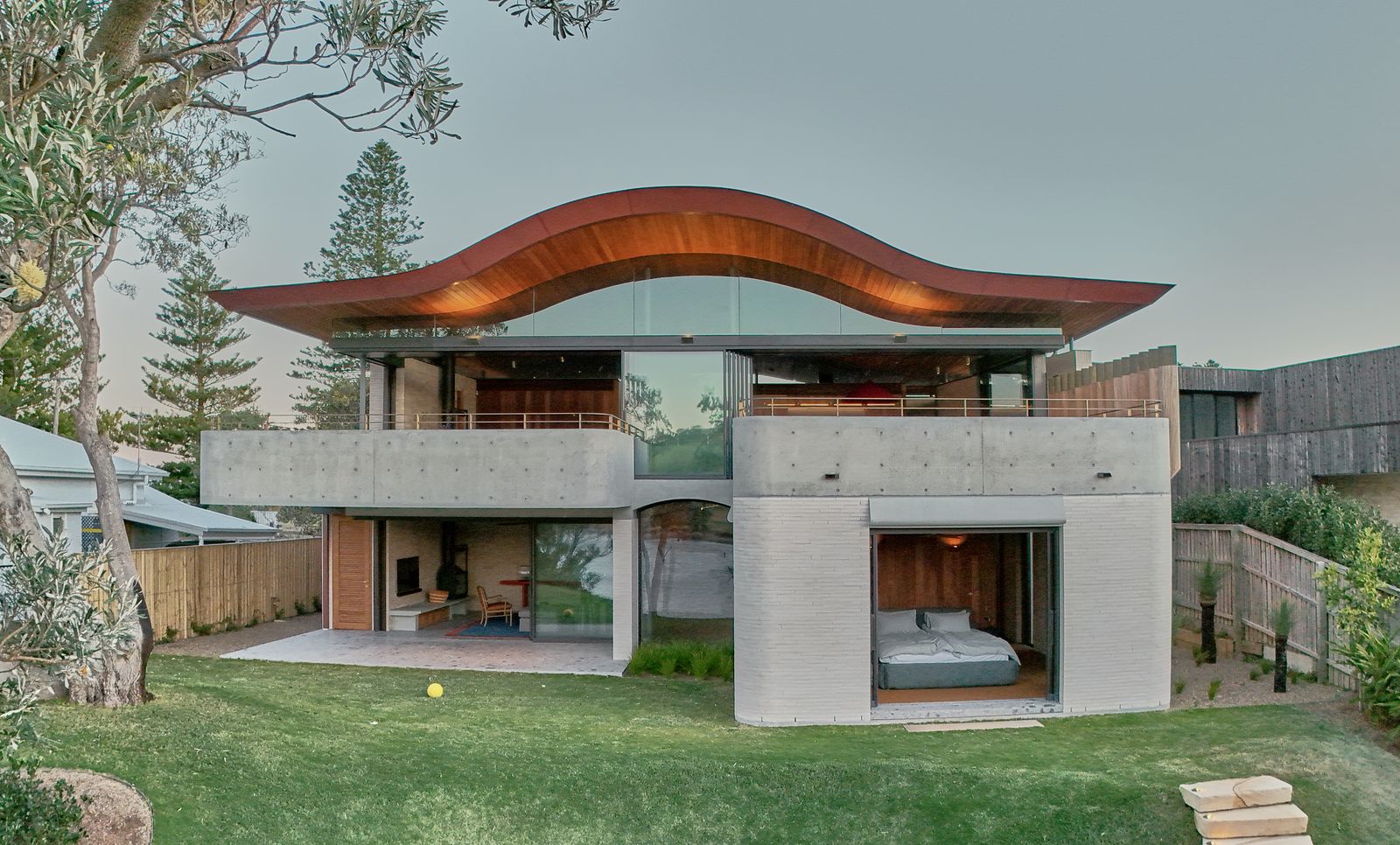
Like a Hat, a Wavy Roof Caps This Beach House in Australia

It swells over a central circulation area, its eaves coming to rest atop two patios on either side.

Houses We Love: Every day we feature a remarkable space submitted by our community of architects, designers, builders, and homeowners. Have one to share? Post it here.

Project Details:

Location: New South Wales, Australia

Architect: Casey Brown Architecture / @caseybrownarchitecture

Footprint: 4,000 square feet

Builder: Lime Building Group

Structural and Civil Engineer: Canterlever Engineers

Landscape Design: Bates Landscaping

Lighting Design: Tovo

Photographer: Zella Casey Brown / @zellacaseybrown

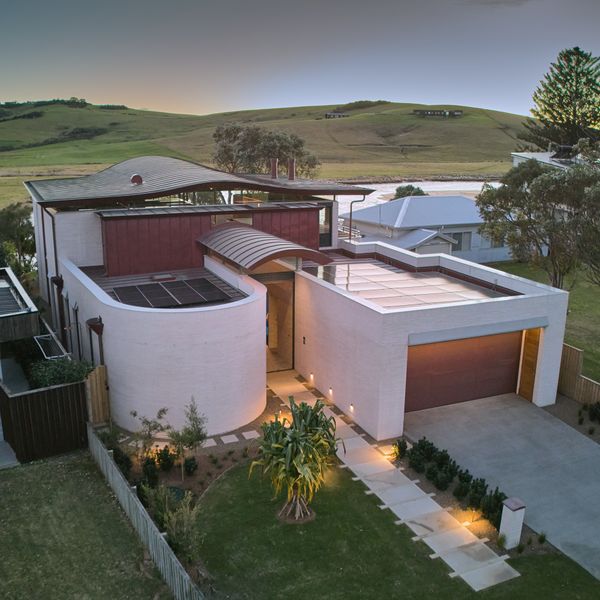
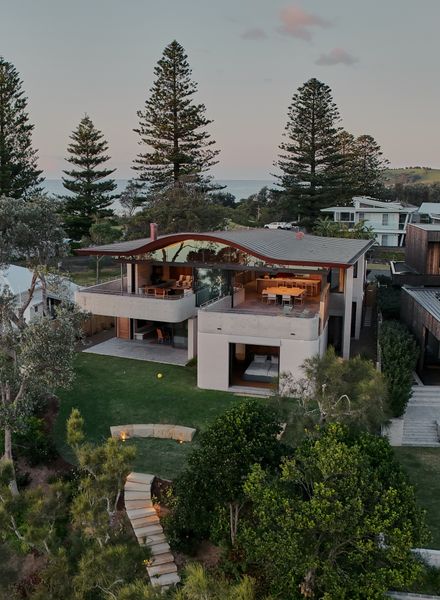
From the Architect: "This home sits on flat land on the edge of a lagoon within a stones throw of a surf beach. It faces north, with panoramic views of wetlands, lime green pastures, and the mountains of the Great Dividing Range. The plan, with its staggered massing and central spine, is private to the street with the recessed garage contrasting the curved exterior of the media room sweeping in to the central front door. Internally, the spine varies in height, punctuated by light shafts as you pass a series of bedrooms leading to the private primary bedroom suite and the northern garden terrace under the large cantilever balcony. The upstairs is slowly revealed as one large living, dining, and kitchen area, with a curved floating timber ceiling rising to the north, taking in the sun and views. Two protruding decks with a fully opening door configuration link inside and outside, while the large cantilever roof protects the northern glazed façade. The floating roof is supported on near-invisible round steel columns, creating a glazed light throughout the upper floor.

"The interior and exterior is all exposed white bricks, rustic long brick at the exterior and more refined internally, with the concrete structure exposed throughout. The geometric, curved roof gently changes angle from the front to the rear gently and is clad in copper. Brass doors, windows, and railings respond to the seaside condition of the site. Throughout the home, the stone floors are all heated electrically and powered by a large solar rooftop array concealed behind the flat roof on the street side and batteries in the garage. This, combined with the double glazing and large roof overhang, responds well to the micro-climate of the South Coast. Meticulously crafted by skilled craftsmen in concrete, bricks, brass, copper, and tallowwood, the home is a very considered response to a very special place."

Photo by Zella Casey Brown

Photo by Zella Casey Brown

Photo by Zella Casey Brown

See the full story on Dwell.com: Like a Hat, a Wavy Roof Caps This Beach House in Australia
Related stories:

From the Archive: This Tribeca Pad Was One of New York’s First Houses Warmed by Geothermal Energy

Built in 2000, the five-story building served as both office and family home for architect John Petrarca.

Welcome to From the Archive, a look back at stories from Dwell’s past. This story previously appeared in the June 2003 issue.

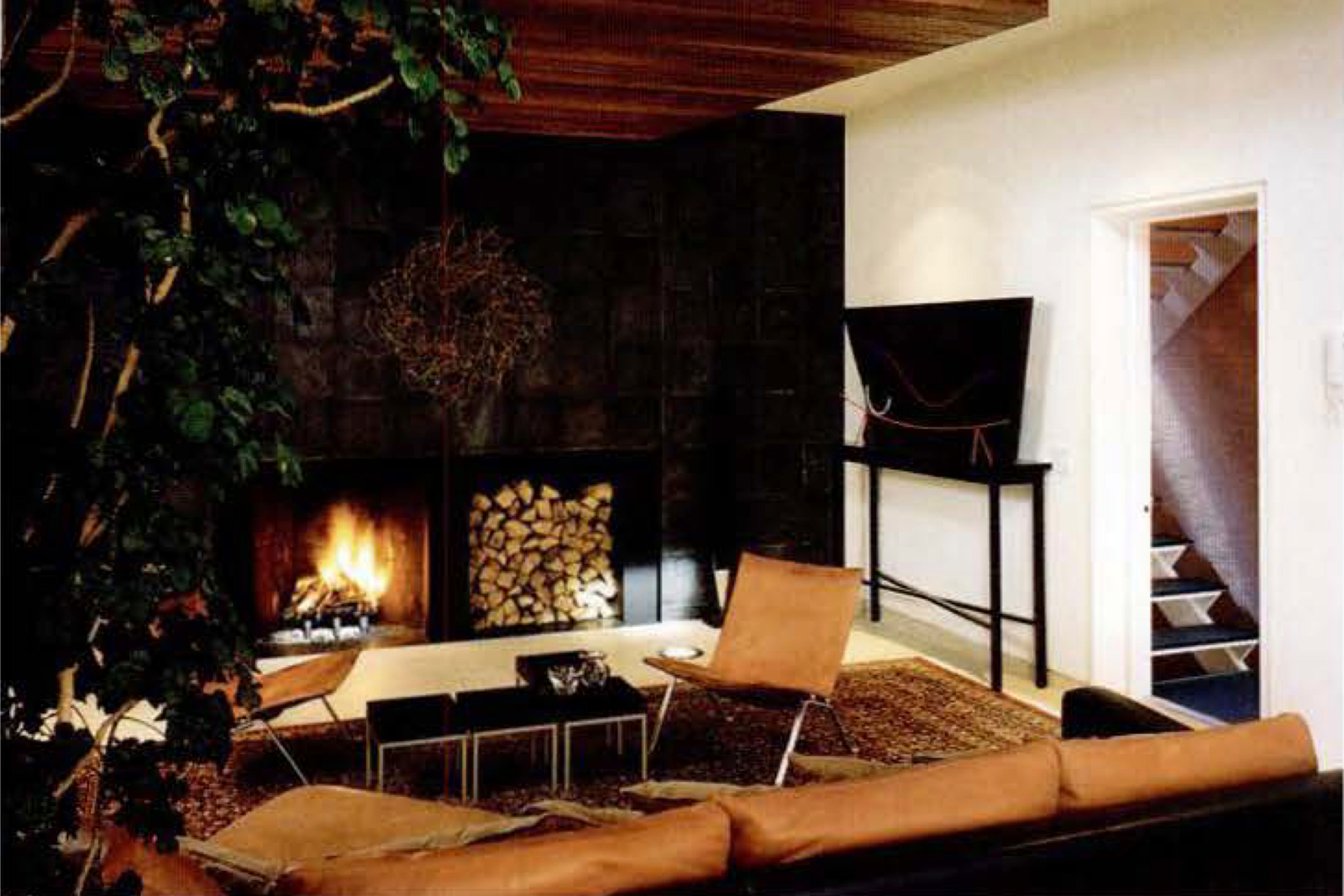
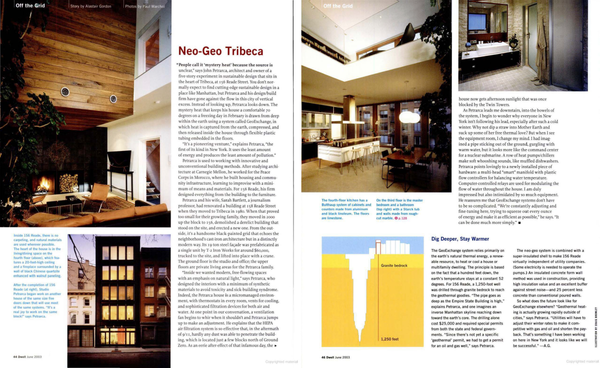
"People call it ‘mystery heat’ because the source is unclear," says John Petrarca, architect and owner of a five-story experiment in sustainable design that sits in the heart of Tribeca, at 156 Reade Street. You don’t normally expect to find cutting-edge sustainable design in a place like Manhattan, but Petrarca and his design/build firm have gone against the flow in this city of vertical excess. Instead of looking up, Petrarca looks down. The mystery heat that keeps his house a comfortable 70 degrees on a freezing day in February is drawn from deep within the earth using a system called GeoExchange, in which heat is captured from the earth, compressed, and then released inside the house through flexible plastic tubing embedded in the floors.

"It’s a pioneering venture," explains Petrarca, "the first of its kind in New York. It uses the least amount of energy and produces the least amount of pollution."

Petrarca is used to working with innovative and unconventional building methods. After studying architecture at Carnegie Mellon, he worked for the Peace Corps in Morocco, where he built housing and community infrastructure, learning to improvise with a minimum of means and materials. For 156 Reade, his firm designed everything from the building to the furniture.

Petrarca and his wife, Sarah Bartlett, a journalism professor, had renovated a building at 158 Reade Street when they moved to Tribeca in 1980. When that proved too small for their growing family, they moved in 2000 up the block to 156, demolished a derelict building that stood on the site, and erected a new one. From the outside, it’s a handsome black-painted grid that echoes the neighborhood’s cast-iron architecture but in a distinctly modern way. Its 19-ton steel facade was prefabricated as a single unit by T-2 Iron Works for around $60,000, trucked to the site, and lifted into place with a crane. The ground floor is the studio and office; the upper floors are private living areas for the Petrarca family.

"Inside we wanted modern, free-flowing spaces with an emphasis on natural light," says Petrarca, who designed the interiors with a minimum of synthetic materials to avoid toxicity and sick-building syndrome. Indeed, the Petrarca house is a micromanaged environment, with thermostats in every room, vents for cooling, and sophisticated filtration devices for both air and water. At one point in our conversation, a ventilation fan begins to whir when it shouldn’t and Petrarca jumps up to make an adjustment. He explains that the HEPA air filtration system is so effective that, in the aftermath of 9/11, hardly any dust was able to penetrate the building, which is located just a few blocks north of Ground Zero. As an eerie after-effect of that infamous day, the house now gets afternoon sunlight that was once blocked by the Twin Towers.
As Petrarca leads me downstairs, into the bowels of the system, I begin to wonder why everyone in New York isn’t following his lead, especially after such a cold winter. Why not dip a straw into Mother Earth and suck up some of her free thermal love? But when I see the equipment room, I change my mind. I had imagined a pipe sticking out of the ground, gurgling with warm water, but it looks more like the command center for a nuclear submarine. A row of heat pumps/chillers make soft whooshing sounds, like muffled dishwashers. Petrarca points lovingly to a newly installed piece of hardware: a multihead "smart" manifold with plastic flow controllers for balancing water temperature. Computer controlled relays are used for modulating the flow of water throughout the house. I am duly impressed but also intimidated by so much equipment. He reassures me that GeoExchange systems don’t have to be so complicated. "We’re constantly adjusting and fine tuning here, trying to squeeze out every ounce of energy and make it as efficient as possible," he says. "It can be done much more simply."

See more from the Dwell archive on US Modernist.

Related Reading: 

From the Archive: The Tropical Modernist Whose Lush Spaces Blended British and Sri Lankan Heritage

From the Archive: With Rammed Earth Walls and Flagstone Flooring, This Desert Home Matched Its Site

Land Ho! For $1M, You Can Score a Chesapeake Bay Lighthouse

Built in 1891 and fully restored in 2005, the working beacon doubles as an off-grid residence.

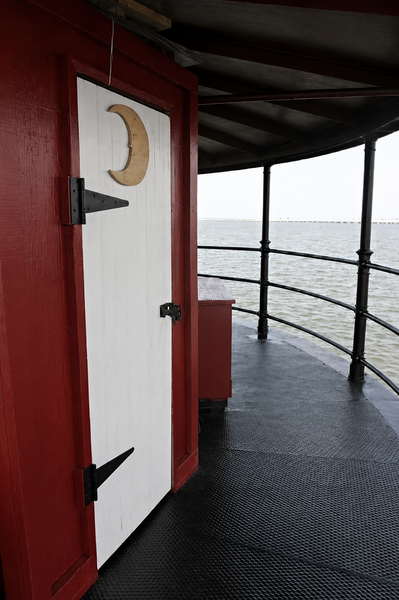
The exterior has been fully restored and repainted in its signature bold red.

Location: Chesapeake Bay, Hamptons Road, Virginia 

Price: $995,000

Year Built: 1891

Renovation Year: 2005

Footprint: 1,251-square-foot interior; 1,128-square-foot exterior deck spaces

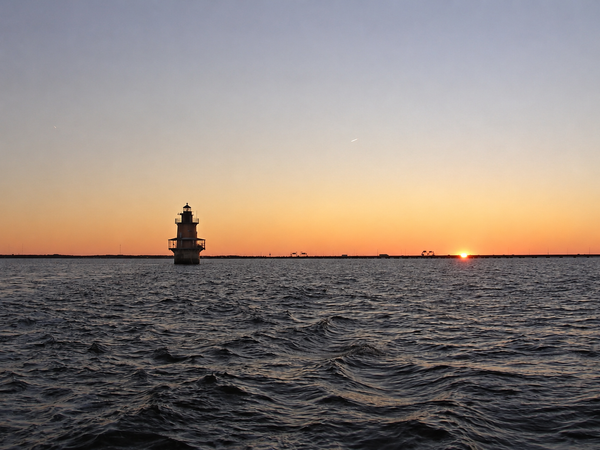
From the Agent: "Middle Ground Lighthouse is a privately owned offshore lighthouse residence located in Hampton Roads, Virginia. Built in 1891 and still serving as an active navigational aid, the lighthouse was acquired by its current owners in 2005 and carefully restored over two decades into a fully functioning off-grid residence. Following its purchase from the federal government in 2005, the lighthouse entered a new chapter of private stewardship. Ten engineers from the Billingsley and Gonsoulin families, supported by Eddie Prokop and a close network of friends, devoted more than 7,000 hours and over $300,000 to its rehabilitation. The work addressed both structural integrity and livability. In addition to extensive repairs, the team restored the rainwater collection systems, cisterns, plumbing, and pumps. The property now includes hot and cold pressurized water, a propane gas range, water heating, solar panels, a 10-kilowatt diesel generator, and 15 kilowatts of lithium phosphate battery storage supporting HVAC, lighting, and essential systems, along with a USCG-approved sanitation system. As with any offshore historic property, continued ownership requires ongoing maintenance and thoughtful stewardship. The rehabilitation ensured the lighthouse’s stability and functionality; its preservation remains an active responsibility."

The sellers are seeking offers in excess of $750,000, in the $1M range.

The off-grid lighthouse is located in Chesapeake Bay.

Photo courtesy of middlegroundlight.com

The exterior has been fully restored and repainted in its signature bold red.

The exterior has been fully restored and repainted in its signature bold red.

Photo courtesy of middlegroundlight.com

Photo courtesy of middlegroundlight.com

See the full story on Dwell.com: Land Ho! For $1M, You Can Score a Chesapeake Bay Lighthouse
Related stories:

For These Standout Waterfront Homes on the Jersey Shore, Trim Takes Center Stage

A third-generation homebuilder shares time-tested insights for crafting exceptionally durable (and beautiful) coastal residences.

For Robert L. Monetti, owner of New Jersey-based Monetti Custom Homes, building is in his blood. A third-generation homebuilder, Monetti proudly carries forth the legacy of his grandfather, the son of an Italian immigrant, who established the family business in 1948 building a custom colonial-style home in Union, New Jersey, alongside his two sons.

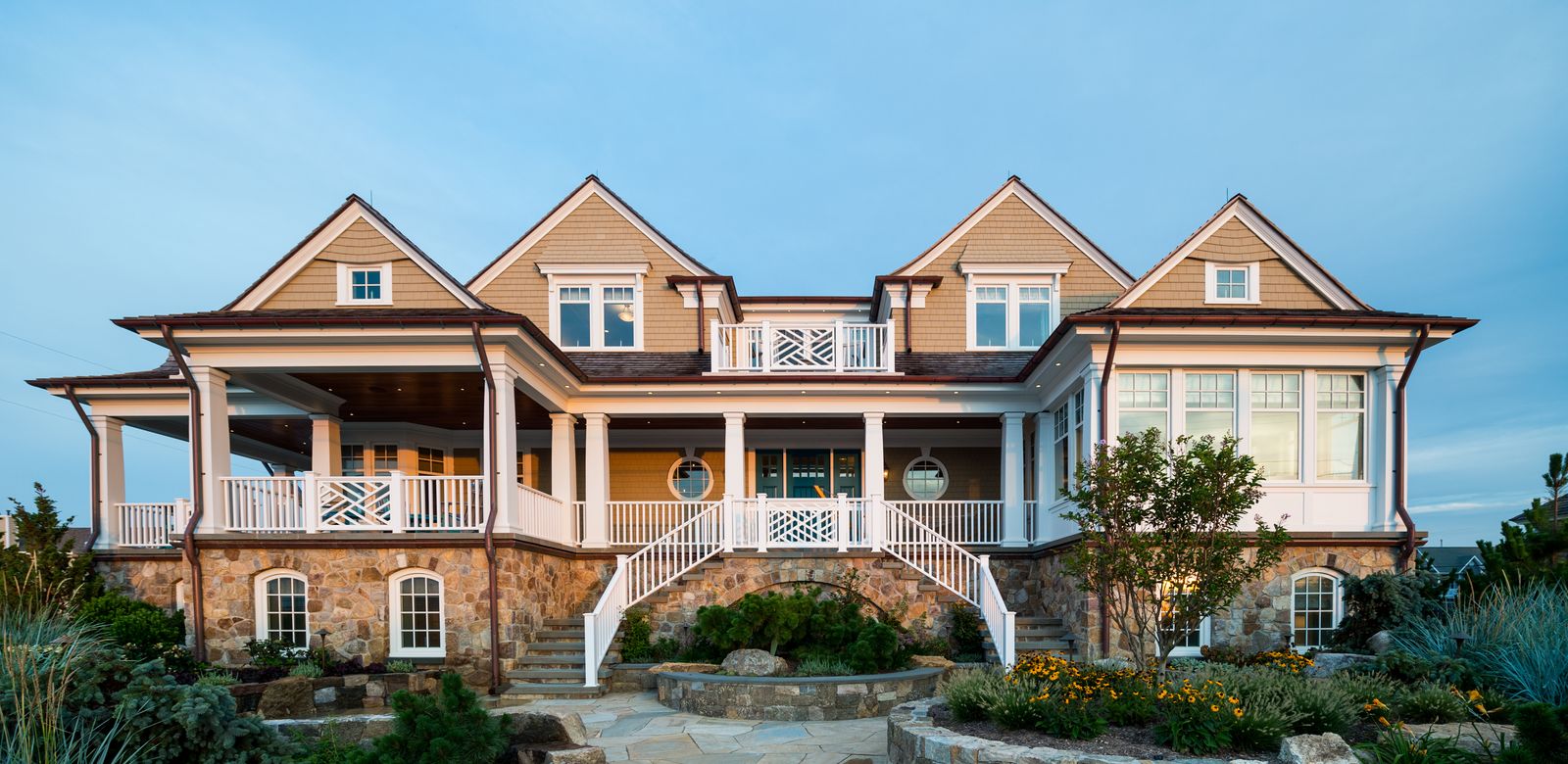
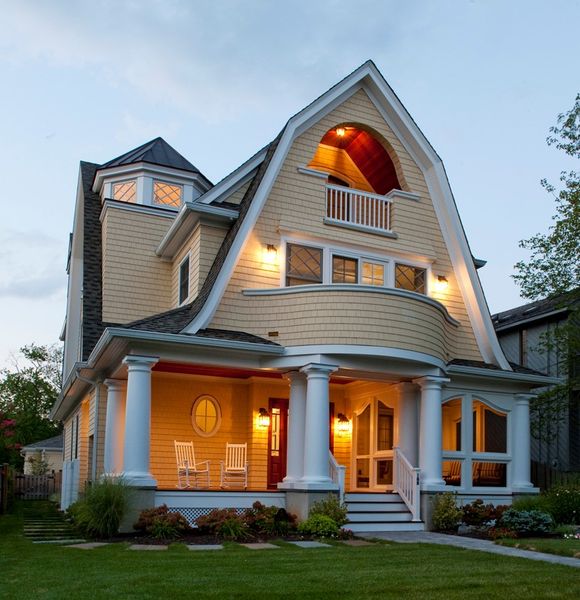
A gracious covered porch and intricate trim details define this custom shingle-style home. Frieze boards, moldings, and window trim—including the surround for an oval picture window at the front entry—are all rendered in AZEK product.

A gracious covered porch and intricate trim details define this custom shingle-style home. Frieze boards, moldings, and window trim—including the surround for an oval picture window at the front entry—are all rendered in AZEK product.

Courtesy of Monetti Custom Homes

Two generations later, Monetti continues to build upon the groundwork laid by his grandfather—and his own father, who made the decision to relocate to coastal New Jersey in the 1970s to start a new chapter of the Monetti family business focused specifically on waterfront building. For decades since then, Monetti has continued this tradition of building high-quality custom homes on the Jersey Shore.

Waterfront construction necessitates careful attention to the way in which exterior materials are selected and assembled.

The complexity of waterfront construction necessitates careful attention to the way in which exterior materials are selected and assembled.

Courtesy of Monetti Custom Homes

"Growing up on the river, I developed an awareness early on of how harsh the effects of a brine environment had on everything from corroded hardware to relentless wind-driven Nor’easter storms," says Monetti of his upbringing in the waterfront community of Toms River. "Those experiences shaped how we approach building today, with a heightened focus on durability and protection." 

When looking to integrate architectural details such as dentil molding or corbels, the versatility of AZEK Trim and Moldings allows Monetti and team to easily implement these profiles in water-resistant PVC instead of traditional wood.

When looking to integrate architectural details such as dentil molding or corbels, the versatility of AZEK Trim and Moldings allows Monetti and team to easily implement these profiles in water-resistant PVC instead of traditional wood. "This allows us to achieve both classic and contemporary detailing with greater precision and longevity," says Monetti.

Courtesy of Monetti Custom Homes

See the full story on Dwell.com: For These Standout Waterfront Homes on the Jersey Shore, Trim Takes Center Stage
Related stories:

Is Sweden’s Purple Crystal Sauna Making Climate Change… Fun?

The tongue-in-cheek installation anchors a "climate action" park along the Skellefte River, a revitalized green space where visitors can recharge and consider the future all at once.

The first line of T.S. Eliot’s seminal modernist poem "The Waste Land" is a prickly reversal of the first line in Chaucer’s The Canterbury Tales, turning April from a month of healing to one of cruelty. It is in that vibrating tension that Wasteland, a climate-focused art park in Skellefteå in northeastern Sweden, lives; the park, which opened on May 28, aims to expose, nurture, and even satirize conversations around global climate change.

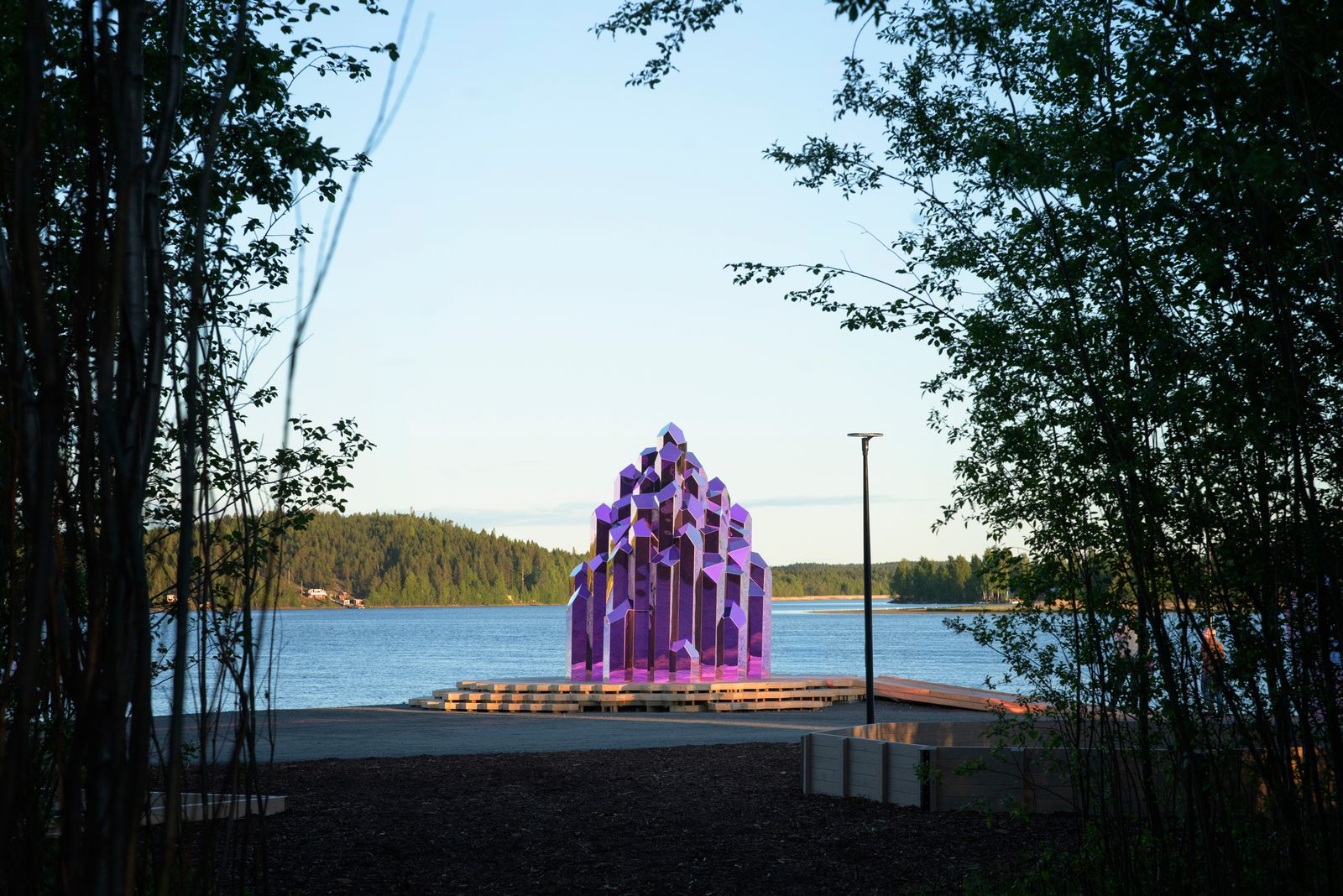
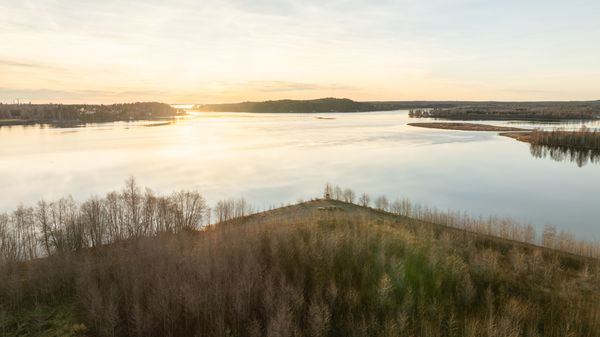
Wasteland sits on the banks of the Skellefte River in Scharins, a once-highly polluted industrial area that has recently undergone a sanitization and transformation that both confronts and subverts its Byzantine history. Known as Guldstaden ("Gold Town") for its gold mines, the city’s current major industries include copper mining and lithium-ion battery cell manufacturing. Not exactly the spot you’d expect green dreams to flourish; you’d be more likely to find Blinky the three-eyed fish from The Simpsons. But the climate park is recasting the site with temporary art exhibitions, an observation tower created in collaboration with the Oslo School of Architecture and Design, and—its central landmark—a sauna designed by renowned Swedish art duo Bigert & Bergström, made of gleaming magenta, titanium-plated steel and emerging from the ground in the shape of a giant cluster of lithium crystals.

Swedish design studio Bigerts & Bergström created a crystal-shaped sauna for WasteLand, a
WasteLand sits on the TK river, once polluted from gold mining and TK.
The titanium sauna is designed after lithium crystals, a commentary on the area’s lithium manufacturing industry.

See the full story on Dwell.com: Is Sweden’s Purple Crystal Sauna Making Climate Change… Fun?

Live Like Royalty in This $3.2M "Castle" on the California Coast

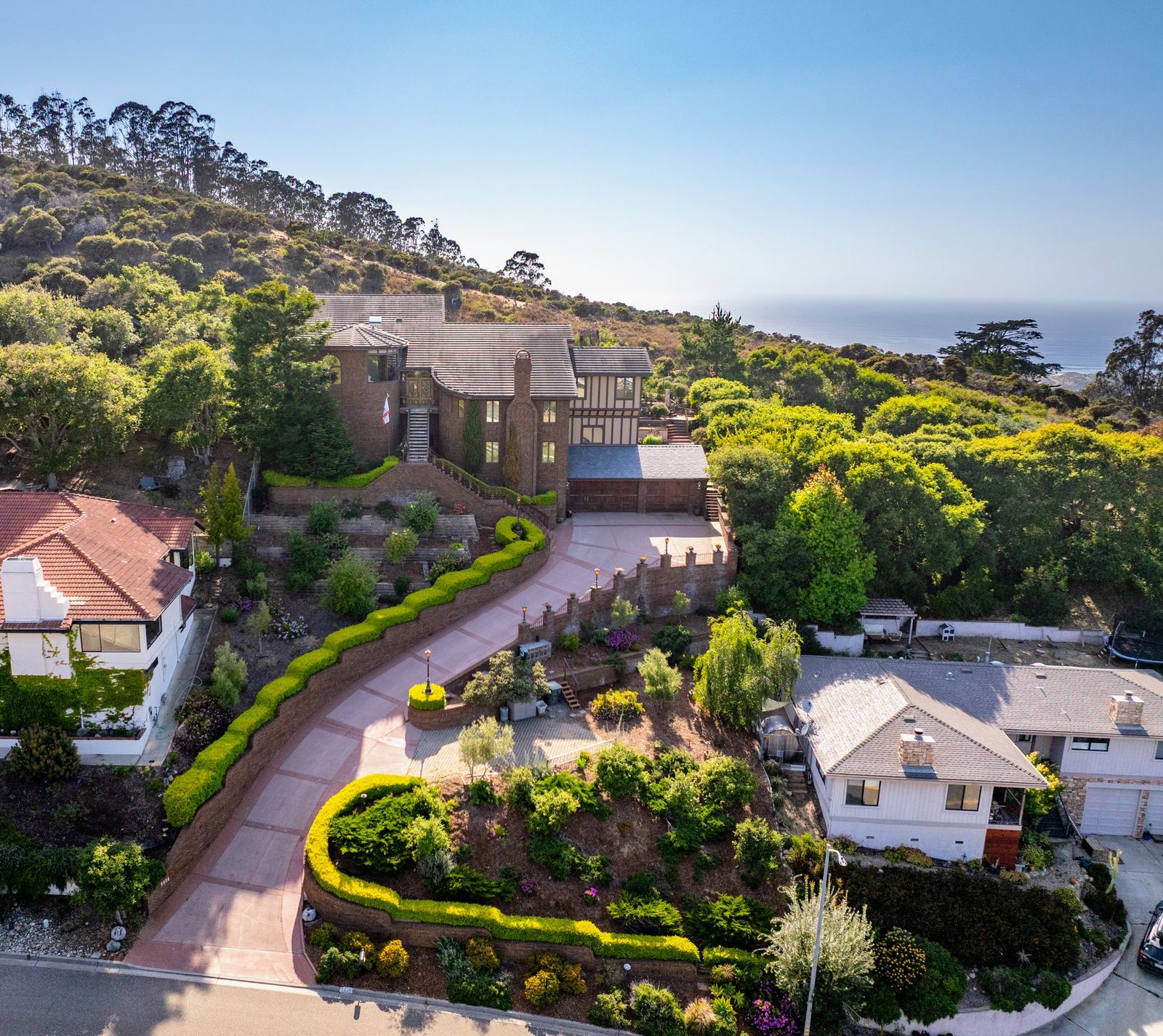
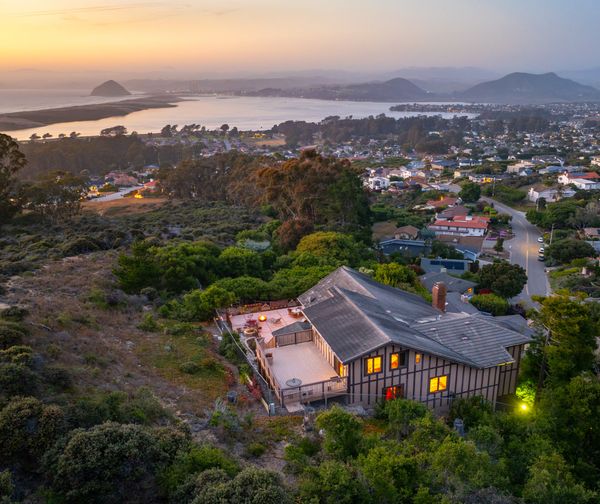
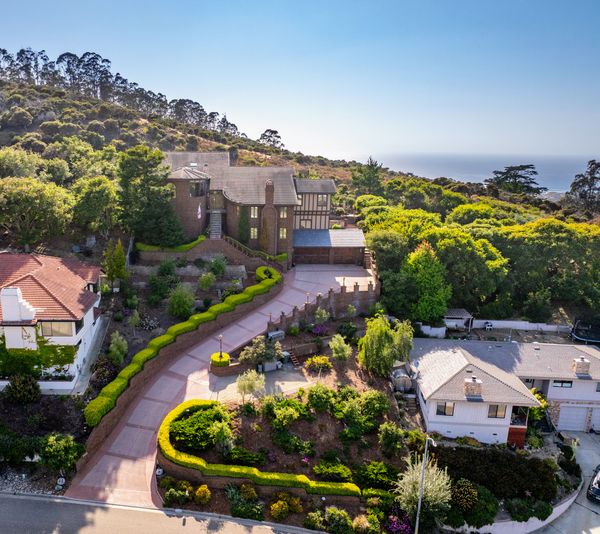
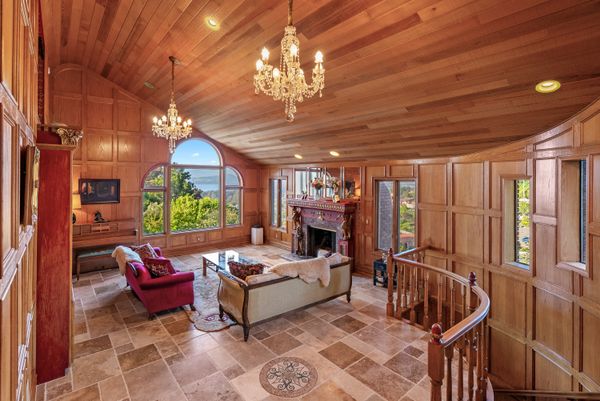
Built in 1990, the ornate, Bavarian-style mansion is filled with decorative woodwork, chandeliers, and ocean views.

The residence has gardens, lounging areas, and gardens.

Location: 2743 Rodman Drive, Los Osos, California 

Price: $3,175,000

Year Built: 1990 

Footprint: 5,200 square feet (4 bed, 4.5 bath)

Lot Size: 0.41 acres 

From the Agent: "Tucked into the coastal hills of Los Osos, this truly one-of-a-kind estate was inspired by classic European design and modern California living. Set high on a hill with sweeping views and complete privacy, the 5,200-square-foot residence unfolds as a series of spaces designed for gathering and retreat. The house has been fully restored to preserve its character while upgrading major systems. Arched doorways, handcrafted details, and warm natural materials create a sense of timeless character rarely found on the Central Coast. Multiple living areas, a chef’s kitchen, wine storage, and expansive indoor/outdoor flow make the home equally suited for entertaining or quiet coastal living. Located just minutes from Morro Bay, Montaña de Oro, and San Luis Obispo, yet worlds away in feel, this property offers a unique blend of accessibility and seclusion. It is ideal for a private coastal residence, a second home, or a boutique wellness retreat."

The residence was completed by designer-builder Andy Horther.

The residence was conceived by designer and builder Andy Horther. 

Photo by TriMotion Media, Triston Ioppini

The residence has gardens, lounging areas, and gardens.

The home is constructed from locally sourced wood, stone, and brick. 

Photo by TriMotion Media, Triston Ioppini

Photo by TriMotion Media, Triston Ioppini

See the full story on Dwell.com: Live Like Royalty in This $3.2M "Castle" on the California Coast
Related stories:

The Urban Swimming Revolution Is Here

Across a growing number of European and American cities, people are taking back their waterways.

Welcome to Beach Week, our annual celebration of the best place on Earth.

When the temperature rises, it seems half of Portland, Oregon, gets the same idea: Let’s head down to the Willamette. It’s no wonder—it’s the sweetest water for miles, and the banks of this wide, chill river have become the city’s outdoor living room. "Everyone gathers at the downtown beaches with their kids and their dogs, swimming and paddleboarding, jumping off the docks," says Amy Souers Kober, vice president of communications at natural conservation group American Rivers, and regular swimmer in downtown Portland. "The natural open water is just beautiful. It’s a really neat way to experience the place you live." A lot has changed on those banks in the past 20 years—the Willamette has gone from being heavily polluted and illegal to enter, to safely welcoming swimmers. "If you live in downtown Portland, this is part of our quality of life," says Kober. "The Willamette is our natural space. It feels great to be in it."

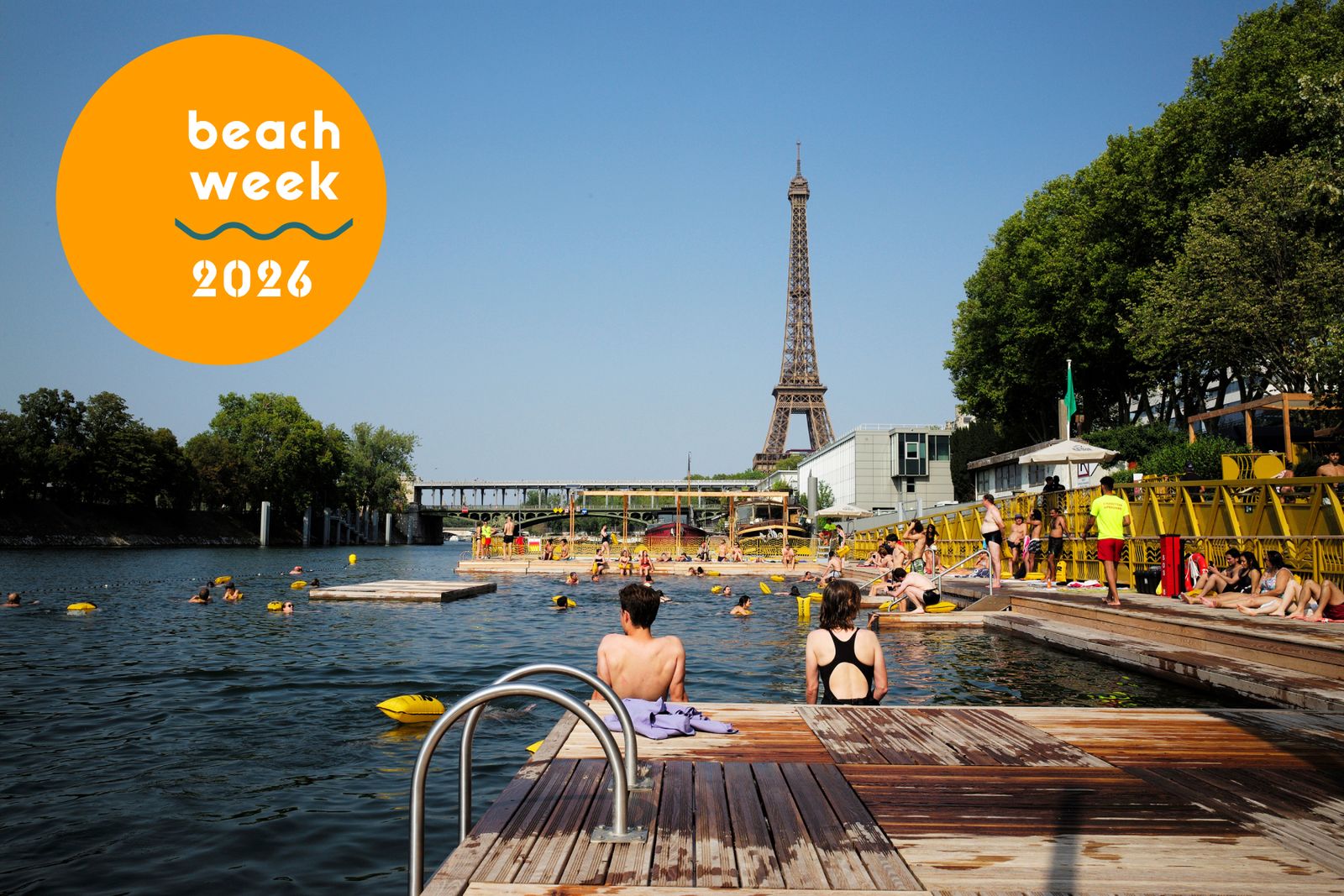
After being unswimmable for decades, major cleanup efforts have transformed the waters of Portland into an American success story alongside cities like Washington, D.C., Boston, San Antonio, and Chicago, which just had its second annual Chicago River Swim. In the global push toward urban open-water swimming, cities like Copenhagen, Oslo, Amsterdam, Munich, and Zurich and Basel have led the way in clearing their waterways of sewage, agricultural runoff, and industrial waste to make swimming part of city culture. All over the world, inner-city waterways are now being reclaimed for swimming and water sports, spurred on by Paris declaring the River Seine open for swimming for the first time in a hundred years, just in time for the 2024 Olympics. It was a moment that made many city dwellers across the world sit up and ask questions—who is our river really for? And why can’t we swim in it?

Swimmers on a dock on the Willamette River in Portland, Oregon.

Swimmers lounge on a dock on the Willamette River in Portland, Oregon.

Photo by Ann Suckow via Getty Images

Willie Levenson first asked himself these questions when he moved to Portland in 1996 and found that locals considered the river a write-off. "I was told to never put your toe in the Willamette or you’d grow horns and your skin would flake off," he says. "When I first started talking about swimming in the Willamette, ninety-nine percent of Portland thought I was a lunatic."

Swimming used to be popular in the Willamette before being banned in 1924, as the river became increasingly saddled with sewage overflows and unfiltered factory discharges. Things started looking up in the 1990s when legal nonprofit Northwest Environmental Advocates used the Clean Water Act to compel the city to address the problems. The result was Portland’s 20-year Big Pipe project, completed in 2011 to the cost of $1.4 billion, which ensured the city’s waste no longer enters the waterways untreated. Except on a few stormy days in winter (when the City will issue notifications), the Willamette routinely comes up good and safe for swimming.

Levenson went on to become the founder of the grassroots advocacy group Human Access Project, which has worked tirelessly for 16 years to promote river swimming for Portlanders. "Multiple generations have been taught to feel shameful and hopeless about our urban river spaces, and it takes a lot of work to get people to think about it differently," he says. This is why Human Access Project started out by organizing what they called "recreational protest swims" in the Willamette in the years after the cleanup when entering the river was still illegal—to draw attention to the fact that since the cleanup, the water is safe and the rules needed changing. The transition was gradual; Portland got its first official beach in 2017, and swimming only became fully legal in 2022. But today, anyone can join the River Huggers, the one-time trespassers, as they swim across the Willamette six days a week, right next to the downtown Hawthorne Bridge.

The story of the Willamette is similar to that of many other major cities, where the rivers are often cleaner today than in decades, but people still harbor feelings of urban waters being dangerous and to be avoided. "People protect what they love, so the first step is getting them to see that rivers are assets with value," says Levenson, who describes himself as "a river plunker" rather than a fitness swimmer—"somebody who hangs out on a dock or a beach and sits around until they get hot, then jumps in and cools off." For Levenson, the river is a "liquid public space" for communities to get together. "Cell phones don’t work as well there, and people are generally dressed the same," he says. "It’s just a great way to bring people together."

The City of Portland is a member of the Swimmable Cities initiative, which launched two years ago as an international support organization to inspire and share resources for making urban waterways safe to swim in. After taking off in Europe, the group now has members around the globe, including several recent joiners across North America. Right now the signatories include 237 organizations across 115 cities and towns in 37 countries, including, in the U.S., places from New York City, Baltimore, and Milwaukee to McCall, Idaho.

A view of the 2025 Chicago River Swim.

A view of the 2025 Chicago River Swim, which marked the city’s first such event in a century.

Photo by Chris Costoso, courtesy Chicago River Swim

Urban swimmers’ barriers to entering the water usually start with sewage overflows and pollution. "The fundamentals are all very similar," says Swimmable Cities cofounder Matthew Sykes. Long before the initiative launched, cities like Copenhagen and Amsterdam became beacons for urban swimming after spending more than a decade cleaning not only the cities’ waters but the entire systems around them, from preventing sewage spills during rainstorms to compelling individuals to install filters on their houseboat pipes. It’s not cheap—Paris spent nearly €1.4 billion to get the Seine up to scratch, including building a giant stormwater basin. Cleaning the water is just one of the Swimmable Cities initiative’s seven enabling conditions, which also includes cooperation and investment partnerships. And even with everything else in place, campaigners often run into red tape and fearful city officials worried about drownings. "We need to create the social infrastructure of swimming too, with learn-to-swim programs and education about swimming outdoors," says Sykes.

U.S. cities do, however, have some unique challenges. In Annapolis, the state of Maryland spent over $4.8 million to buy back a piece of Chesapeake Bay waterfront that once served the Black community during segregation, in a move that recognized how historic racial barriers to accessing water can still be felt in present-day inequalities. "We also hear a lot more about privatization of waterfronts in the U.S.," says Sykes, explaining that while people may be allowed to walk next to the water, swimming on private land is frequently forbidden due to liability fears.

In New York’s Lower Manhattan, access to the water is so restricted that swimming organizers take people out on boats for Statue of Liberty swims. "Starting from land would be a safer and better experience, but with very few exceptions, that’s not permitted," says Deanne Draeger, founder of UrbanSwim, which organizes open water swims across the five boroughs while campaigning for safe access to local waters. This includes teaching people about water safety, as the Hudson and East Rivers have strong currents: "Downtown Manhattan is a very busy area in terms of water traffic," says Draeger. "And if you don’t understand how the tides and currents work, it can be very dangerous."

New York City’s rivers are much cleaner than they used to be, but there’s still a lot of work to do. Last year, the state’s Department of Environmental Conservation proposed to reclassify the vast majority of the city’s waterways as "swimmable," but there are still too many days when rain triggers sewage overflows (in most cities, a good rule of thumb is to steer clear for 48 hours after a big rain). Still, despite what many New Yorkers think, it’s often safe to swim, at least in the summer—just keep a close eye on the test reports.

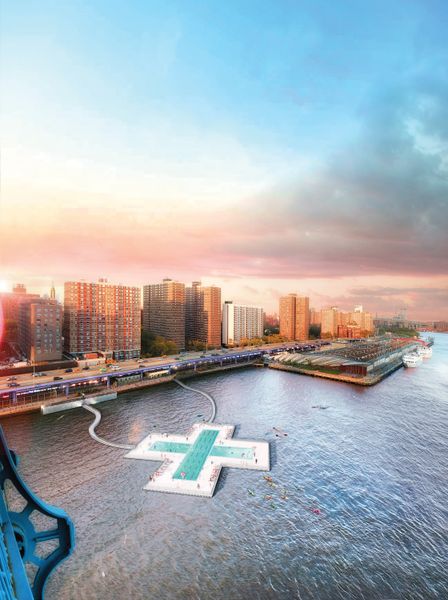
A rendering of the long-awaited +POOL in New York City.

A rendering of the long-awaited +POOL in New York City.  

Photo by Luxigon, courtesy of Friends of +POOL

See the full story on Dwell.com: The Urban Swimming Revolution Is Here
Related stories:

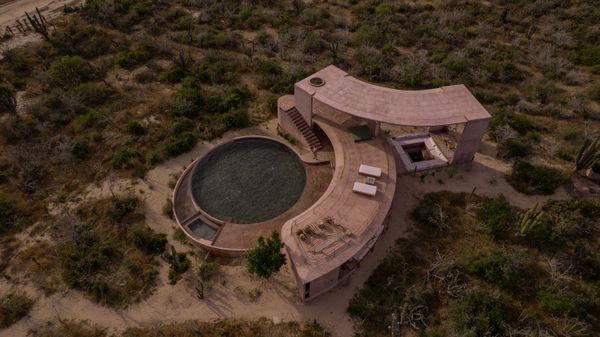
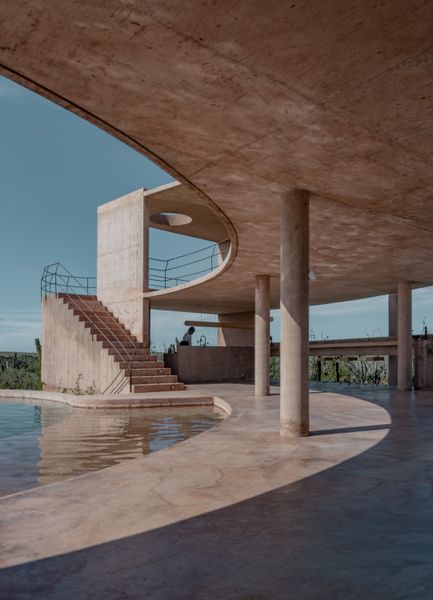
Lounging Is Mandatory at This Curving Concrete Beach House in Baja

A conversation pit, a wading pool, several rooftops, and standalone bedrooms with a view: this Todos Santos retreat is built for relaxmaxxing by the Pacific.

Houses We Love: Every day we feature a remarkable space submitted by our community of architects, designers, builders, and homeowners. Have one to share? Post it here.

Project Details:

Location: Todos Santos, Mexico

Architect: Studiofont

Footprint: 6,450 square feet

Structural Engineer: Fernando Calleja

Mechanical Engineer: FREMER

Lighting Design: KOVA

Photographer: Alberstudio

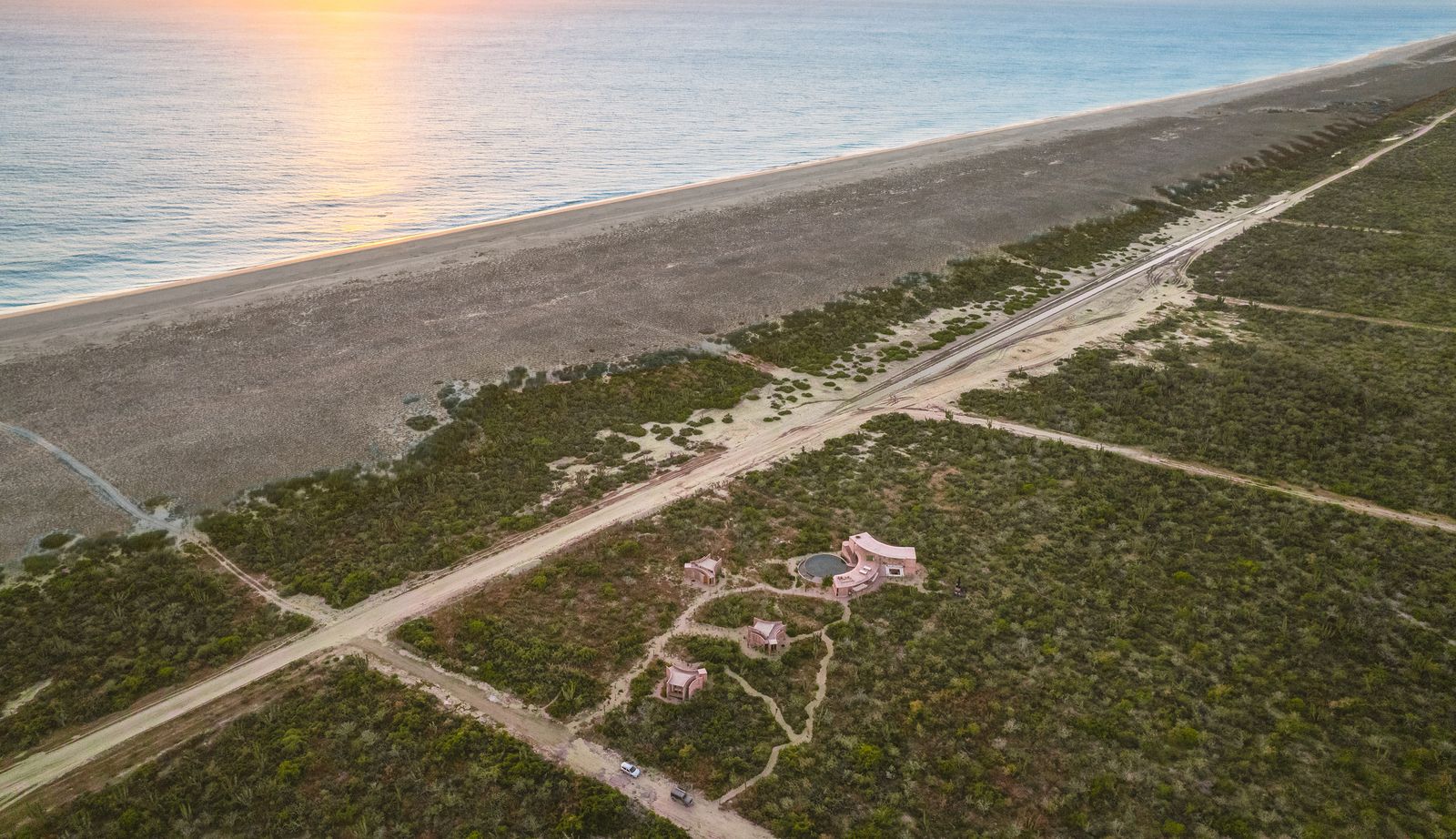
From the Architect: "Nereidas Design House is an architectural project located in the desert landscape of Baja California. Situated near Todos Santos, the project occupies a 6,458-square-foot plot characterized by cacti and uninterrupted views toward the Sierra de la Laguna Mountains and the Pacific Ocean. The project is conceived as a house broken into architectural pieces, a fragmentation that allows each inhabited unit to secure privacy while establishing a specific and deliberate visual relationship with the surrounding landscape. This strategy distributes domestic life across the site, avoiding a single enclosing volume.

"The house is articulated through a set of private rooms and a shared structure, arranged to balance containment and openness across the site. Individual spaces are oriented toward precisely framed views, while the collective areas extend longitudinally, engaging the full breadth of the landscape and accommodating shared use. There are three private units across the landscape, conceived as a single continuous interior in which sleeping, resting, and bathing coexist without subdivision. Curved interior walls open onto three distinct windows, each framing a different portion of the landscape and generating specific atmospheres within the same room. Beds, seating, storage, and bathrooms are integrated into the architectural envelope, allowing each activity to relate to its own visual field while remaining part of a unified spatial volume. Access to the roof extends inhabitation vertically, reinforcing a direct connection between private space, sky, and horizon.

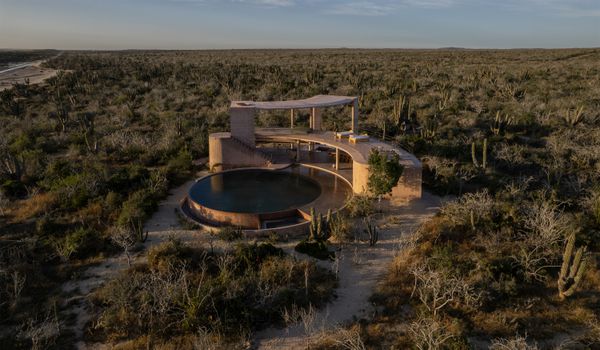
"The shared structure forms the primary collective space of the project. Its configuration is defined by two crossing roofs that unfold a double-height firepit and a cascading cylindrical pool, and creating distinct settings for gathering, dining, and rest. Fully open along its length, the structure establishes continuous visual and spatial alignment with the desert. Overlapping planes generate deep shade, while changes in height guide movement through space without the use of conventional partitions.

"The architecture is built entirely in pigmented concrete, used simultaneously as structure and finish. The pink tone gives warmth to the material, allowing the building to register variations in light throughout the day and intensifying the contrast with the surrounding vegetation, particularly after rainfall, when the landscape becomes visibly greener.

"Environmental systems are integrated into the project’s design. The house operates fully off-grid: electricity is generated through photovoltaic solar panels, and a thermosolar system provides hot water. Water reuse strategies reduce demand on local resources, and all vegetation displaced during construction was replanted on site, maintaining continuity of the existing desert ecosystem."

Photo by Alberstudio

Photo by Alberstudio

Photo by Alberstudio

See the full story on Dwell.com: Lounging Is Mandatory at This Curving Concrete Beach House in Baja
Related stories:

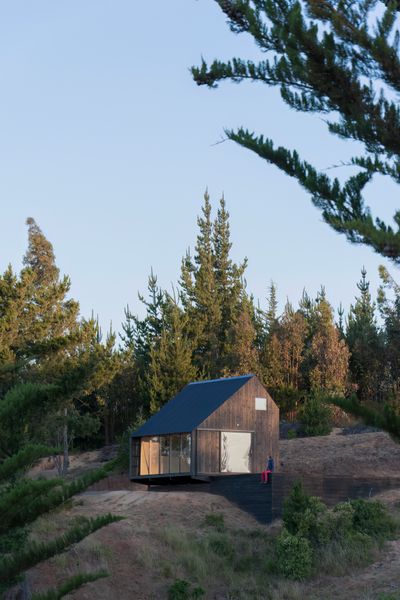
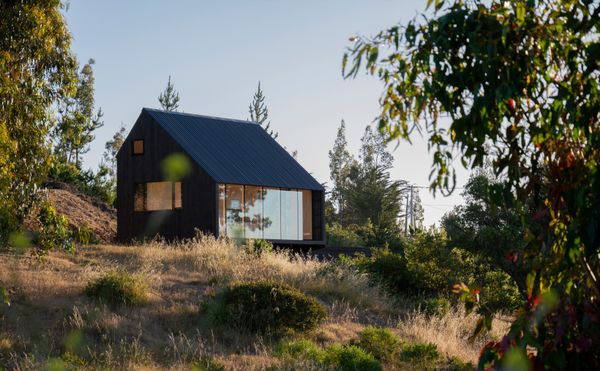
Budget Breakdown: This $167K Chilean Prefab Isn’t Your Typical Surf Shack

"Quality was controlled to the maximum," says architect Nataša Stanaćev. "The result is a home with finishes that are—I would say—almost luxurious, yet achieved without the use of luxury materials."

Welcome to Beach Week, our annual celebration of the best place on Earth.  

This compact coastal cabin in Matanzas, a village on Chile’s craggy central coast, is not your typical prefab. It was designed by Stanaćev Granados, an architecture duo known for their highly expressive minimalist residences, and it was built at a nearby workshop by an independent contractor and his three trusted workers. In other words, the endeavor was unusually bespoke. But it did achieve the client’s goal of reducing the cost and time of traditional construction.

"This was a fun project because it was an attempt at prefabrication, which is a very industrial process, but it became something very boutique," says architect Nataša Stanaćev, who helms Stanaćev Granados with Manuel Granados, her partner and husband. 

This 376-square-foot cabin in Matanzas, a rugged coastal area of Chile popular among kite surfers, was designed by local studio Stanaćev Granados.

This 376-square-foot cabin in Matanzas, a rugged coastal area of Chile popular among kite surfers, was designed by local studio Stanaćev Granados.

Photo: Manuel Granados

The story began with a forested 1-acre plot on a hill with distant views of the Pacific. Raúl Castellazzi, an Argentine tech professional based in Santiago, had bought it for $67,000 about a decade earlier. "I fell in love with the place," he says of Matanzas. "I thought it was magical to have the sea, hills, and forests, all together." As a single guy and avid kitesurfer, he imagined building a basic crash pad for weekend trips from the city.

He initially considered a prebuilt tiny house, but his neighbor, an engineer and contractor named Florent Dromard, proposed a more custom option: fabricating timber panels at his workshop and assembling them on-site. Florent’s friends at Stanaćev Granados could design the structure. "I knew how innovative they were, and since Florent enjoyed working with them, it seemed like the perfect trifecta," says Raúl.

The homeowner, Raúl Castellazzi, is a young tech professional who wanted a simple place to crash during his frequent trips from Santiago to the sea.

The homeowner, Raúl Castellazzi, is a young tech professional who wanted a simple place to crash during his frequent trips from Santiago to the sea.

Photo: Manuel Granados

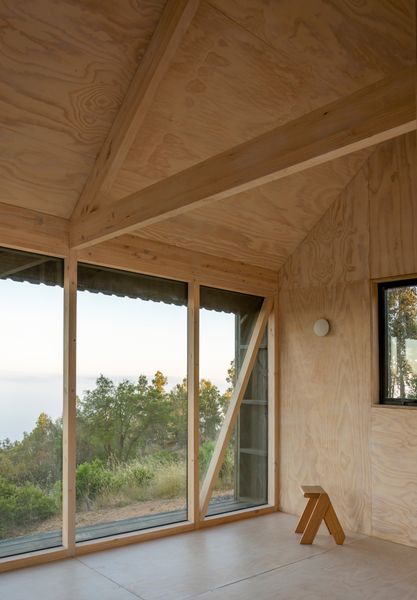
Knowing that the goal was to build something very small and affordable, the architects drew a 370-square-foot lofted cabin made almost entirely of plywood panels. The panels were cut to specification at Dromard’s workshop, a modest space that barely accommodated the larger pieces. Once on-site, they were glued to the timber framing—there are no visible screws or nails—to create a seamless look.

The interior of the cabin, with its 19-foot-tall pitched ceiling, is covered in plywood panels that were glued to the structure’s wood frame—no nails or screws—to achieve a clean, seamless look.

The interior of the cabin, with its 19-foot-tall pitched ceiling, is covered in plywood panels that were glued to the structure’s wood frame—no nails or screws—to achieve a clean, seamless look. 

Photo: Manuel Granados

See the full story on Dwell.com: Budget Breakdown: This $167K Chilean Prefab Isn’t Your Typical Surf Shack
Related stories:

In British Columbia, an Off-Grid Island Cabin Just Surfaced for $2M

Designed by BattersbyHowat Architects, the boat-accessible residence is perched on a rocky site with views of Horseshoe Bay.

Designed by BattersbyHowat Architects, this boat-accessible residence is perched on a rocky site with views of Horseshoe Bay.

Location: 671 Bowen View Road, Gambier Island, British Columbia, Canada

Price: $2,850,000 CAD (approximately $2,016,375 USD)

Year Built: 2005

Architect: BattersbyHowat Architects

Footprint: 2,009 Square Feet (3 Bedrooms, 2 Baths)

Lot Size: 0.49 Acres

From the Agent: "Here’s a rare architectural home on Gambier Island. Just 20 minutes from Horseshoe Bay, arrive at your private dock and leave everything else behind. Designed by BattersbyHowat and constructed by custom builder Hart Tipton Construction, this one-of-a-kind home masterfully tames the rugged landscape with bold architecture and seamless indoor/outdoor flow. A stunning three-bed layout wraps around a sun-filled courtyard, flooding the home with natural light all day. Warm, refined interiors feature Douglas fir floors and millwork, hemlock ceiling panels, and sleek aluminum curtain wall windows. The home feels sheltered and quiet, while still maintaining a strong connection to the water and rugged landscape. The design for privacy includes many thoughtfully placed windows that give tailored natural light and focused tree views, and the south-facing exposure delivers unreal sunrises and glowing sunset skies."

BattersbyHowat designed the cabin to sit gently amidst the existing landscape.

BattersbyHowat designed the cabin to sit gently amidst the existing landscape.

Photo by Alena Machinskaia at InFrame

Photo by Alena Machinskaia at InFrame

Photo by Alena Machinskaia at InFrame

See the full story on Dwell.com: In British Columbia, an Off-Grid Island Cabin Just Surfaced for $2M
Related stories:

In Colorado, $1.8M Will Get You a Tiny House on a Massive 35-Acre Lot

Located in Durango, the property includes a 625-square-foot cabin by Atkinson Architecture—and ample acreage for a larger home.

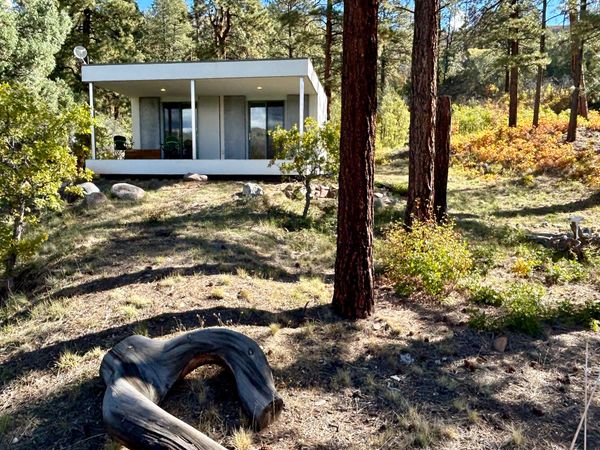
Location: 2326 Celadon Drive East, Durango, Colorado

Price: $1,800,000

Year Built: 2006

Architect: Stephen Atkinson

Footprint: 625 Square Feet (1 Bed, 1 Bath)

Lot Size: 35 Acres

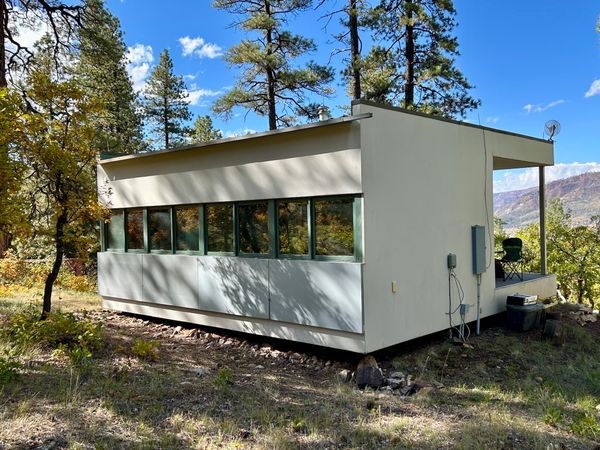
From the Agent: "This  35-acre property, set within the gated Celadon community, borders national forest land, providing privacy and direct access to outdoor recreation. The Celadon neighborhood is located in Southwest Colorado between the historic town of Durango and the Purgatory Ski Resort. From this elevated homesite, enjoy spectacular views across the Animas Valley to dramatic rock cliffs and sweeping mountain peaks beyond. Locally sourced aspen paneling, earthen plastered walls, an antique claw-foot bathtub, and woodstove create a warm, woodsy compliment to the contemporary design. The super energy-efficient building envelope features Icynene open-cell foam insulation. The exterior is constructed with durable, low-maintenance cement stucco. Utilities, including electric, natural gas, and a communication conduit, are installed at the cabin and ready for extension to a future custom home. A fully permitted and inspected septic system is in place, designed for both the existing cabin and a future three-bedroom residence."

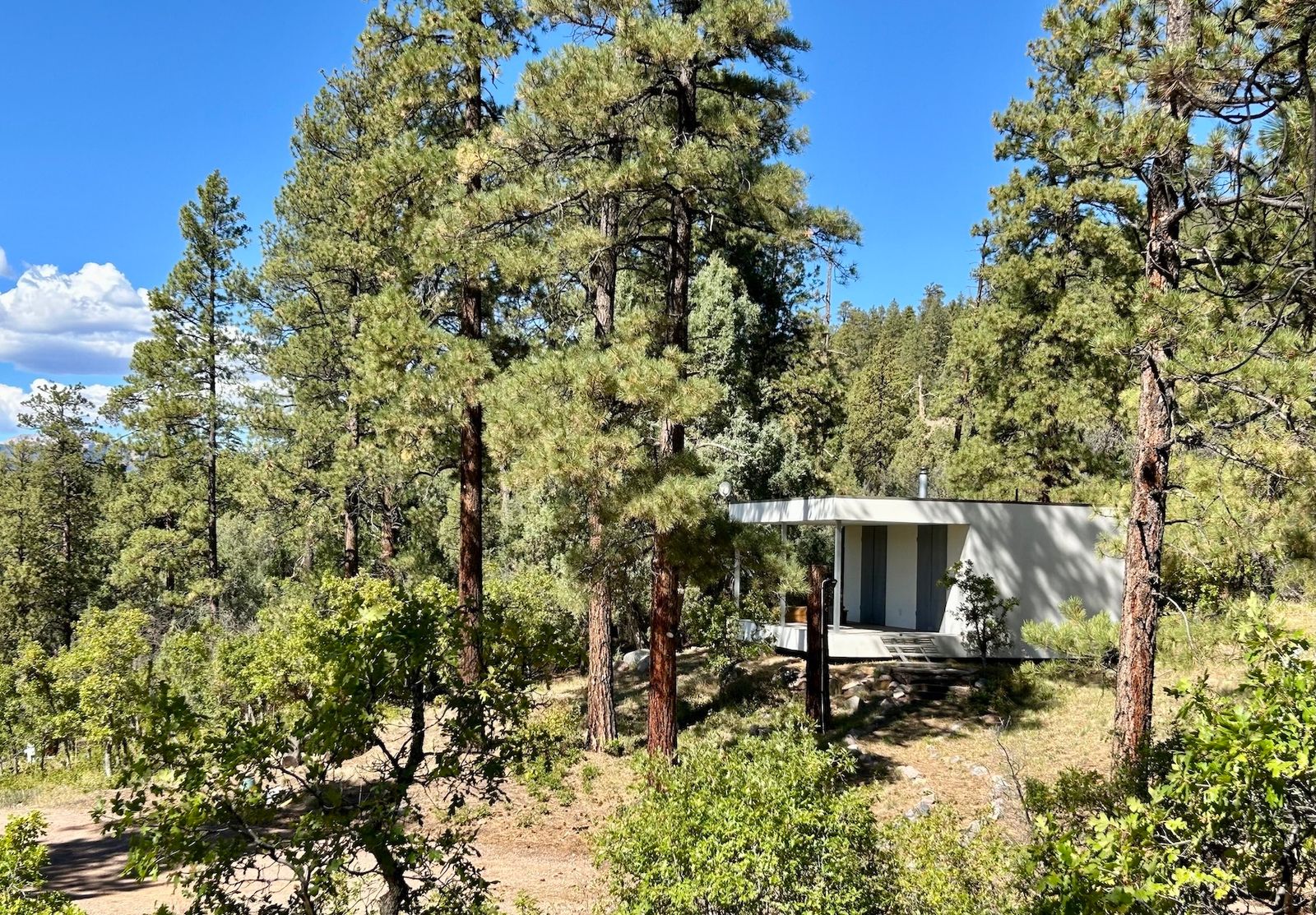
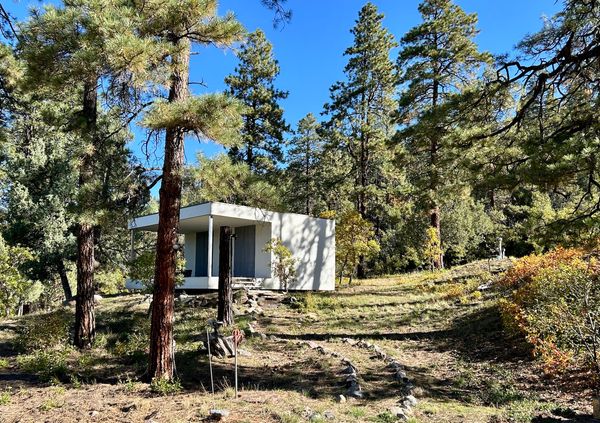
The forested property has ample available land to build a larger home and adapt the cabin as a guest house.

The forested property has ample space to build a larger home and adapt the cabin as a guesthouse. 

Photo courtesy of Keller Williams Realty Southwest Associates

Photo courtesy of Keller Williams Realty Southwest Associates

The windows and doors have hinged steel shutters, securing the cabin when the future owners are elsewhere.

The cabin’s windows and doors have hinged steel shutters. 

Photo courtesy of Keller Williams Realty Southwest Associates

See the full story on Dwell.com: In Colorado, $1.8M Will Get You a Tiny House on a Massive 35-Acre Lot
Related stories:

They Put a Mini House Inside This Sixth-Floor Apartment in Japan

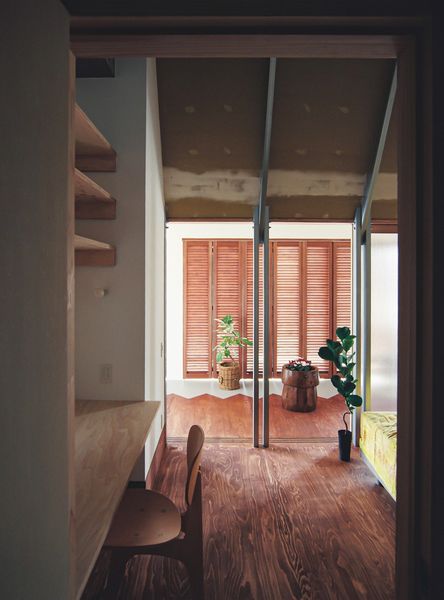
A structure resembling the client’s childhood home holds a living area and bedroom, recreating the idea of an engawa around it.

Houses We Love: Every day we feature a remarkable space submitted by our community of architects, designers, builders, and homeowners. Have one to share? Post it here.

Project Details:

Location: Fukuoka prefecture, Japan

Architect: Kuma & Elsa / @kumaelsa

Footprint: 2,706 square feet

Builder: Azuma Kensetu

Structural Engineer: Kenichi Inoue Structural Engineers

Photographer: Shohei Kuma

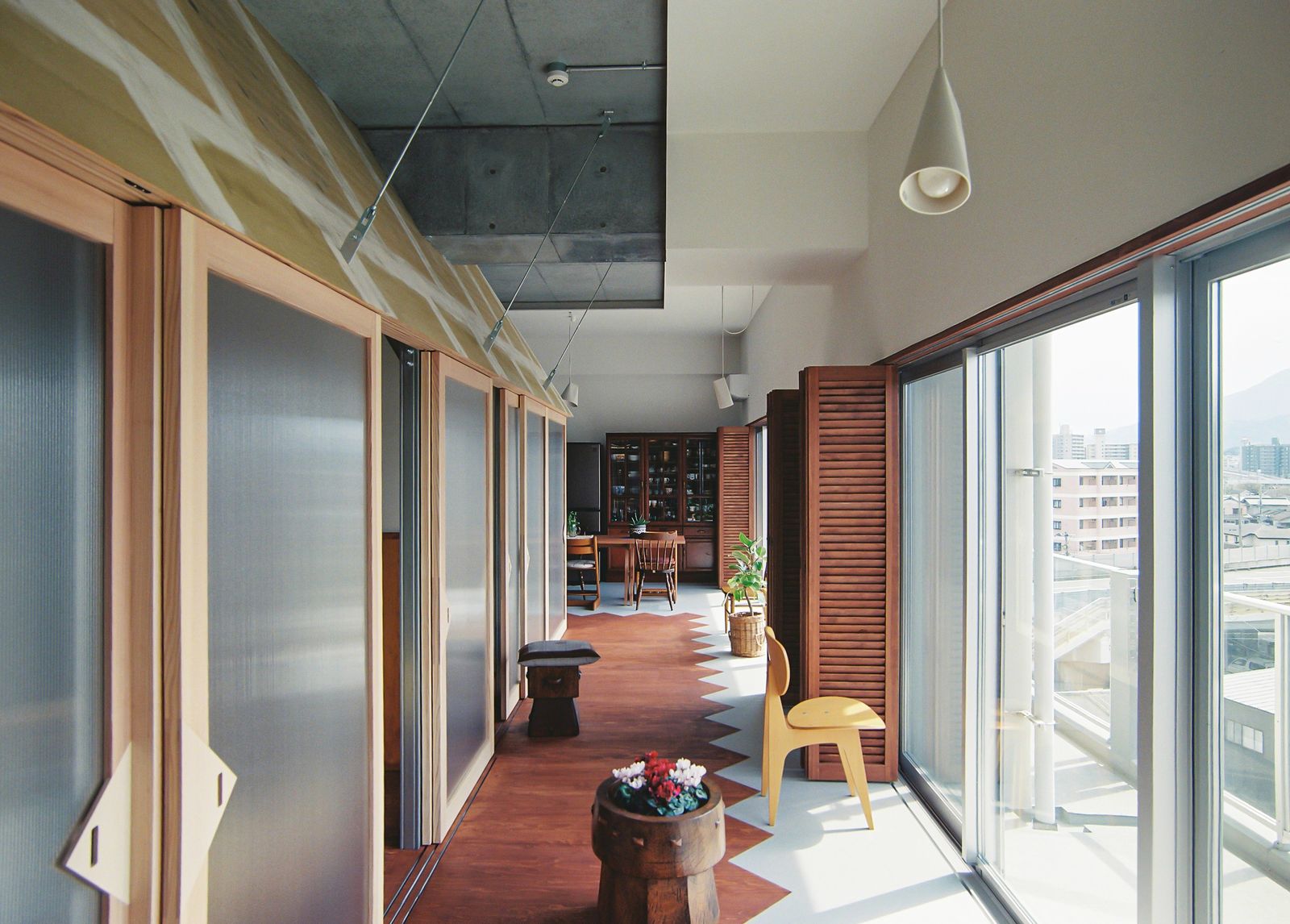
From the Architect: "The client’s childhood home, a traditional Japanese house, has an engawa—a gallery open to the garden. There, she was immersed in the scent of fresh grass, the fragrances of the seasons, and even the smells drifting from his neighbors’ kitchens. The wish was to recreate that memory, this time in an apartment nearly 50 feet above the ground. We imagined a house open to the sky. The new residence occupies the top two floors of a building owned by the client. She, along with her two sons and their families, will move into three apartments located on the sixth and seventh floors. We were commissioned to design the client’s apartment on the sixth floor and one of his sons’ on the seventh. In this reinforced-concrete frame building, lined with balconies to the north and south, these two levels benefit from a generous ceiling height. They give the impression of new plots of land suspended in the urban sky.

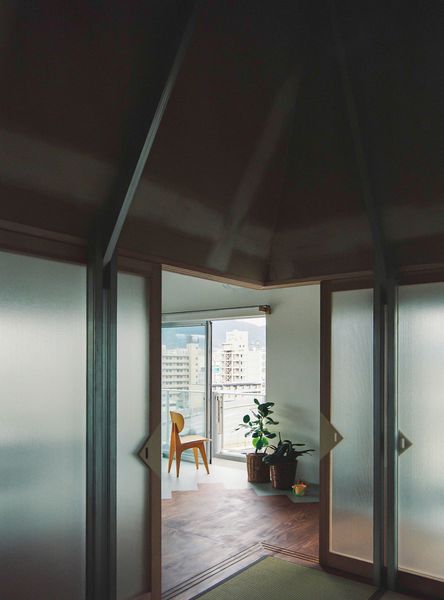
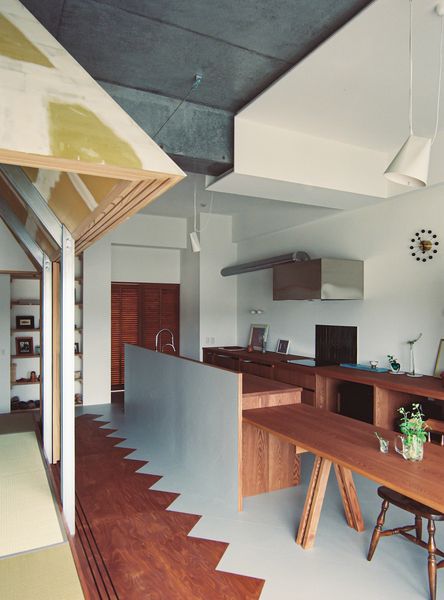
"At the center of each apartment, we inserted a hut-like volume that gathers the quieter rooms: a small living room and the bedrooms. In the space carved out around it emerges an intermediate zone, an engawa that serves both as a place to stay and as a passage. Balcony, engawa, and hut thus form three spatial layers that resonate with the childhood home. To encourage natural ventilation and seasonal thermal comfort, the hut is punctuated with high-level openings. But where do the rooms begin, and where does the passage end? As if to embody this ambiguity of boundaries, the wooden floor extends beyond the hut and interlocks in a sawtooth pattern with the engawa’s tiles. Materials blend together, as do uses of the space.

"Although recently completed, the apartments deliberately retain a sense of incompletion. The white-painted surfaces, which suggest a finished state, are limited to the areas where thermal insulation has been reinforced. Inside the huts, large expanses of exposed gypsum board walls are left open to the inhabitants’ appropriation, so that their future choices may take root. The structure consists of Y-shaped modules made of lightweight steel sections and bracing cables, typically used in shelving systems. These modules are arranged two-by-two in mirrored pairs along a regular grid, with occasional inversions. They are fixed to the floor and ceiling slabs of the building’s structural frame and are structurally stable, requiring no additional bracing to withstand earthquakes. From these new dwellings, one can look down across the street at the engawa of the childhood home."

Photo by Shohei Kuma

Photo by Shohei Kuma

Photo by Shohei Kuma

See the full story on Dwell.com: They Put a Mini House Inside This Sixth-Floor Apartment in Japan